The Turtle — Seat 27, 1983
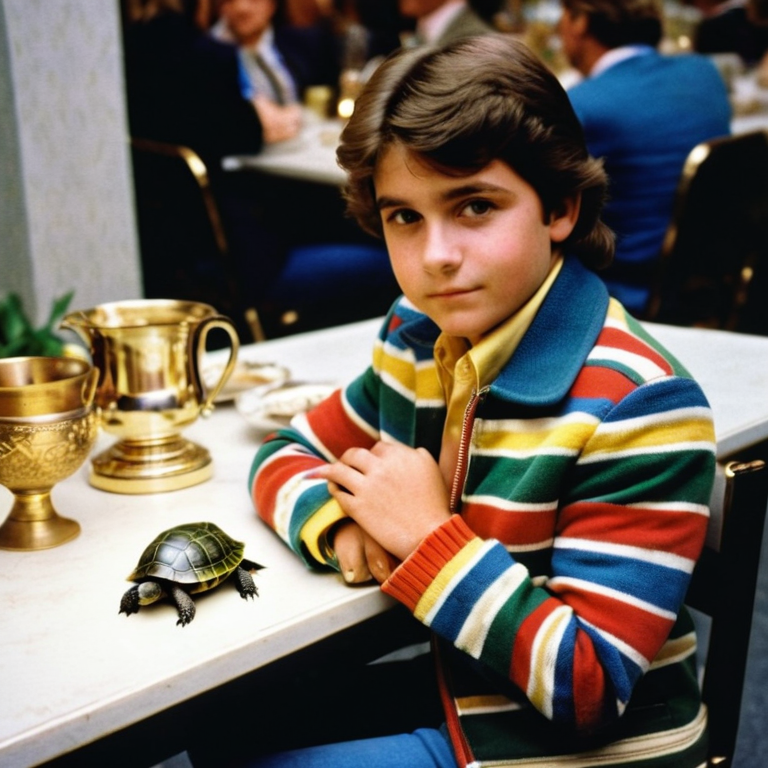
The Round Table · Seat 27 · The Turtle, 1983
---
The Seat
Come round the table with me. Every other chair here holds a master — someone who spent a lifetime forging one edge and paying for it in full.
This chair holds a beginner. On purpose. It is the only seat at the table that does not belong to a person at all.
It belongs to an archetype: the novice who followed written rules. And to understand why a beginner outranks half the legends in this room, you have to hear about the strangest bet ever placed on the nature of magic itself.
Chicago, 1983 — you stood on the balcony with me above the pits, so you know the sermon that floor preached: blood, not books. You have it or you don't. The pit finds you out. Richard Dennis, a legend of that floor, had heard the sermon his whole career and decided it was wrong. His partner William Eckhardt — a mathematician who had walked out of a doctorate and into the pits — took the other side. Eckhardt believed the great-trader spark was innate, something no rulebook could hold. Two friends, one question: is trading a gift, or a craft?
In Chicago, you do not argue a question like that. You bet on it.
So Dennis did the thing that put this chair at the table: he advertised. In the great newspapers of the day ran a notice — verified, the wording survives — saying that Mr. Dennis would train a small group of applicants in his trading methods, that successful candidates would trade solely for him with his money, and that prior experience would be considered but was not necessary. Read that last clause again. A floor legend, publicly offering his own coin to strangers, on the record as saying the one thing his whole civilization held sacred — experience, instinct, blood — was optional.
Over a thousand people answered. A handful were chosen — and the class list is my favorite document of the whole era: accountants, a blackjack player, a designer of fantasy games. Not one pit veteran among the picks. They were trained for two weeks — two weeks — in December of 1983, set loose with small accounts in January, and funded properly once they proved they could follow the ink. A second class walked the same door the following year.
And the name? Dennis had just come back from Asia, and he explained the program to a reporter in one line — verified, and I will love it forever: they were going to grow traders the way they grow turtles in Singapore. A farm. For wizards. The pit's proudest sermon, answered with agriculture.
The bet's own terms are lore — the accounts disagree, and Eckhardt himself laughed in print that the eyewitnesses can't get their stories straight. But the verdict is not lore, and it arrives at the end of this chapter, from the mouth of the man who bet against the beginners.

The Spell
So what was in the rulebook? That is the right question, and the answer is the best surprise in this seat — because years later the graduates published the rules for anyone to read, free, and the ink survives. I have held it. It fits on a few pages. Here is the whole spell, in plain hands.
The entry you already know, because it is Donchian's channel from the 1960s wearing a young jacket: watch the highest ground price has reached in roughly the last month. If price climbs above it — new high ground — go with it. There was a slower door too, a longer lookback for the patient, but the shape is the same shape: strength, confirmed by new ground, joined without argument. No prediction. No story. The turtle does not know why the market is moving, and the rulebook forbids caring.
The exit is the same spell cast in a mirror: when price falls back through its lowest ground of roughly the last two weeks, you leave. Not at a target — the rulebook has no targets, because a target is a way of punishing a strong position for being strong. You leave when the strength visibly fails, and not before, and not later. Ricardo's fogbound commandment again — cut the losses, let the profits run — written so exact a beginner cannot mumble it.
And above all, the sizing. Lean close, because this is the part everyone skips and it is most of the magic. Before the turtles ever placed a trade, they measured each market's breath — how far it typically swings in a normal day. They called that breath N. Every position was sized so that one day's normal breath would move the account by only about one coin in every hundred. A wild, stormy market breathes deep — so the rule automatically bought less of it. A sleepy market breathes shallow — the rule allowed more. The stop lived two breaths from the door: close enough to matter, far enough that ordinary breathing would not trip it. And no pile of positions, however beautiful, was allowed to grow past a hard ceiling.
Do you see what that is? The entry decides whether you were right. The sizing decides whether being wrong is survivable — and you will be wrong, often, by design; this family of spells loses most of its casts and pays for all of them with the few that run. Eckhardt said it plainly afterward: teaching the system was the easy part. The rules fit on a page. What filled the two weeks was risk, sizing, and how to hold yourself when the ink and your nerve disagree.
Because that is what a written rule is for. On an ordinary day it is nothing — a sentence you would have followed anyway. Its entire value is concentrated in one kind of day: the day the storm is up, the account is bleeding, and every instinct you own is screaming. On that day, ink does not desert. A written rule is courage stored in advance, the way a candle is fire stored in wax. The turtles held through days that broke veterans — not because they were braver, but because the decision had been made earlier, by a calmer person, and written down where the frightened person could find it.


The Honest Ledger
Now the ledger, and this seat's is a good one to learn the labels on.
The program's winnings — REPORTED. The folklore says the turtles earned on the order of $175 million for Dennis across the program's years, at glittering average returns. Those numbers come from inside the story, never from a public audit. Enjoy them; do not lean on them.
The concession — VERIFIED, in print. Eckhardt, the man who bet on blood, said this for the record: "I was proven wrong. The Turtle program proved to be an outstanding success. By and large, they learned to trade exceedingly well." A mathematician stated a hypothesis, watched the experiment come in against him, and updated in public. He lost the bet the way you are supposed to lose anything: quickly, cleanly, and on the record. And he kept the nuance the folklore drops — the rules were learnable by anyone; what separated the graduates afterward, when they ran their own money on the same ink, was everything around the entry: sizing, patience, the mind. Both men were right about different halves of the question, which is the most honest ending an experiment can have.
And the measurement — MEASURED, in this lab. I carried the turtle rule home to my scrying pool and cast it across years of real trading, at real cost, with the verdict rules signed before the trial. In clean wind — the weather where price travels far for the steps it takes — the rule wins 40.1 of every hundred casts and earns its keep. In chop, the same rule — same ink, same sentences — wins 15.0 of every hundred and starves. Same spell. The weather is the only difference.
Hold both halves of this seat together, because together they are the hinge of the whole book. The Turtles proved the rule can be written, and taught, and trusted on the day your nerve fails. The pool proved the rule was never the whole spell — the weather it is cast in is the other half, and nobody in 1983 was reading weather. The beginner in this chair carried half a spell and made history with it. You, apprentice, get to carry both halves. That is why the beginner's seat faces yours.
For Your Grimoire
A written rule is courage stored in advance — and half a spell: the same ink wins 40.1 in clean wind and starves at 15.0 in chop, so write the weather beside the rule.