Seat 5 · The Tulip Trader — Haarlem, 1636
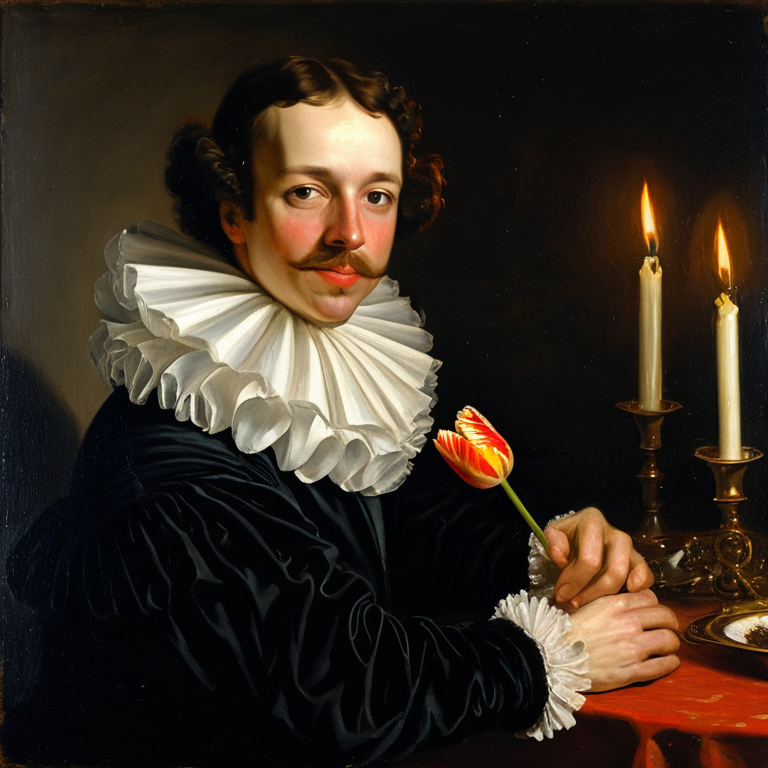
The only master at this table without a name — and the only one whose gift can save you before you ever place a trade. Mind the paper folded in his coat. It has been worth a canal house and worth a beer, in the same season.
---
The Seat
Come around the table with me — past the olive-watcher of Miletus, past the counting-man of Pisa — to the fifth chair, where a man sits warming his hands as though the room were still a Dutch winter. Look at his hands before you look at his face. Calluses, in a particular pattern: the loom. A weaver. Not a fool, not a gambler — a skilled man who paid his rent, kept his accounts, and went to church on Sunday.
He has no famous name because he was never one man. This seat belongs to the crowd — to every weaver, brewer, and carpenter who packed the tavern back rooms of Holland in the winter of 1636 — and I have given the crowd one chair and one face because you will keep meeting this man. In 1720 he speaks French and buys shares of the Mississippi. In 1929 he reads a ticker. Somewhere this week, he is opening a trading app for the first time. Be kind to him. You have been him. So have I.
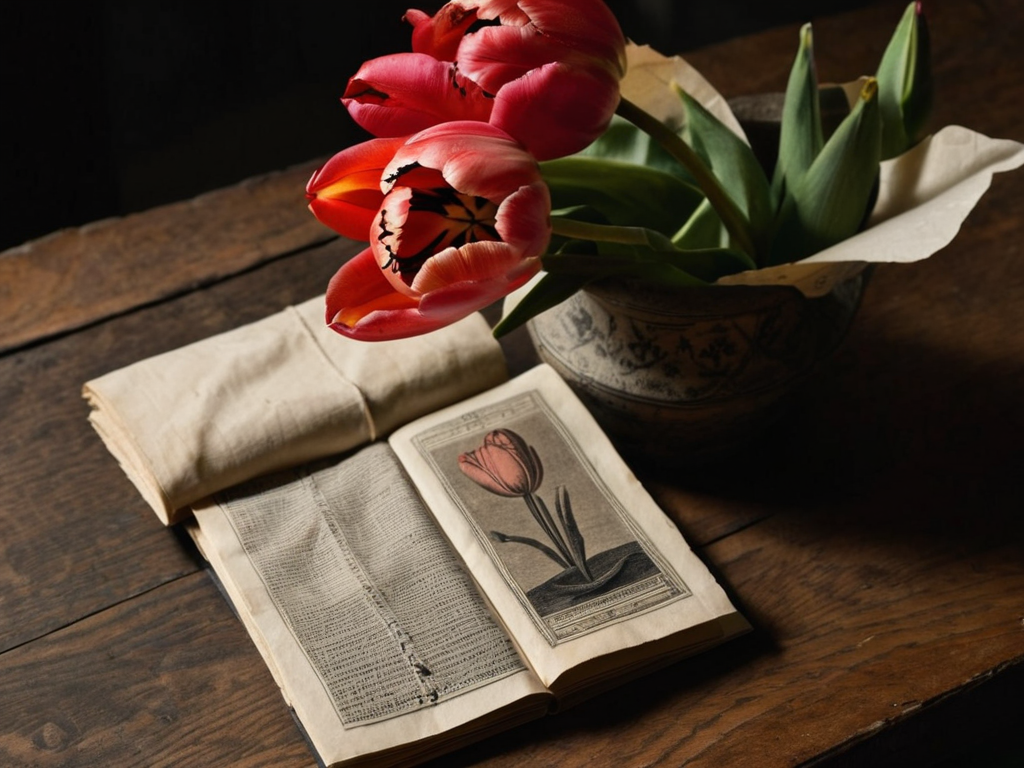
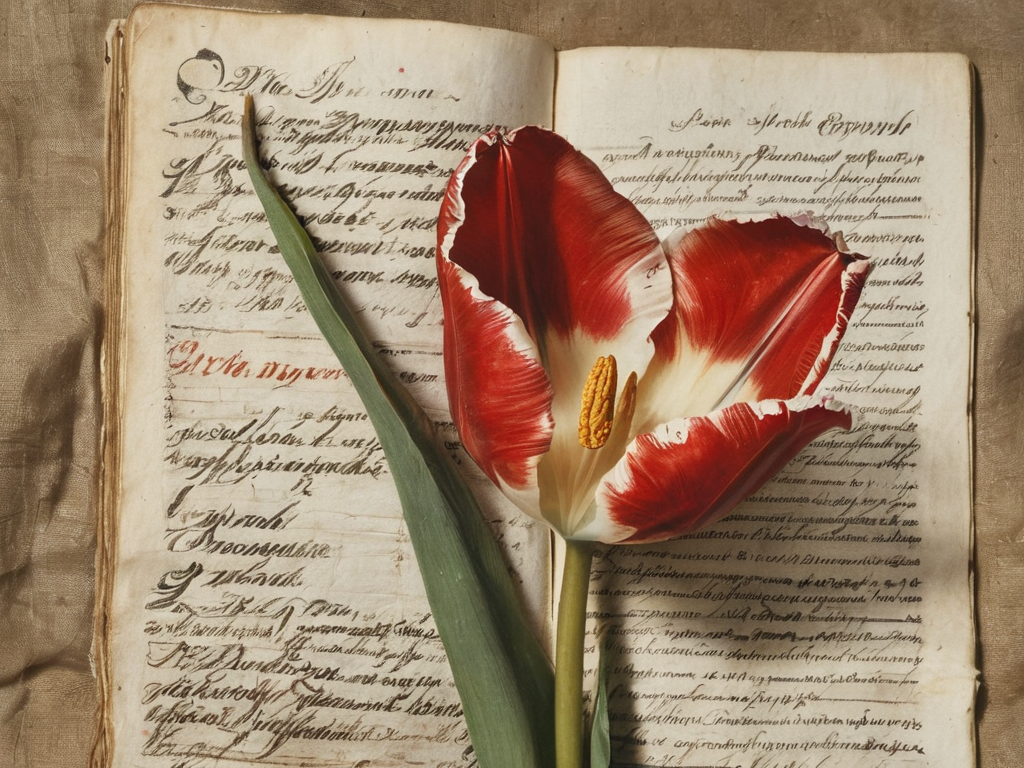
His winter, compressed: Holland has just spent a generation getting rich, and newly rich people go looking for somewhere to put it. What they found was asleep under the frost — the tulip, new to Europe, and stranger than any flower had a right to be, because some bulbs came up broken: petals flamed and feathered, white slashed with crimson, every bloom a small painting no gardener could plan. Nobody alive knew why. Three centuries later the answer arrived: a virus in the bulb. Beauty caused by a disease. The market never knew it was bidding on an illness. Markets rarely do.
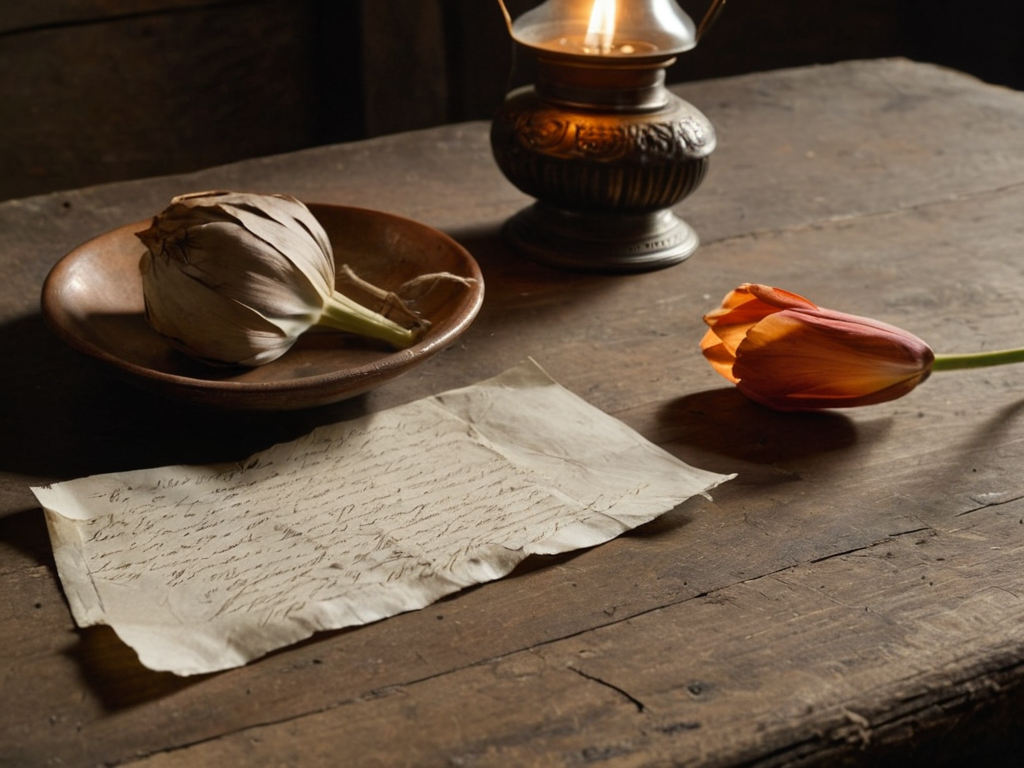
The rarest broken bulbs were genuinely scarce, the way a great painting is scarce, and worth real money — the trouble never started with the flower. The trouble started with the paper. By that winter the bulbs slept in the ground where nobody could lift them until summer, so what changed hands in the taverns was a promise: this bulb, at lifting time, at this price agreed tonight. The buyer often did not have the money. The seller often did not have the bulb. Neither intended a flower to ever change hands — each meant to sell the promise on at a better price first. The Dutch, who are funny about their own vices, named it honestly: the windhandel. The wind trade. Trading air.
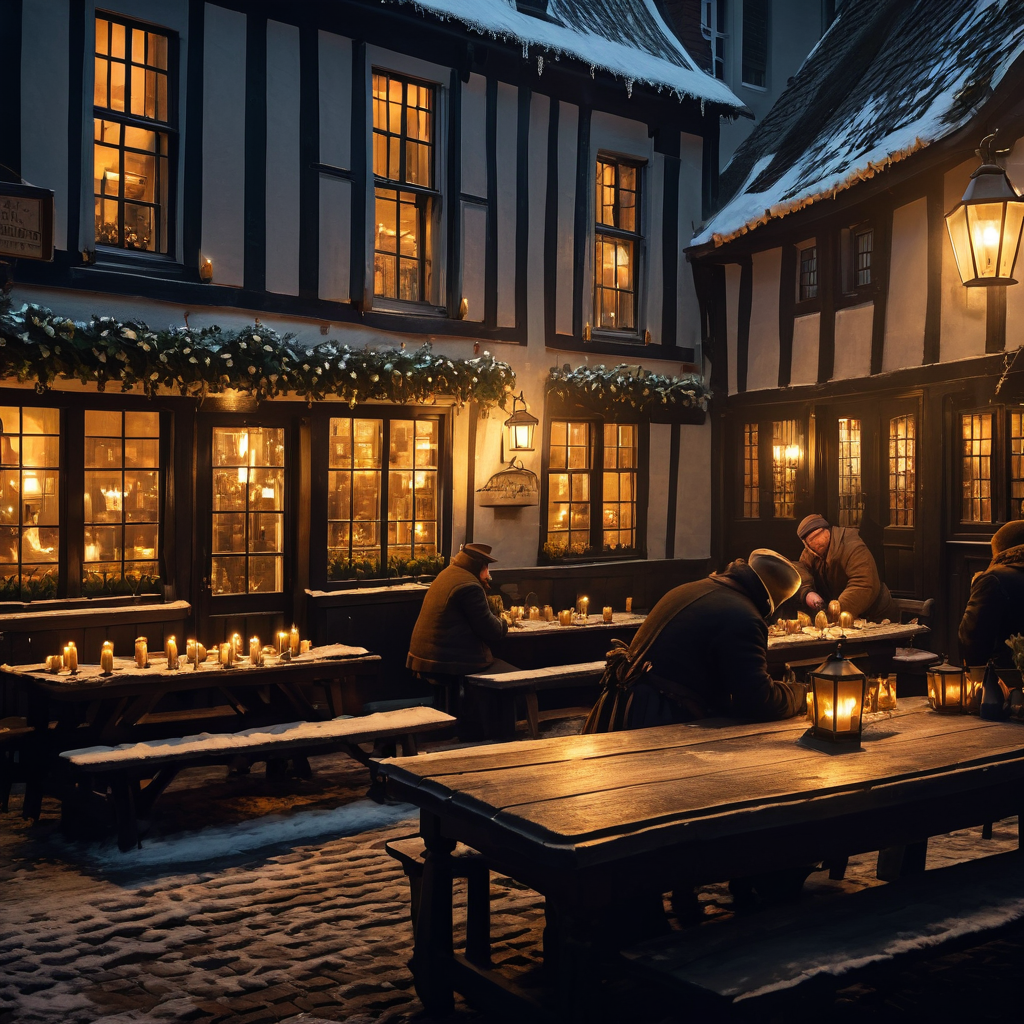
The taverns had rules, rituals, slates that went around, and a fee on every closed deal called wine money, spent on exactly what the name suggests. In one of those smoky rooms I watched this weaver bid a year of his wages for a promise of a flower he had never seen bloom — and hear the part that matters most, because it is the part the jokes always leave out: that night, in that room, it was not obviously a mistake. The price of promises had done nothing but climb for months. Every man there knew someone who had sold one for double. The room's whole arithmetic was: it went up yesterday, so it goes up tomorrow.
Then came February, and February came as a silence. A tavern in Haarlem, bulbs offered at the going rate — the rate everyone knew, the rate that was real yesterday — and no hand went up. The price dropped. Nothing. Dropped again. Nothing. A room full of men discovering together that a price is not a fact about a flower. A price is an agreement between people, and agreements can simply stop.
The courts, when the promises came due, largely shrugged: gambling on wind, said the magistrates, and unenforceable. Most contracts were settled for a small fee — a toll paid to walk away.
And the weaver? The legend drowns him in a canal. The archives — we will open them below — say otherwise: he went back to his loom. The cloth had been real all winter. He kept the worthless paper, though, and that paper is why he holds a seat among masters: he carried out of that winter the one lesson every later century has tried to un-learn, and he paid the full tuition so that you would not have to.
The Spell
His spell is called THE CROWD'S PRICE, and I will teach it the way every first spell should be taught — as exact language. A spell, remember, is words precise enough to change the world when spoken correctly and do nothing when mumbled; a trading rule is exactly that. This one is a single question, asked before you buy, never after:
What is holding this price up — the thing, or the belief?
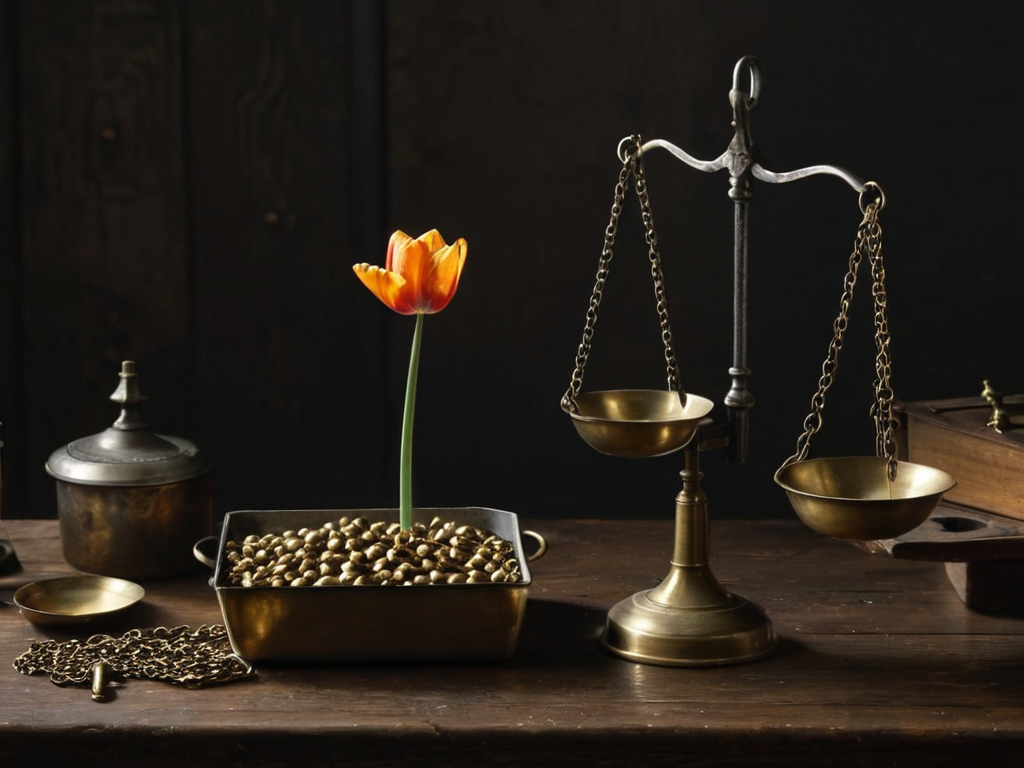
Every price ever printed stands on two pillars. The first is the thing itself: the use it has, the rent it earns, the scarcity that is true whether or not anyone is excited. The second is the belief: someone will pay more tomorrow. Understand — there is nothing wicked about the second pillar. Every market ever built stands partly on it. The spell is not "never touch belief." The spell is knowing how much of your price is standing on it.
Three marks tell you the belief pillar is carrying the whole roof. Learn them; the weaver's tavern had all three.
First mark: the reason to buy is the rising itself. Not the flower, not the harvest, not the earnings — the climb. When "it went up" has become the entire argument, the price has let go of the thing.
Second mark: the buyers do not have the money and the sellers do not have the thing. Holland's wind trade in one sentence. When both sides of a market are trading promises of promises, the price is a rumor agreeing with itself.
Third mark: everyone's plan is the same plan — sell to someone else before the reckoning. The exit is assumed to be always open. But an exit is other people, and when every buyer has already bought, the door and the crowd are the same body.
Now the rite, and it costs nothing. I call it the bulb-in-winter test. Take one thing you own or want to own — tonight, on your own chart — and say out loud what you would be holding tomorrow if every other buyer went quiet tonight. A flower is still a flower. A share of a business is still a slice of what it earns. But if the honest answer is a promise whose only value is a higher promise — then you are holding a tulip in January, and now at least you know it. The vow that makes the spell work: cast it before you buy. Cast afterward, it only tells you what you already fear.
The Honest Ledger
This mania is famous twice — once for happening, and once for the audit. The audit is the better story, and it is the reason this book labels everything, so watch the labels work.
VERIFIED. The prices were real. At the last grand auction — Alkmaar, held for the benefit of an innkeeper's orphaned children, days after Haarlem had already gone silent — a single bulb fetched 5,200 guilders, the highest honestly documented price of the mania: fine-canal-house money for one flower that was still underground. The wind trade was real, the tavern colleges were real, the wine money was real, and the courts really did refuse to enforce the promises.
LEGEND. In 1841 a Scottish journalist named Charles Mackay wrote Extraordinary Popular Delusions and the Madness of Crowds, and his chapter on the tulips gave the story its costume: a nation ruined, fortunes vaporized, drowned speculators in the canals — and the sailor who, mistaking it for an onion, allegedly ate a tulip bulb worth as much as a house, and went to jail for his breakfast. The sailor is the best breakfast in financial history and he is a legend: label him, love him, do not cite him. Mackay's version sold for generations, which is its own lesson — a good story travels farther than a true one, and arrives first.
THE AUDIT. A historian named Anne Goldgar spent years in the actual archives — wills, notary books, small-claims courts — and the ledgers say much less than the legend. Few genuine ruins. Not one drowned speculator; the bodies were invented later by moralists who wanted a better ending. Holland sailed on, rich as ever. What actually broke in February 1637 was not Holland's money but Holland's certainty: a whole society watched a price triple in a winter and vanish in a week, and learned that value is not a property of things — it is a weather that moves through crowds.
THE LAB. The mania's scale was exaggerated; its psychology was not. The crowd's weather is real, it leaves fossils, and my scrying pool finds the same shape — the climb on rising certainty, the collapse into silence when the last buyer has bought — in every market I pour into it, including the ones you traded last week. The measured version of that weather, and what it does when it ends, lives in his era's chapter and in the lab's own reports. The seat only needs the shape.
For Your Grimoire
A price is an agreement, not a fact. Before you buy, ask what you are holding if the crowd goes quiet tonight — and if the answer is only a promise of a higher promise, you are holding a tulip in January.
The weaver tips his cap. He has held the paper for four hundred years so that you could read this page instead. The next chair over sits a man who watched this crowd's children trade shares instead of flowers — and wrote down four rules by candlelight. Let me introduce you.