The First Option
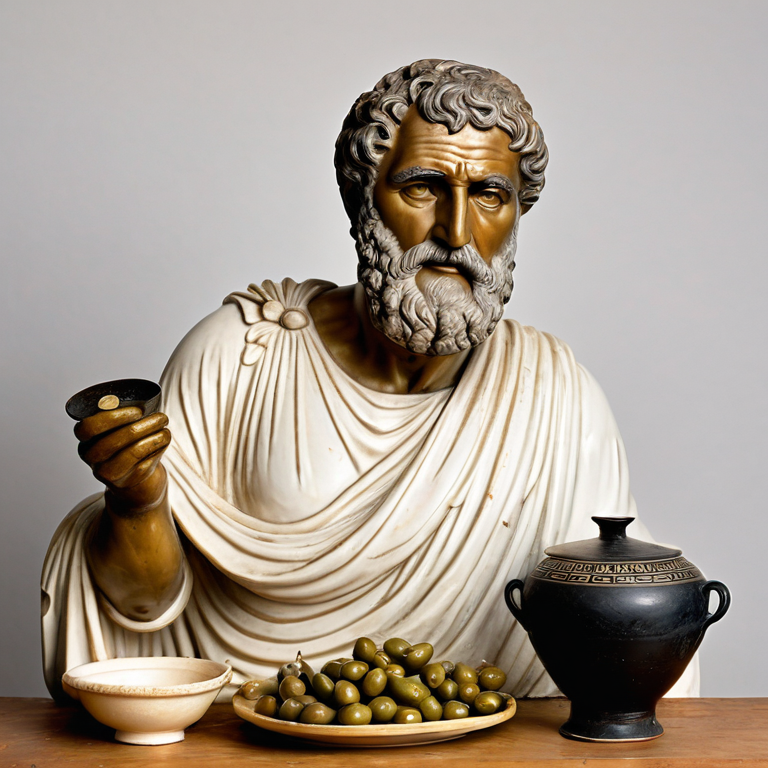
The first chair at the table, and the oldest, and the man in it never bought a single olive. He arrives smelling faintly of rain and lamp-oil, his cloak still wet from a winter twenty-six centuries deep, and he takes his seat without apology for being late — he is, after all, the reason there is a table. Every guest who sits down after him is casting some variation of the one small spell he left on a press-house door.
---
The Seat
Seat one belongs to Thales of Miletus, and the first thing to say about him is that his neighbours thought he was a joke.
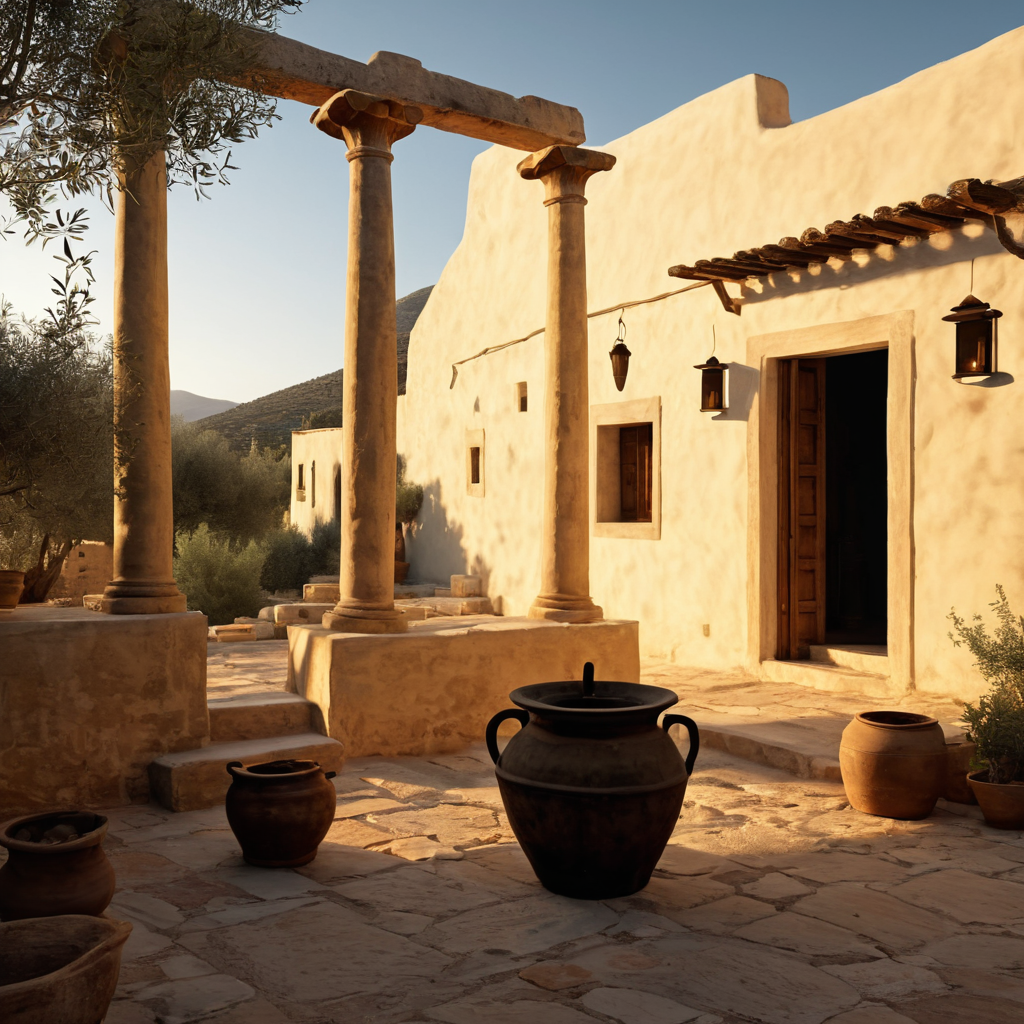
Miletus, around six hundred years before your calendar starts counting, was no backwater — it was the greatest Greek city of its sea, four harbours, colonies strung along the Black Sea like beads, wool sailing the whole length of the known world. Athens was still a middling town with a good hill. And through the streets of this rich, busy, practical place walked a man in a worn cloak who owned almost nothing, head tipped all the way back, watching the sky like it owed him money.
The jokes about him were old even then. Plato tells the one that has outlived every empire since: so busy studying the stars that he walked straight into a well, and a servant girl laughed at him — the great sage, so hungry to know what was in the sky that he could not see what was at his feet. Twenty-six centuries of jokes about impractical intellectuals, and that girl told the first one. The town's own version was blunter: here is proof that philosophy pays nothing. The smartest man in Ionia, and poor.
But the joke has it exactly backwards, and that is why he holds the first chair. This man watching the sky was doing something no one on earth had done before him: he was looking for rules. Not gods, not omens — patterns that repeat, that can be learned, that hold whether or not anyone prays. The histories say he predicted an eclipse of the sun, the famous one that snuffed the daylight over two armies mid-battle and frightened them into peace. They say he measured the height of the pyramids with nothing but a shadow, by waiting for the hour when his own shadow matched his own height. Whether every detail is true, the kind of man is: the first person in recorded history to insist that the world runs on patterns a patient watcher can read. The original weather-reader. The founder of this table.
Now the story that seats him, and I will tell it the way Aristotle told it, because Aristotle is the one who wrote it down.
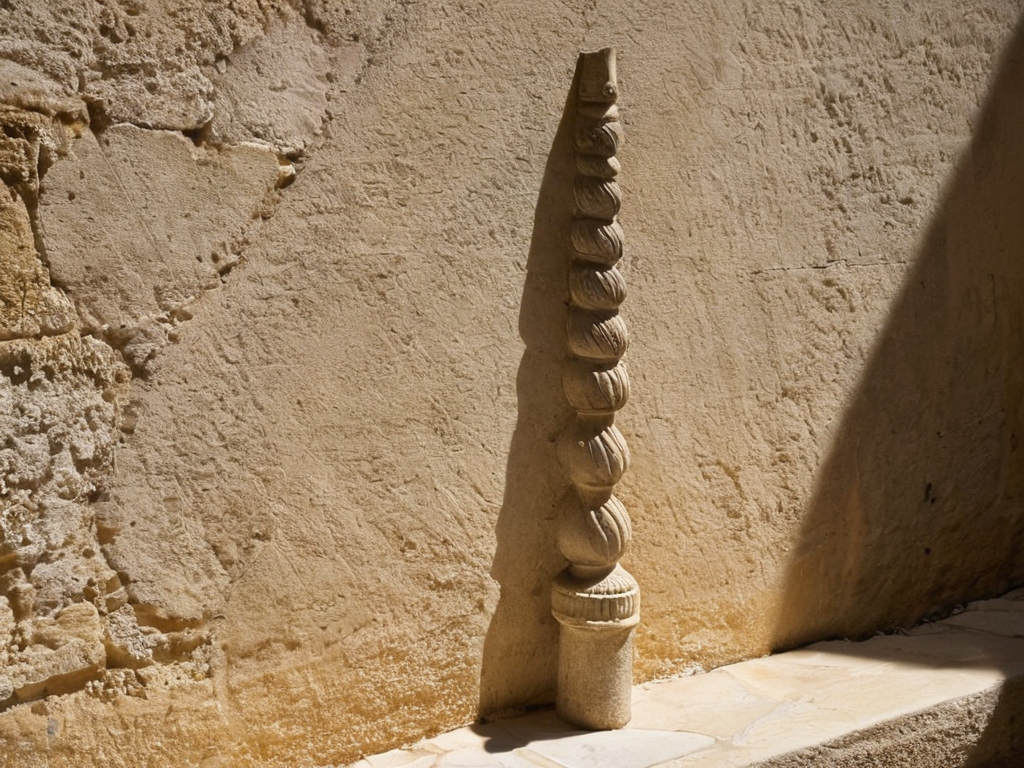
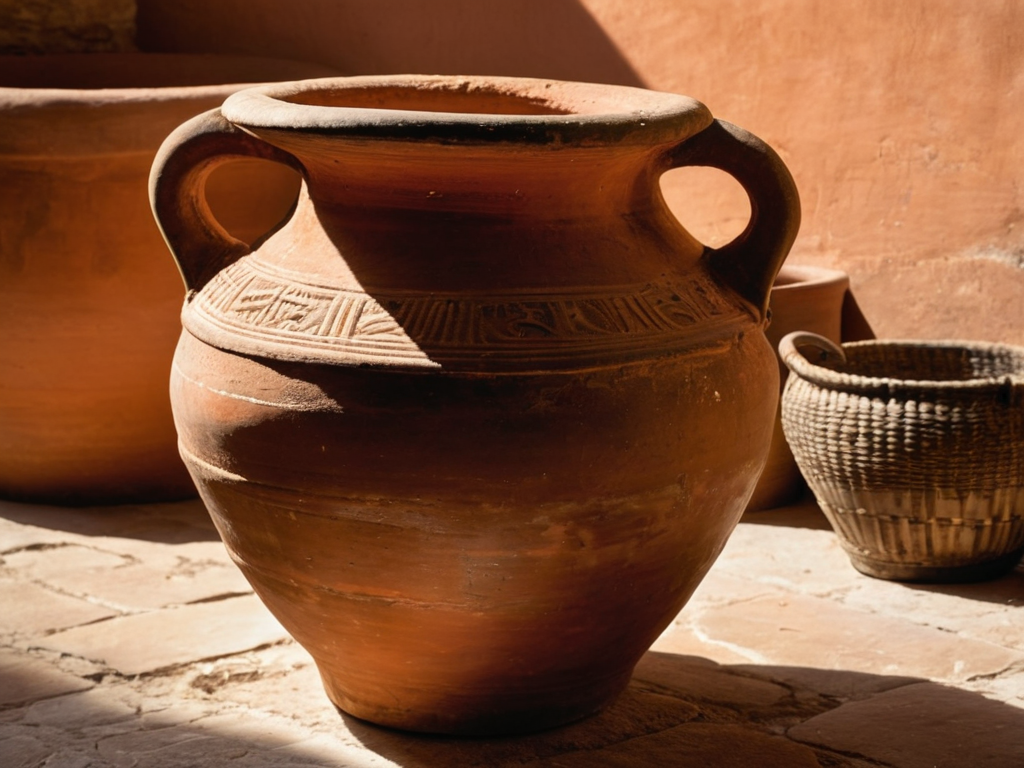
The world Thales lived in was a harvest economy. Nothing traded all day, every day; everything waited. The wool waited on the shearing, the grain waited on the ships, and the olives — the lamp-oil, soap, kitchen, and export of the entire civilised world — waited on the autumn. Then everything happened at once, in a few frantic weeks, and the scarce thing in those weeks was not olives at all. It was the presses — great stone crushers, brutally expensive, idle eleven months of the year, and then for one month the judges of who turned a harvest into oil while it was fresh and who watched it spoil in baskets. At harvest, the press is the market.
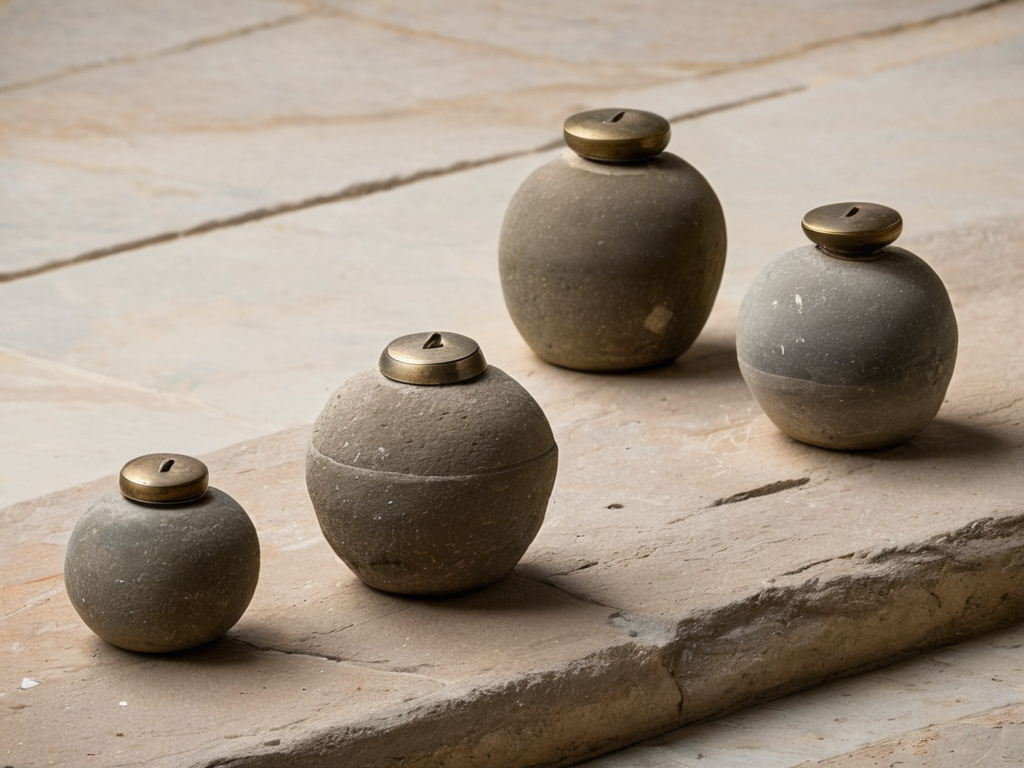
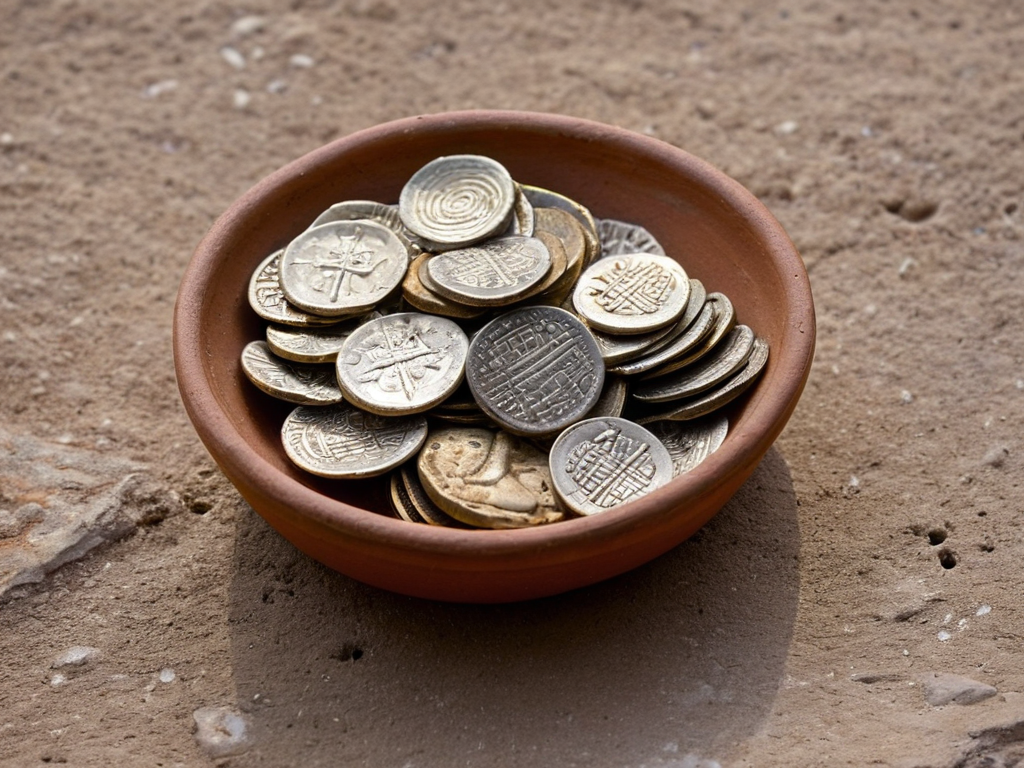
And Greek commerce ran on a beautiful, humble custom: earnest money. You want to bind a deal for later? Put a small coin down now. The deal is yours. Walk away, and you lose the coin — the coin, and nothing else. Everyone used it. Nobody had ever looked at it and seen what it was.
The story goes that from his sky-watching — stars, weather, the patient arithmetic of seasons — Thales became convinced, while it was still winter, that the coming olive harvest would be enormous. How, nobody recorded. And consider what a poor man convinced of a huge harvest could not do. Buy olives? There were none; they were months from existing. Buy trees, land, a press of his own? Any of those cost a fortune he didn't have, and any of them could ruin him if he was wrong.
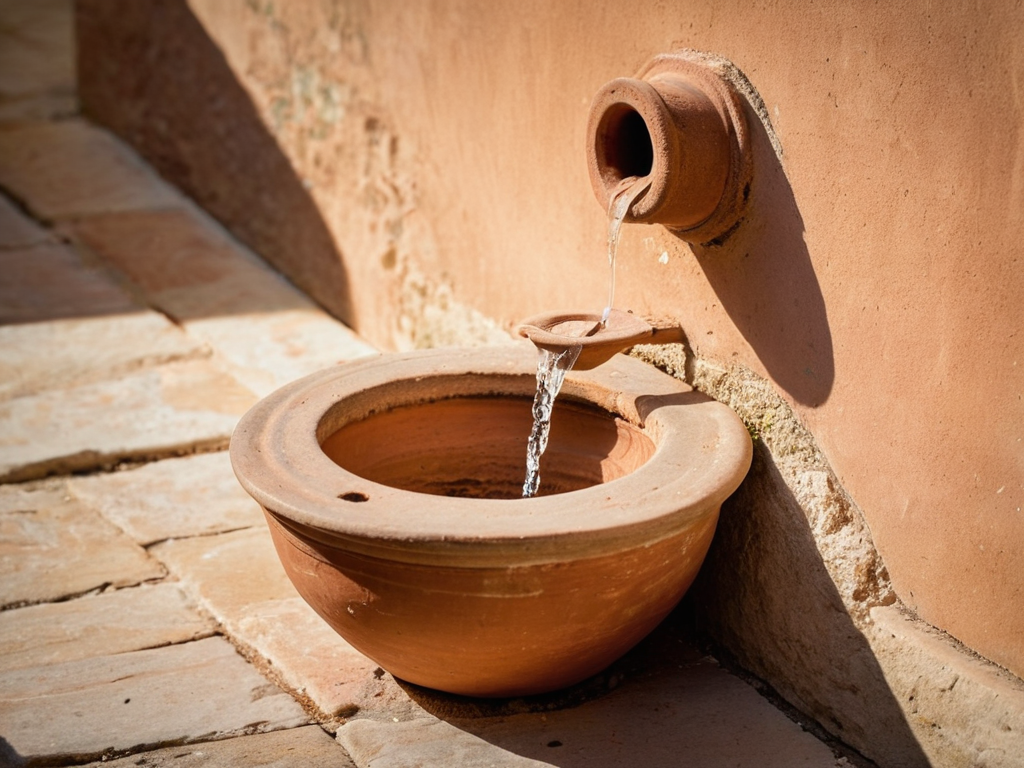
Instead he took the small money he could raise and went, in the dead of winter, when the presses stood cold and their owners were glad of any coin at all, from press to press in Miletus and across the water to Chios, and on each one he put down that humble customary thing. A deposit. The right to hire the press at harvest, at a price fixed now, in the season when nobody else wanted it and nobody bid against him. Every press. Both cities. Small coins on many doors.
And Miletus laughed, of course. The well-walker had finally tipped over entirely — renting oil-presses in winter, when a child could tell you nobody presses anything in winter.
Then autumn came, and the sky paid out. The harvest came in heavy, and picked olives will not wait — every day they sit, the oil in them turns — so when the crop landed, every road in two cities converged on the pressing-houses at once. And on every door, one man's earnest coin was already sitting. The stargazer held all the doors. He hired the presses out on his own terms, says Aristotle, and the money poured in — and then, having proved his point, he let it all go and went back to the sky. Aristotle's own moral, the reason he wrote the story down at all, was that philosophers can be rich whenever they care to; it is simply not what they are for.
The Spell
Look past the laughter and the pouring money to what the man in the story actually bought, because that is the spell, and it is not olives. He never owned an olive. Not trees, not land, not presses.
He bought the right to act, without the obligation to act.
If the harvest had failed — if the sky had lied to him — he would have walked away and lost the deposits. The deposits, and nothing else. That is the first option, and every option ever traded since — and the markets of your century trade oceans of them daily — is that winter's coin on that press door, wearing modern clothes.
But the vocabulary word is not the spell. The spell is the part of the trade nobody laughs about, the part that was settled before the trade existed: Thales knew his worst case to the coin, in winter, before he risked anything. The deposit was the maximum loss. Not estimated after, not hoped about, not discovered halfway through a bad morning — counted out on a table, in money, first. The whole discipline of survival that fills the rest of this book — the wards, the stop-lines, the sizing rites of the seats to come — descends from that one winter habit. In this book we call that pre-counted coin your R: the amount, in money, you decide you can lose on one trade before you enter it, spoken in one breath, before, always. The first recorded trade in history already contained it.
And notice one thing more, because it is the quiet half of the spell: he bought when nobody else wanted what he was buying. In winter the right cost a small coin, because no one bid against him. At harvest the same right ruled two cities. The right without the obligation is cheapest exactly when the crowd cannot imagine wanting it — which is a lesson about crowds folded inside a lesson about deposits, left on the table by a man the crowd was busy laughing at.
The rite, castable tonight, costing nothing: take the next trade you are considering — just considering — and before you look for an entry, before you draw a single line, write one number on paper. The deposit. The exact money you will walk away having lost if the sky lies to you. Written before, in money, in one breath. If you can name it, you are trading. If you can't, you are carrying baskets toward a door somebody else holds.
The Honest Ledger
Now the labels, and this seat's begin with the story itself.
Legend-grade, and honestly so. Nobody who wrote this story down stood on that quay. Aristotle told it some two and a half centuries after Thales died — a story already old in his time, told secondhand, to win an argument about philosophy. Later writers repeated it with the details drifting, the way retold stories drift. No deposit receipt survives, no press-owner's tally, no farmer's complaint; the legend says everything and the ledgers say nothing at all. Careful scholars raise an eyebrow at the mechanics — Chios is a fair sail away — and some doubt the whole episode. Even the reading is contested: Aristotle's own moral was about monopoly, cornering the presses; the option reading rests on the machinery he describes, the forfeitable deposit, and that machinery is real as iron whatever Thales did or didn't do. How he called the harvest is not recorded at all — olive trees do rest one year and bear heavy the next, a rhythm a patient watcher could count, but that is our suspicion across twenty-six centuries, labelled as suspicion, not history.
The spell bounds the loss. It does not make the harvest come. This must be said plainly, because the story's ending is so warm it can melt the lesson. A named worst case did not make Thales right; the sky did. Deposit after deposit laid on a read that is wrong is still a road to ruin — a bounded, orderly, well-documented road, reached by smaller steps, but the same road; a later seat at this table has measured that truth to the bone. Knowing your maximum loss is the floor of the craft, not the craft. It keeps you alive to be right eventually. It has no opinion on whether you are.
The winter price is not always winter-priced. In your century the right-without-obligation is no longer a sleepy custom; it is a vast, crowded market of its own, and the sellers of such rights have long since learned what harvests cost. The deposit is only cheap when you want what nobody else wants yet. Buy the right when the whole town is already bidding, and you have paid harvest prices for winter's spell.
Untested — awaiting trial. No claim from this seat has stood before my lab's judges yet. A spell has been forged in his name and waits its turn at the festival, and this ledger will print the verdict when it comes, kind or cruel. What can be said today is only this: the habit of naming the worst case first is the oldest pedigree in this book for everything the later seats measure — and it costs a pencil.
For Your Grimoire
- Buy the right, not the obligation. The deposit is the whole loss;
- Name your worst case in money, in one breath, before the trade
- The laughter of the town is weather, not evidence. Neither is your
- A bounded loss keeps you alive; it does not make you right. The spell
- The right is cheapest in winter, when nobody bids against you. Paid
everything above it is choice.
exists. That number is your R, and it is the first thing written, not the last thing discovered.
conviction — the harvest still has to come.
is a floor under the craft, never a substitute for the read.
for at harvest, it is just an expensive way to join the crowd.