The Proof That Machines Win
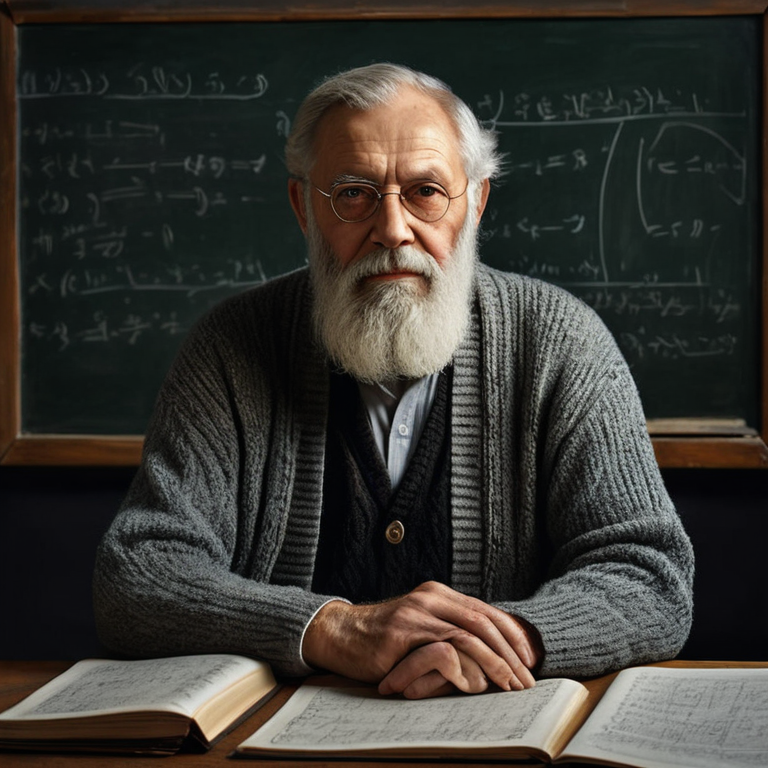
The Round Table, near the far end, where the chairs stop belonging to history and start belonging to living memory. The wizard stands behind an empty seat, one hand on its back, and waits for the room to quiet.
---
The Seat
Come and stand here a moment, before I seat him. I want you to see the chair first, because everything about it is wrong.
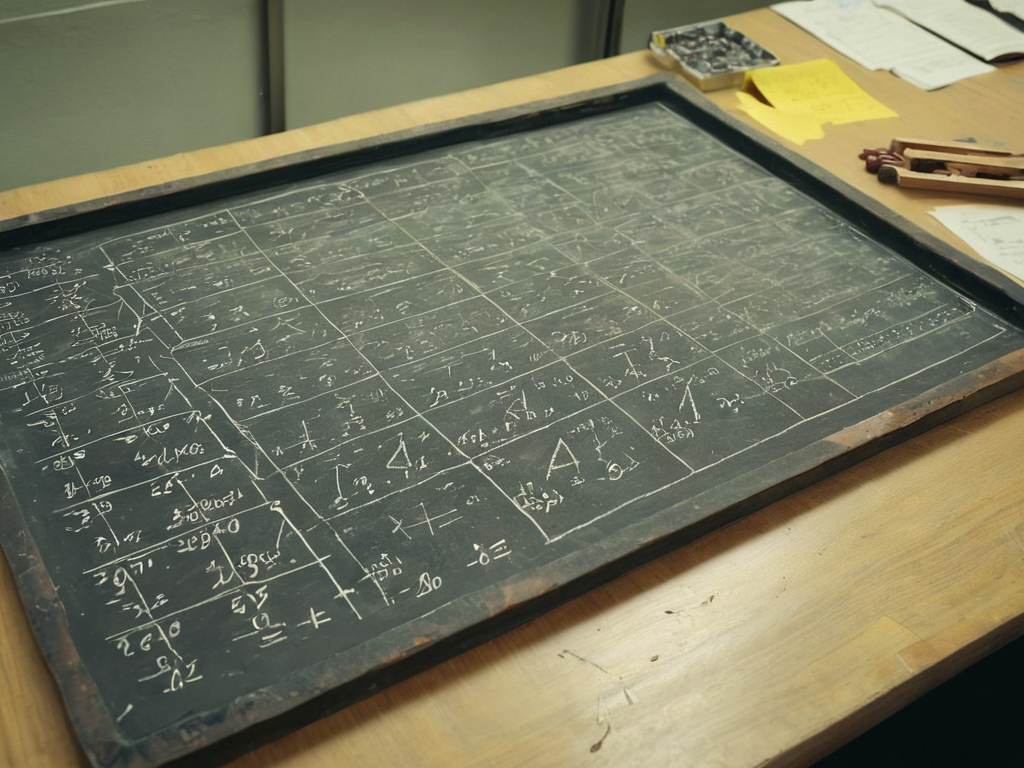
Every other seat at this table belonged to a trader who watched the market. Thales watched the sky over his groves. Homma watched the rice bridge. The dancer watched a week-old newspaper, which was his genius. But the man who takes seat twenty-nine spent his trading life watching a chalkboard, in a corridor lit like a hospital, in a strip of ordinary shops on Long Island — and the market itself he barely glanced at again after 1988.
His name is Jim Simons, and before he ever priced a future he was the kind of mathematician other mathematicians make room for. A theory with his name on it lives in physics textbooks to this day. He broke codes for his country until 1968, when he opposed a war out loud in the newspapers and learned that this is a duel a codebreaker does not win. Fired, he built a university mathematics department into a power instead. And in 1978, at forty, he walked away from all of it to trade currencies.
Now the part the legend always skips, and this table never will: the machines did not win at first. The early models made money, then faded, and the operation drifted back to the oldest method there is — read the news, guess what the great banks will do, hold on. By 1984 the guessing was failing badly enough that Simons halted trading and offered his backers their money back, telling a friend the losses were "stomach wrenching," with no rhyme or reason to them — a private remark, reported years later by his biographer, and I hand it to you with that label on. Sit with the shape of that. The founder of the greatest counting-house of the modern age was, in year six, a man trading on his gut and losing sleep. The machines earned this seat only after the gut had been given every chance.
So they rebuilt. Other first-rank mathematicians joined; one of them had spent years hoarding the one treasure nobody else would stoop to collect — old prices, tick by tick, rescued from the world's wastepaper baskets. And in 1988 the new fund launched under the name Medallion, named for the mathematics medals its founders had won: the one boast in the entire operation, and they hid it inside the name.
It promptly stumbled — down roughly a third within its first year. And the quarrel that followed is my favorite proof that chalk does not take the human out of the human: one great mathematician wanted to keep casting, because the rules allowed for a stretch this bad and stopping now was superstition; Simons wanted to halt everything and find what was broken before another coin moved. The argument ran so hot that both men spoke to lawyers — two of the finest mathematicians alive, preparing to sue one another over whether to trust their own equations. One colleague's account, given to the biographer, and labeled so. The halting side won, the rules were taken apart and rebuilt to wager far faster and far smaller, and the next full year the fund earned 55.9 percent after fees.
The machine never really looked back. Take your seat, Jim. Now — his spell, because it is not the one the legend sells.
The Spell
The legend says they found a secret signal. One great truth, locked in a vault. The truth is stranger and far more useful to you, and it comes in three clauses, spoken exactly, the way all spells must be.
First: many weak signals, honestly weighed, beat one strong opinion. No single signal carries anything. The edge — as it is usually paraphrased, so take even this with its label — is being right barely more than half the time. Picture a coin so slightly bent you could flip it all afternoon and never feel the bias. Now flip it tens of thousands of times, every wager small, all of them folded into one book so they share the load instead of fighting each other. That is the whole cathedral. Not one miracle — an honest congregation of tiny, boring almost-nothings, none of which would impress you alone.
Second: costs and capacity ride in the front of the carriage, never the back. The fund fenced itself near ten billion and handed profits back out rather than let them pile up inside, because the edge was thin and every extra coin of size pressed it thinner. Outside investors were shown the door; in the end it traded only for its own people. A counting-house turning money away at the door — the rarest weather event recorded anywhere in this book. The fence is the tell. They measured exactly where their edge drowned and built the fence at the waterline. My own pool taught me the same law at a scale ten thousand times smaller: the toll is not a footnote to the spell. The toll is half the spell.
Third — and this is the clause the whole table went quiet for: never override the casting. The rules are written in advance; the humans' whole discipline is not to interrupt. And the finest hour of that vow is also its breaking. In a hot August — 2007 — the counting-houses of the world had crowded into one another's patterns, and when they all rushed for the door at once, every model bled together. Simons — Simons himself, the keeper of the vow — reached in and cut positions by hand, judging the survival of the house worth more than the doctrine. Days later, prices snapped back exactly as his own rules had implied they would. "We gave up a lot of extra profit," a colleague told him. "I'd make the same decision again," he answered — the exchange as his biographer reports it.
Hold both truths at once, because the spell lives between them. The rules were right. AND the man who built them blinked when his own house was on fire. If Jim Simons could not keep the vow, then the vow was never about intelligence, and it was never about discipline. It is about the size of the fire. Never override the model, spoken exactly, means this: size the wager so small that you never HAVE to. If the fire can ever grow big enough to make you grab the wheel, the wager was wrong before the first coin moved.
That is the spell of seat twenty-nine. Not a signal. A way of never needing to be brilliant twice in the same afternoon.
The Honest Ledger
This table promised you labels, and this seat needs the sternest one at the table.
The record: roughly 66 percent a year before fees and 39 after, across three decades, more than a hundred billion in profit. Those figures come from investor records assembled by his biographer, Gregory Zuckerman — the best-DOCUMENTED record of the modern age, and it has never been publicly audited. One professor said returns like these were "like the sun rising in the west." One year is reported as a loss after fees: 1989, the stumble you just watched the lawyers nearly feast on. Documented beats rumored, and audited beats documented, and this record sits on the top rung of the second-best shelf. I set it before you exactly that shape.
And the method itself? Secret. By design, forever. Anyone selling you "the Medallion strategy" is selling fog in a bottle. But notice what was never secret, because it could not be hidden: every clause of the spell. The many over the one. The toll and the fence. The vow, and the sizing that makes the vow keepable. Those are not signals. They are laws, and laws work in the open.
For Your Grimoire
Many small edges, honestly tolled, folded into one book — and sized so you never have to break your own vow.