Tudor Jones — Seat 29, 1987
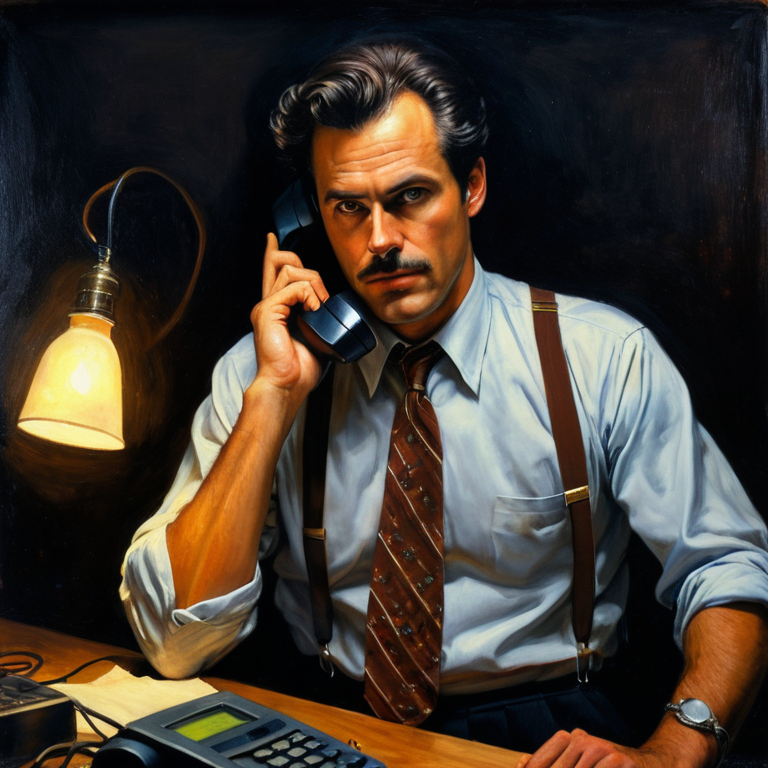
The Round Table · Seat 29 · Tudor Jones, 1987
---
The Seat
The guest in Seat 29 arrives with a telephone in each hand.
He does not put them down, either — not at first. He sits, props both elbows on my table, and goes on talking into each ear of the world at once, and I let him, because this is precisely the creature I crossed the 1980s to collect. Paul Tudor Jones, out of Memphis by way of the cotton pits — apprenticed under an old New Orleans cotton speculator, schooled on a floor where the price of a crop was made by throat and hands; then a seat of his own on the New York Cotton Exchange; and by 1980, his own shop. By 1987 he is thirty-two years old, loud, superstitious, utterly alive, and standing at his desk shouting into both phones at once while the greatest storm in modern market history breaks around him — and makes him famous.
I know exactly what he looked like that year, and not from legend. A film crew spent 1987 in his office and aired an hour of it that summer: the young Jones caught precisely as he was — cocky, profane, brilliant, a man conducting an orchestra of noise and visibly enjoying every bar of it. Years later, polished and respectable, he reportedly found the film so embarrassing he asked for it to be pulled from circulation — which, of course, made bootleg tapes of it trading-floor contraband for decades, passed hand to hand like a forbidden text. The pit gods keep their humor: the man who mastered the market could not buy back his own footage.
Understand what that film is worth to a keeper of ledgers, because it is not gossip — it is evidence. Nearly every master at this table is remembered backwards: the legend written years afterward, by admirers, from memory, polished a little at every retelling. This seat is different. Its famous year was caught on camera while it was still happening, before anyone — including the man himself — knew how the story would end. That is why, when I tell you in a moment that a certain piece of paper hung on a certain wall, I can say verified instead of so the story goes. A camera is a ledger that cannot be retold. And the pit gods, having their humor, arranged that the one master who wanted his record pulled from circulation is the one master whose record cannot be untold.
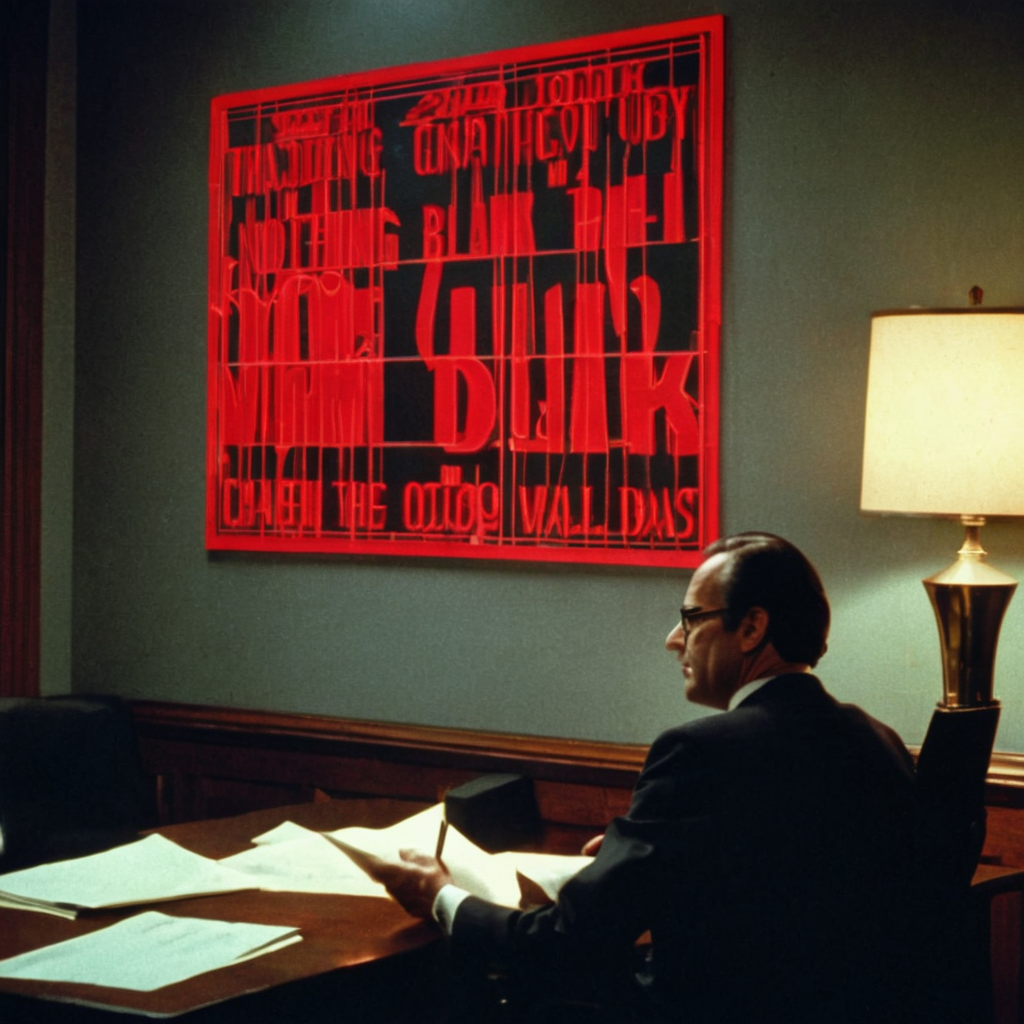
But I did not seat him at this table for the phones, or the film, or even for the famous October. I seated him for the quietest object in that loud office. Taped to the wall behind his desk — preserved on that same film, verified — is a sheet of loose-leaf paper with four words in black marker.
LOSERS AVERAGE LOSERS.
Hear it correctly before you flinch, because it is a law about positions, never about people — no trader in this book is a loser, and that is not what the sign says. It says that a position moving against you is the market speaking, and that paying more for the thing the market keeps marking down is not conviction but its counterfeit. Four words on loose-leaf, taped where his own eyes would have to cross them a hundred times a day. Mark that placement, apprentice, because it is the most honest thing in the whole loud office: the noisiest trader of his era did not trust his own noise, and posted a sentry against himself, in his own handwriting, at eye level. All evening at my table, whichever way he turned, that sign hung in my memory behind him like a keel beneath a fast boat — and you will see shortly that a keel is exactly what it was.
Now the year itself, because the seat makes no sense without the storm.
Early in 1987, his research man laid the chart of the 1920s market over the chart of the 1980s, and the two lines seemed to lie down together. The fit looked uncanny — he claimed a striking closeness for it on camera, and I label it exactly that: his claim, on camera, never a measurement. The overlay prophesied 1929 all over again, the great crash returned on schedule, and Jones positioned short. Then, on Monday, October 19, 1987, the Dow fell 22 percent in a single day — the worst day the American market has ever printed — and the young man with two phones stood in the middle of the wreckage on the profitable side of it.
That is the picture the folklore enshrines: the office roaring, both phones alive, the crash arriving almost as if summoned by the young man shouting into it. His fund's October is one of the most repeated numbers in market folklore — roughly a 62 percent gain in that single month — and I hand it to you already wearing its true label: REPORTED. The fund was private. Its statements were never public. No audit of that number has ever existed for anyone to check. The career around it is not in dispute; the digits are folklore until a ledger says otherwise, and none ever has.
And then, years later, came the honest ending — the reason this seat earns a chapter instead of a shrine. The research man himself said it, in print: he had fudged the exercise — moved the starting points of the two charts until the lines agreed. And the sculpted prophecy's clock was broken besides: it called for the break to come in the spring of 1988, and the market fell in October 1987. Sit with the full strangeness of that. The most famous prophecy in modern markets was a hand-fitted chart — and it missed the date.
So how did the fortune happen anyway? Because underneath the prophecy, the dull things were on duty. The market had already slipped below his 200-day line at the top — the long slow average he calls his metric for everything — and his stated law had him carrying nothing on the long side when the storm broke: not because the overlay whispered to him, but because the line forbade it. The sign on the wall saw to it that no position going wrong was ever fed on the way down. And the shots he took were priced so that being wrong — the permanent condition of everyone at this table — would have been survivable anyway. None of the three predicted a thing. All three were in place before the storm had a name — which is the only time defenses can be built. The legend rode the prophecy. The money rode the disciplines.
When at last I asked him about the sign, in the quiet after the close, he did not give me a speech. He pointed at it, with the telephone still in his pointing hand, and went back to talking to the world. Some masters at this table taught me with a library, and one or two with a lifetime of silence. This one taught with a wall.
The legend of this seat is a prophecy. The treasure of this seat is that piece of paper, and the two dull disciplines that stand beside it. Let me teach you all three — and then open the ledger, where the prophecy and its famous number get the honest labels the folklore never gives them.

The Spell
Three disciplines make up this seat's spell, and I will give them to you in the order he gives them to students.
The first: the 200-day defense. Take the closing price of every one of the last two hundred days — roughly a year of markets — and average them. Drawn on a chart, that average becomes a long, slow line, a keel the price carries beneath itself. His stated law, repeated to students to this day: that line is his metric for everything he looks at, and its purpose is defense. Above the line, you may play offense. Below the line, you defend — you get out, and you stay out.
Hear what the spell does not say, because its modesty is its power. It does not say the line predicts anything. It does not pick your entries or promise you profits. He had watched too many things fall all the way to zero, and every one of them had to fall through that line on the way. The keel cannot tell you where the ship is going. It can keep you off the voyages that end on the rocks — and a wizard who never rides anything to zero has already beaten most of the graveyard.
The second: the paper sign. Read it correctly, because it is a law about positions, never about people — no trader in this book is a loser, and that is not what the sign says. It says: when a position moves against you, the market is handing you information. Adding to that position — averaging down, buying more because it is cheaper — is paying more for the thing the market keeps telling you is worth less. Feeding a position that is going wrong does not rescue it. It grows it. Four words on loose-leaf, and they close the single most seductive trapdoor in trading: the one that feels, on the way down, exactly like conviction.
The third: the 5-to-1 hunt. Only take shots where the intended reward is five times what you risk. The arithmetic is the whole argument, so do it once with me, in money. Risk one hundred dollars to win five hundred, five times over. Lose four of the five — be wrong eighty percent of the time — and you have lost four hundred and won five hundred: still whole. His own words carry the spell: wrong four times out of five, and still not losing. At 5-to-1, being frequently wrong — which is the permanent condition of everyone at this table — stops being fatal and becomes merely the price of hunting.
Defense, discipline, asymmetry. Notice that not one of the three tells you what to buy, or when, or why. All three tell you how to survive being wrong — and he built one of the great fortunes of the age on them. Hold that strangeness. The ledger is about to explain it.

The Honest Ledger
Now the famous story, and then the honest one. This book always tells both, and at this seat they happen to be the same story wearing two faces.
The famous story: in early 1987, Jones's research man laid the chart of the 1920s market over the chart of the 1980s. The fit looked uncanny — he claimed a striking closeness for it on camera, and I label it exactly that, his claim on camera, not a measurement. The overlay prophesied 1929 all over again. Jones positioned short. On October 19, 1987, the Dow fell 22 percent in a single day — and his fund's October is one of the most repeated numbers in market folklore, roughly a 62 percent gain in that one month. Label it before you love it: REPORTED. The fund was private, its statements were never public, and no audit of that number exists for anyone to check. The career around it is not in dispute; the digits are folklore until a ledger says otherwise, and none ever has.
Then, years later, the research man himself gave the honest version, in print, and it is the finest gift this seat brings to the table. He admitted he had fudged the exercise — juggled the starting points of the two charts until the lines lay down together. And the sculpted prophecy's clock was broken besides: it called for the break in the spring of 1988. The market fell in October 1987. The most famous market prophecy of the modern age was a hand-fitted chart that was wrong about the date.
So what actually paid? The dull things. The taped-up things. The market had already fallen below the 200-day keel at the top, so his stated law had him carrying nothing on the long side when the storm broke — not because a prophecy told him, but because the line forbade it. No losing position got fed on the way down; the sign saw to that. And the shots he took were priced so that being wrong would have been survivable anyway. The prophecy made the legend. The loose-leaf paper made the fortune.
And here this lab has already weighed his spell, so I can close the ledger with a measurement instead of a story. I carried the 200-day line into my scrying pool and cast it both ways, verdict rules signed in advance. As a trigger — buy when price crosses the line — it measured out to nothing, which matches what Jones actually said; he never claimed the line picks entries. But as a gate — a standing permission, a rule that simply forbids playing on the wrong side of the keel — it improved four of the four tools it guarded in this lab. Every single one. The oldest, dullest line on the chart, doing exactly the job the man with two phones said it does: not prophecy. Defense. When the pit and the pool agree, apprentice, write it in ink.
For Your Grimoire
The prophecy was fudged and the fortune happened anyway: stand on the right side of the 200-day keel, never feed a position that is going against you, hunt only 5-to-1 — defense, vindicated here four for four.