The Storm Gauge
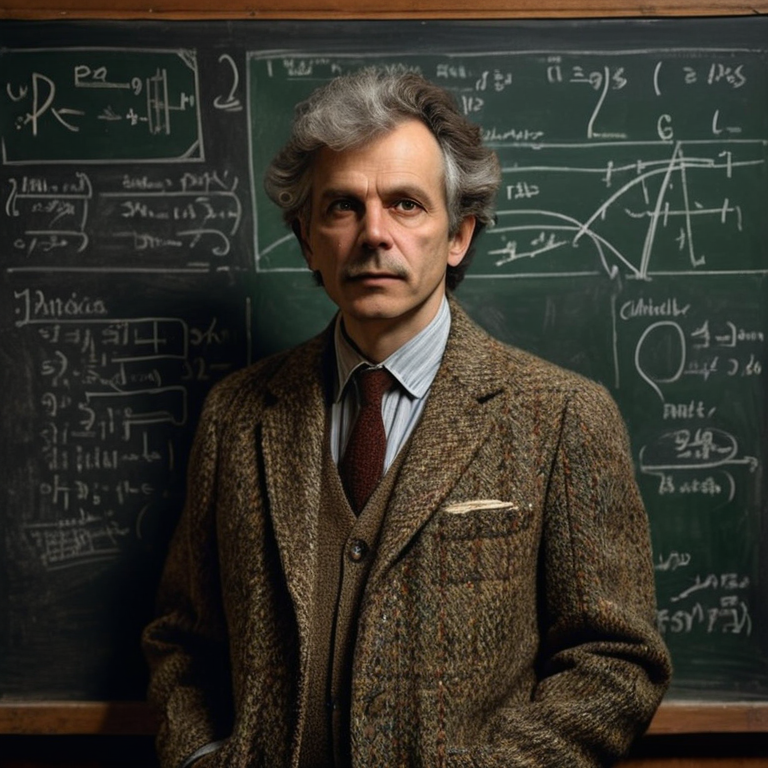
The Round Table · Seat 26 · Michael Parkinson, 1980
The quietest guest at the table, and the only instrument-maker here whose masterpiece is famous in this lab for refusing, thirteen times out of thirteen, to take a side. That refusal turns out to be one of the most valuable lessons in the book. Lean in — he doesn't shout.
---
The Seat
Come round the table to seat twenty-five, the quietest chair in the room. Its guest has said almost nothing all evening, and measured everything — you can watch his eye travel down the table the way an instrument sweeps a horizon, taking readings, taking no sides. The louder masters have barely noticed him. Every one of them, though you would have to torture the admission out of the proudest, uses what he made.
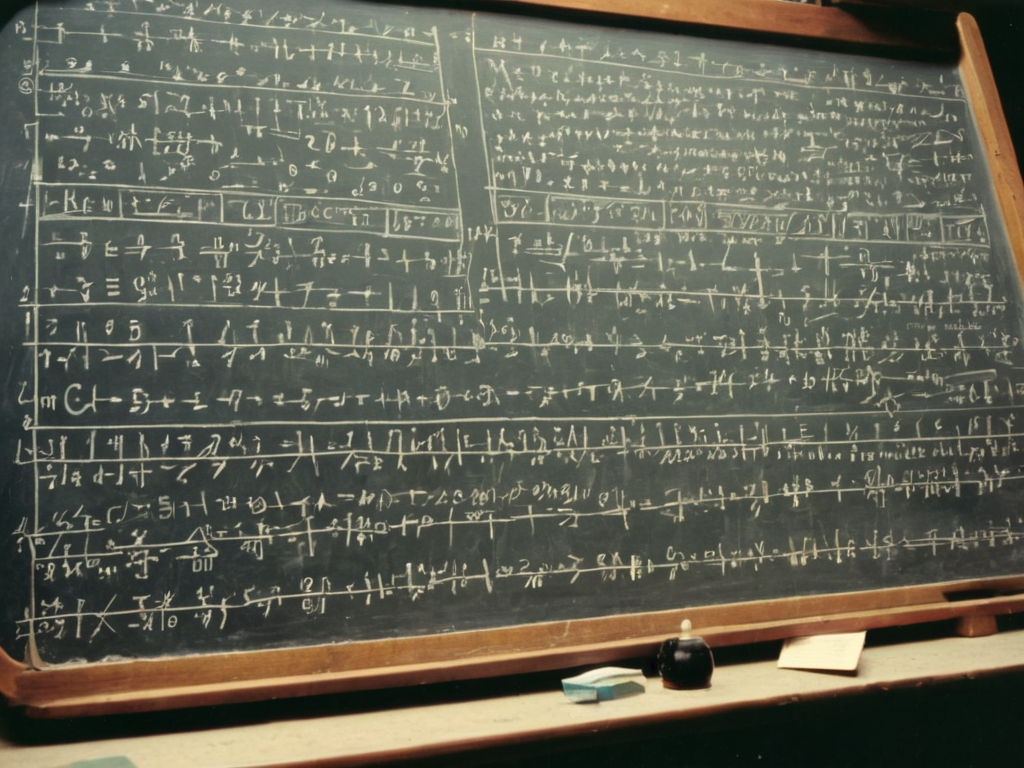
And here this table owes you, straight away, the frankest introduction in the whole book — because with every other guest I began with a life, and with this one I cannot. He is not a trader at all, and this table will not pretend otherwise: Michael Parkinson is a measurer — a scholar of storms — and his seat chapter is written, honestly, through his instrument rather than his life, because it is the instrument that changed the craft. Even the scholar's room I found him in, on the machine-age visit, was my own staging around a real idea; the idea is what sits in this chair. And since honesty is this table's whole furniture, let me show you the staging openly instead of hiding the seams. I gave him a quiet room far from any market, all journals and worked derivations; I gave him chalk, because chalk felt right for 1980 — an age when a new piece of arithmetic still traveled from chalkboard to journal to, only years later, a trading desk. Every prop of it mine. What is not mine, what is real and weighed and sitting in this chair, is the idea — and a seat built on one true idea and no legend at all is, as the ledger below will tell you plainly, a rarer and cleaner thing at this table than you would ever guess.
You should also see where he stands in his era, because he closes it. The Machine Age took me twenty years and four masters to cross — the era when magic became measurement. A man with a straightedge opened it, drawing a rule so exact any clerk could follow it. A young man spent half a year of weekends feeding punch cards to a borrowed machine, checking a master's spell instead of believing it. A toolsmith — one chair up; you have just left his workshop — turned "stretched" and "stride" from feelings into figures a machine could hold. And then, at the era's quiet end, its last door opened on a room nowhere near a market at all: a scholar who never traded, completing the set. The era had taught the craft to write its rules exactly, to check them honestly, and to measure its words. Parkinson taught it to measure the weather the rules are cast in. There is a tidy symmetry in how that era closes, if you stand back from it: it opened on the quietest workshop I had ever visited, and it ends quieter still — in a room with no market in it at all, as if measurement had finally grown complete enough that it no longer needed the roar even in the next street. Of the four quiet men, he is the quietest — the only one whose gift asks nothing of you but that you read it correctly.
And the idea, from 1980, fits in one sentence. If you want to know how rough the sea ran today, do not ask only where the ship ended up — ask how high and how low it pitched along the way.
Feel how obvious that is, one second after hearing it. Any green-faced passenger could have told the captain as much; Parkinson's contribution was proving it with arithmetic. Before him, the standard way to measure a market's storminess was to look at where each day closed against the day before — the ship's position at anchor, night after night, ignoring everything the voyage did in between. And understand, nobody was being stupid. The close is the number a ledger wants: the honest summary, the figure the newspapers printed in their price tables, the line a bookkeeper can rule off and sleep on. It earned its place. But somewhere along the decades, the number easiest to record had quietly become the only number anyone consulted — and the whole middle of the day, every lurch and recovery between the bells, was simply being swept out with the sawdust each evening. Two days can close in the same place: one drifted there on a pond; the other went over two waterfalls and through a lightning storm and limped in. Close-to-close arithmetic calls those days twins. Your stomach knows they are not, and Parkinson sided with your stomach — and then did what separates a scholar from a passenger: he showed, exactly, how to read the day's whole reach — its high against its low — as a measure of the storm, and how much more the reach knows than the anchor-point does. Not "the range seems telling," which is a mumble; the era had outlawed mumbles. He proved the reach carries more news about the storm than the close alone, and he proved how much — the kind of exactness that lets a measure walk out of a journal and into every workshop in the craft, because from that day forward, using only the close was no longer a custom. It was a documented waste.
Every master at this table survived weather; that is roughly what a master is. Listen down the length of the hall and you can hear them surviving it again — the panic bought into, the crash traded through, the losing streak outlasted, each teller's storm growing a little taller with the wine. This guest's relation to storms is different in kind, and once you see it you cannot unsee it: they narrate storms; he numbers them. No storm of his own to boast of, no shipwreck, no miraculous landfall — only the gauge, offered to every sailor equally, that says how hard the wind actually blew. You know both kinds of knowledge yourself, if you have traded even a season. Your account statement is written in anchor-points, one close after another, and it looks almost calm. Your stomach kept the other record — every lurch of the voyage the statement never printed. Parkinson is the man who took your stomach's side of that argument and gave it arithmetic.
At a table of traders, why seat a measurer at all? Because this table does not seat only the sword-arms of the craft; it seats the armorers. Half the guests in this hall are here for spells — for the daring cast, the audited fortune, the legend sorted into piles. This guest is here because when those spells go to trial in my lab, his gauge is part of the courtroom: reading the day's violence exactly is now standard equipment everywhere storms are measured, in whatever school. That is the strange immortality of the instrument-maker — wrong nowhere, famous nowhere, present everywhere.
That is the whole seat. A man who taught the craft to stop throwing away the middle of the day. The humblest gift at this table, and one of the few that every single school of magic in this book accepts without argument — which, as you are about to see, is precisely its limit and precisely its lesson.
The Spell
First, the founding metaphor, earned fresh for this page: a spell is exact language — spoken precisely it works, mumbled it does nothing. But not everything exact is a spell. Some exact language is an instrument — it changes nothing and reveals much — and confusing the two kinds is one of the costliest mistakes a young wizard makes. This seat exists to make sure you never make it.
The instrument: the storm gauge. Take the day's full span — how high the market reached, how low it sank — and read it as the day's violence. Wide span, hard weather; narrow span, calm sea. That is the reader's whole version, and it is genuinely useful: the gauge tells you, better than the closing price ever could, what kind of sea you were actually sailing.
Now the discovery, and it is the lab's own. Back home, my pool put Parkinson's gauge in front of every tool in the pack — all thirteen spells, every school: the ones that chase, the ones that fade, all of them — and asked each one the same question: do you cast better when the gauge reads calm, or when it reads storm?
Thirteen tools. Thirteen identical answers. Not one spell broke ranks.
The split was thirteen to nothing.
At first that sounds like a triumph for the gauge — total agreement! — and here is the degree of illumination this seat confers: total agreement is exactly what makes it unable to choose. A measure that moves every spell the same way can tell you about the field all spells stand on. But on the one question where the schools disagree — is this an hour for chasing, or an hour for fading? — a unanimous instrument has, by definition, no opinion. It is the only tool in the lab that has never started an argument, and a tool that never starts arguments can never settle one.
So carve this over the door, in the lab's own words: the storm gauge is a gate, never a router. A gate answers whether — is this weather fit for casting at all? A router answers which — which school does this hour belong to? Whether, never which. The gauge does the first job perfectly and the second not at all — and the measure that does split the schools, the one that reads the weather the chasers love and the faders hate, sits two chairs down this table, wearing 1995 on its sleeve. This seat's honest refusal is what taught the lab to recognize that router when it finally met one.
One more receipt, because the lab tested the confusion itself and the result deserves to be famous. We once taught a moving average to bend with the storm gauge — to speed up and slow down with volatility, the storm, instead of with the trend's own efficiency. Bending with the right thing had already proven itself book after book. Bending with the storm proved worse than not bending at all, book after book. Hold that: a real instrument, honestly built, wired to the wrong job, performs below doing nothing. A lantern held up as a compass does not merely fail to point north. It walks you in circles, brightly.
Your rite tonight, in two parts, no trading, as always. Part one: open any chart and find two days that closed about the same distance from where they opened — twins by the anchor-point — and then look at their full spans. Find a pond day and a waterfall day wearing the same closing face. Trace both spans with your finger and say which sea you'd rather have been sailing, and why the close alone could never have told you. You have just read a storm gauge with the original instrument. Part two is the one that pays for the whole chapter: open your indicator drawer — every tool you have ever added to a chart — and ask each one the gate-or-router question: does this tell me WHETHER to trade, or WHICH way? Write G or R beside each name. Most drawers, it turns out, are full of lanterns being held up as compasses. One evening of honest labeling, and yours won't be.
The Honest Ledger
Verified: the 1980 idea and its adoption — reading the day's full reach instead of the close alone is now standard equipment everywhere storms are measured. And a label this table owes you: the lab's documents carry no biography of the man — no anecdotes, no fortunes, no legends to sort. This chapter therefore claims none, and the scholar's room of the era visit is labeled what it always was: staging around a real idea. A seat with nothing to de-legend is a quiet luxury at this table.
Measured, in this lab: the gauge was confirmed as a gate three separate times — and the full trial returned the seat's number, the split of thirteen to nothing: every spell in the pack agrees on what to do with the gauge's answer, which is exactly why it can only ever say whether, never which. And the wrong-wiring receipt: bending with the storm measured worse than not bending at all, book after book. Both verdicts were reached the house way — real costs, rules signed before the trial.
What transfers to you: the labeling. The most dangerous object in your toolbox is not a bad instrument — bad instruments get thrown away. It is a good instrument holding the wrong job. Parkinson's gauge is a good gauge; that is what makes its boundary worth a whole seat. Learn each tool's true office, write it down, and never again ask a lantern for directions.
For Your Grimoire
A measure every spell agrees with can tell you whether to cast, never which — the storm gauge split the field thirteen to nothing and thereby proved itself a gate, not a router. Carry the lantern and the compass both, label them, and never mix them up: a lantern held up as a compass walks you in circles, brightly.