The Costumed Debt
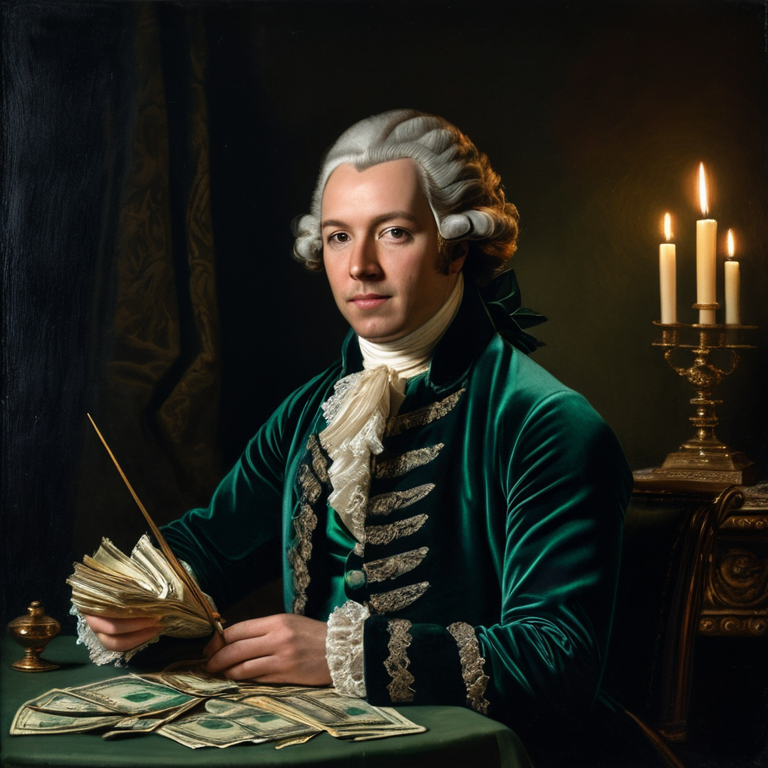
Mind this one. He is the best-dressed man at the table — better dressed than the Lone Wolf down at eighteen, which takes doing — and the most charming, and the cleverest, and he is seated here the way a lighthouse is seated on a rock. The Villains at fifteen were seated so you would learn the enemy's face. This guest is more dangerous than they ever were, because he was not an enemy. He believed every word he is about to tell you, he was half right, and he broke the greatest kingdom on earth with the half that was wrong. Pull up your chair. Keep your hand on your purse — not because he will pick it, but because by the end of the evening you will want to hand it to him, and that is the lesson.
---
The Seat
I will give you his story straight, because no novelist would dare invent it.
John Law, born Edinburgh, 1671, into a family of goldsmiths and bankers — which in that age meant the family was a small bank, and the boy learned the family arithmetic and took it somewhere the family never intended. In London, young and vain, he killed a dandy in a duel — one thrust — was convicted of murder, sentenced to hang, saw the sentence softened, was held in prison anyway, and escaped. What the duel was about is one of history's shrugs; the old accounts disagree, and the ledgers say less than the legends do. What is documented is that for the next twenty years he was the best-dressed fugitive in Europe.
He lived by gambling, and hear that precisely, because it is the key to the whole man: he did not play for luck. The arithmetic of chance was the newest magic of that age, and Law was its dark graduate — he calculated faster than the tables, took the side of the odds, and banked, night after night, kingdom after kingdom. And between games he studied. The great Bank of Amsterdam. The trade of every court that would receive him. And he wrote pamphlets arguing an idea a full century ahead of its hour: that a country's problem is never too little gold but too little money, and that paper, properly managed, could be better money than metal. Understand — and this is why his seat cannot be skipped — he was not wrong about that. The money in your pocket today is his idea, wearing better management. Scotland turned him down. France, magnificently, did not.
France in 1715 was the grandest kingdom on earth and it was broke — the old king had spent seventy years building palaces and fighting everyone, and died owing sums nobody could sensibly write down, his IOUs changing hands at a deep discount because nobody believed them. The new Regent knew Law from the gaming tables and was desperate, and so — savor it — the kingdom of France handed its money to a convicted killer on the run from English justice. The eighteenth century was not a cautious age.
What Law built there I can teach you as three gears, because it was not one trick.
Gear one: make the paper. His bank issued notes you could, in principle, swap back for coin. People preferred the paper — lighter, cleaner, faster — and soon the paper was not a substitute for the money; it was the money. And whoever runs the printing press now decides how much money exists.
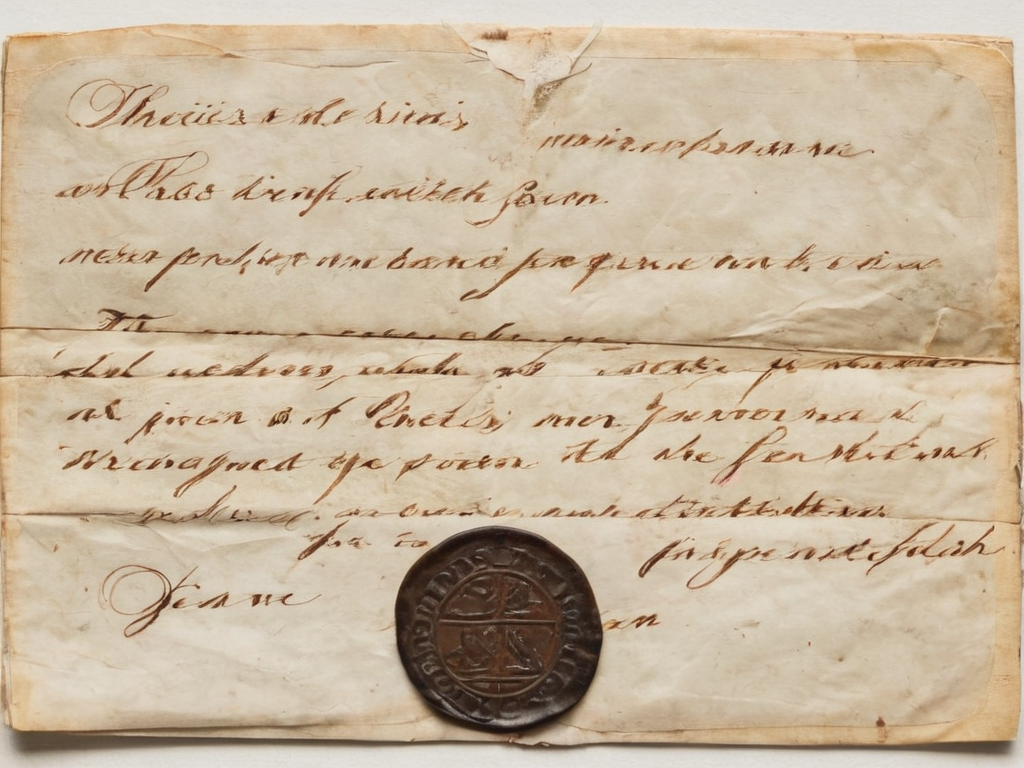
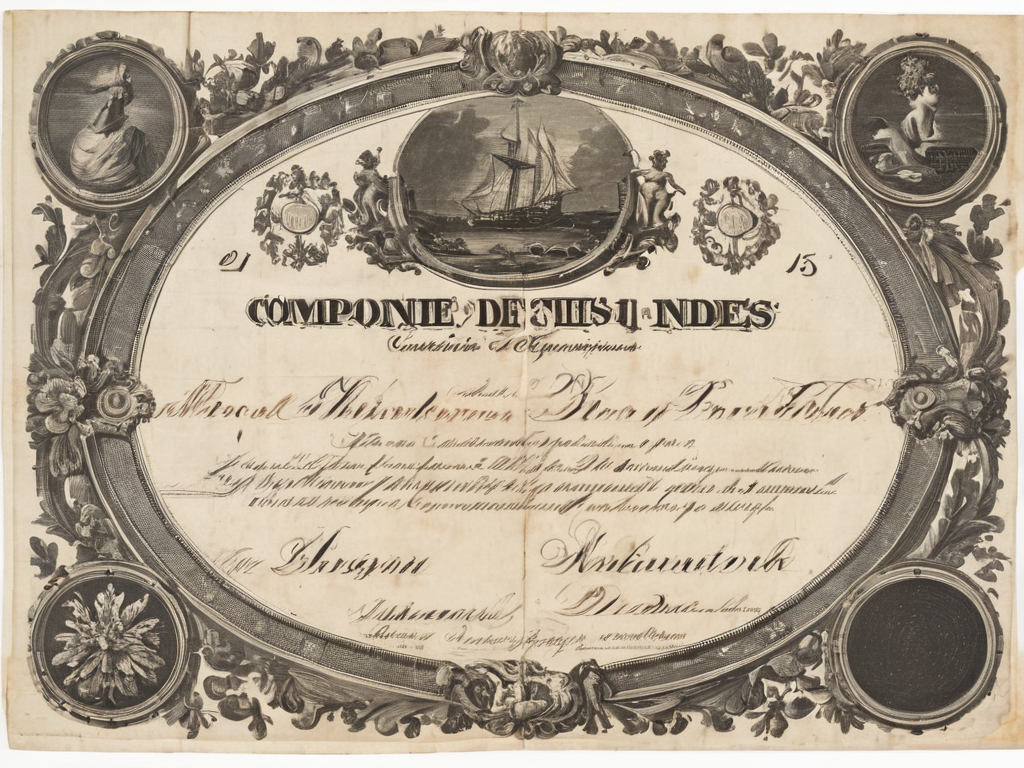
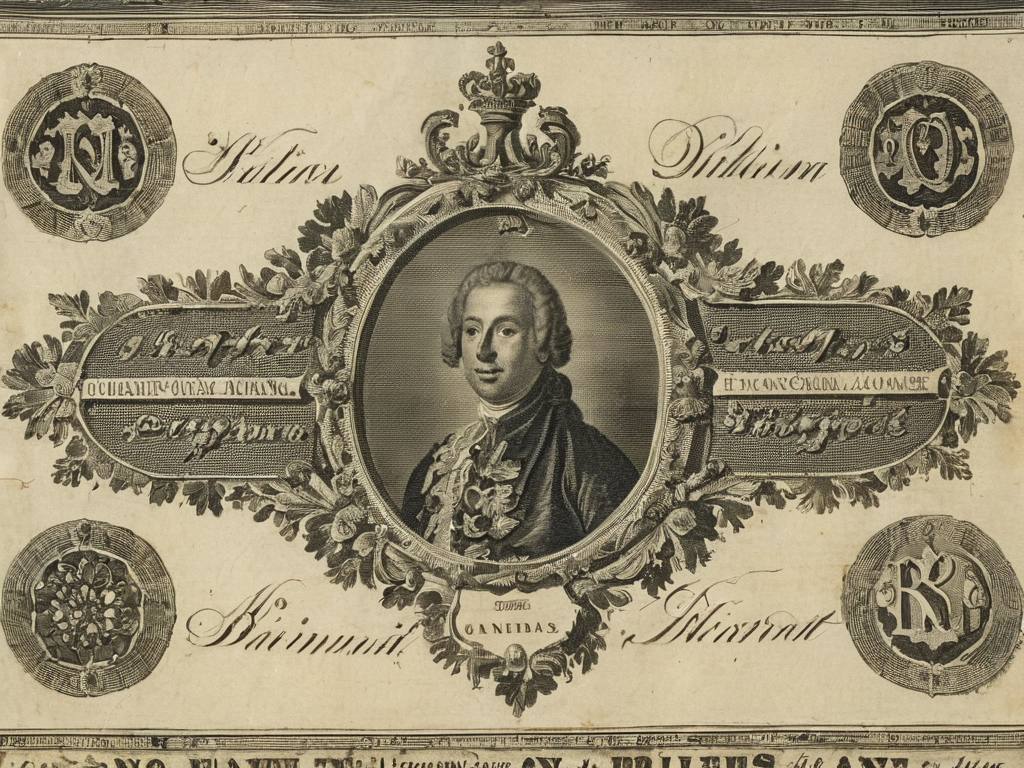
Gear two: swap dead debt for live hope. His Mississippi Company — which swallowed, one by one, France's trading companies, its tobacco monopoly, its mint, its tax collection, until this one company was more or less the commerce of France — sold shares in the glorious future of Louisiana, payable in the King's discounted IOUs. Holders of doubted paper traded it for a piece of tomorrow; the state got its debts consolidated cheap; every ledger in France looked instantly healthier — and not one bushel of tobacco had been grown. The national debt was not paid. It was costumed — dressed as shares and sent to the ball.
Gear three: the loop. The costume only works while the shares rise. So when they wobbled, Law did the thing no market had ever seen: he had the bank decree a floor, standing ready to turn any share into freshly printed notes, on demand, at a price fixed near the top. Say it plainly. The man selling the stock also printed the currency it was priced in, and used the press to be the buyer of last resort of his own shares.
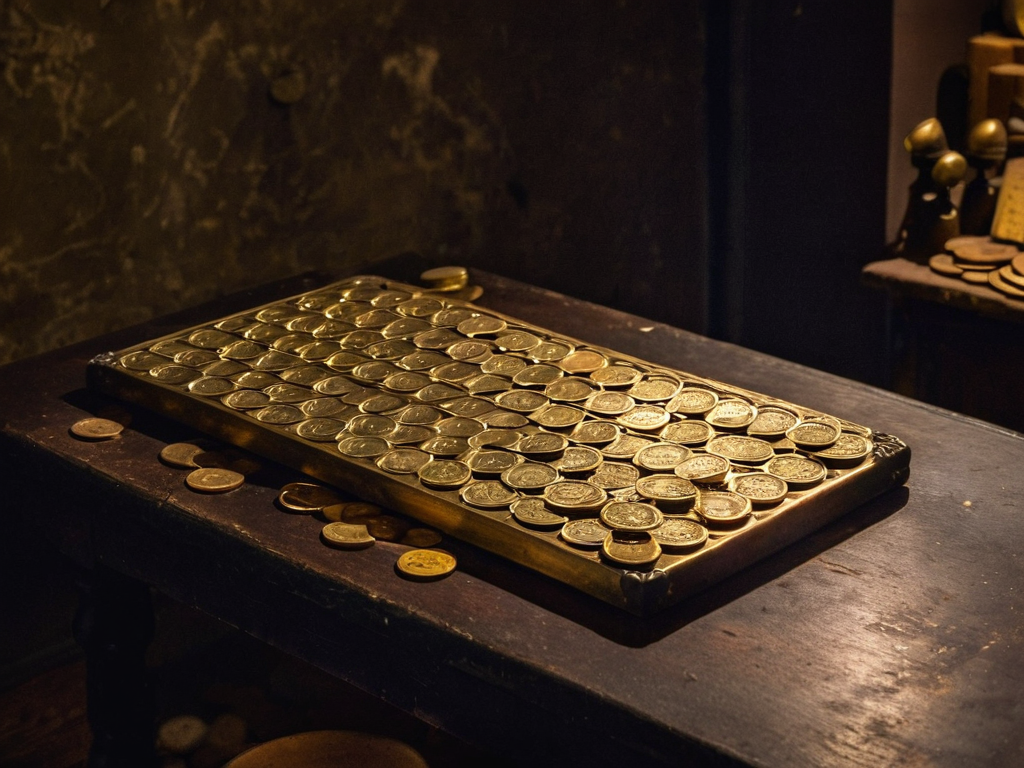
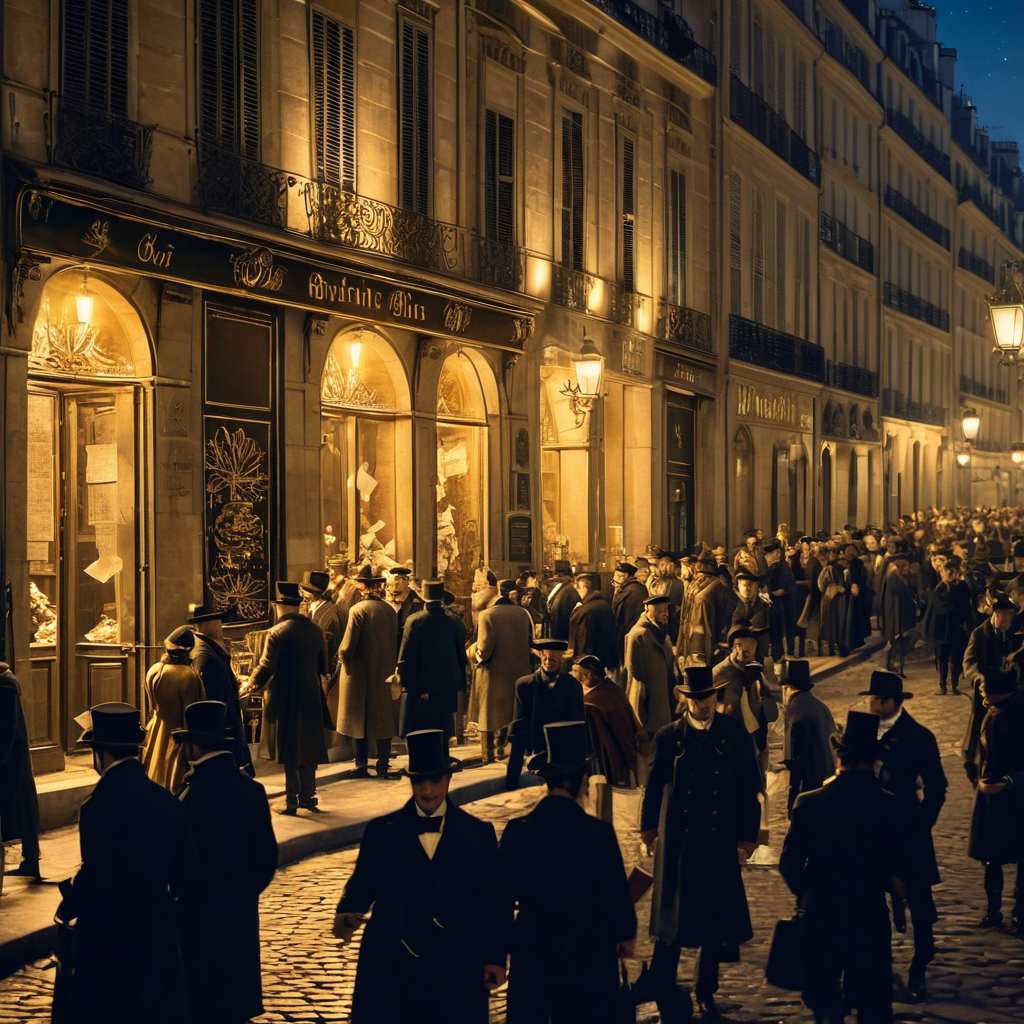
For one delirious year it worked. The shares rose twentyfold; a Paris alley became the financial centre of the world, packed so tight that people died in the crush — died buying — and the French language ran out of words for the newly rich and had to mint one: millionnaire. Every time you hear that word, you are quoting this bubble. And under the floor, the press ran, because gear three demanded it, and the notes poured into the streets, and bread cost more, then everything cost more, and Paris celebrated its paper riches in a currency quietly rotting in its pocket. When Law himself tried to walk the machine back — an edict easing the notes down by stages, an architect lowering his tower gently — he learned that the tower's only material was confidence, and confidence does not come down by stages. It evaporated in a day. By summer, crowds were being crushed to death at the bank's doors trying to turn paper back into anything real — same street, same crowd, buying at the start of the year and dying to sell at the end of it. By autumn the notes were stripped of value by the same authority that had conjured it. In December Law fled France in disguise, his fortune confiscated, carrying — the legend says, and it is legend — little more than one good diamond. He ended where gamblers end: Venice, playing small stakes where he had once moved nations, and died there poor in 1729. France was so burned that the very word banque stayed poisonous for eighty years. A whole language flinching at a word: that is the crater this seat stands in.
One more fact, and it is the one that seats him at this table instead of in its dungeon: he kept his own fortune in the machine to the end. No simple thief does that. The scheme's author was its truest believer — and that, not the printing, is the deepest thing this chair has to teach.
The Spell
Every other master at this table hands you a spell to cast. This one hands you a spell to recognise, because it will be cast at you, and the caster will usually believe it.
A price is a fraction, and the bottom of a fraction can rot. Every seat before this one taught you about the top of a price — what a promise is worth, what the crowd's weather does to it. Paris teaches the bottom: the unit the price is counted in. A trader on that alley who was up twentyfold was rich in livres — a unit being manufactured, that very year, by the very man whose asset he held. Everything he owned lied to him in the same voice, and nobody holding livres could see the crash coming in livres. The only man in this story who leaves it wealthy was an Irish banker who looked at the machine, reasoned that the floor forced the printing and the printing had to break the money, and made the one honest trade left in the system: he stopped betting on anything priced in livres and bet against the livre itself, moving his wealth into claims no French press could touch. Everyone else measured their fortunes in a unit one man could manufacture. He measured in units nobody in France could print.
So the spell of seat nine is a question, and you ask it of every green number that ever glows at you: counted in what? And behind it, three recognitions, one per gear. When the seller of a thing also controls the unit it is measured in, you are not watching a price. When a debt is dressed as a share — when what you are offered is someone's obligation in a costume of someone's future — ask what was owed before the tailoring. And when anyone promises you a floor — a price not permitted to fall — remember that a price you are not allowed to disagree with is not a price at all. It is a decree wearing one, and decrees do not tell you what the thing is worth; they tell you what someone needs you to believe it is worth, which is a different number with a countdown attached.
And the last recognition, the one that wants your hand on your purse: the most dangerous man in any market is not the one who fools you. It is the one who has fooled himself, and prints. Sincerity is not solvency. The brilliant believer sells harder than any cynic, because nothing in his voice is lying.

The Honest Ledger
This seat is a warning, and even warnings must be weighed honestly, so here is what the ledger holds against it — and for it.
Measured: there is no safe size for a losing book. This is the one truth from my lab that this seat carries, and it needs no numbers, because it is a theorem the lab has confirmed every way it knows how. No cleverness of sizing rescues a system that loses on average; scaling it up only scales the ending. Law's whole kingdom-sized machine was that theorem staged with a country. His book was losing from the first debt-for-story swap — Louisiana was swamp and mosquitoes, the earnings were never coming in time — and every note he printed to defend the floor was a size-up on a losing position. The gambler who had spent twenty years taking the side of the odds finally sat down, as the state, on the wrong side of them — and doubled, and doubled, and doubled. Sizing up did not save his trade. It only made the ending national instead of personal.
The warning does not require a printing press. You will never run a country's money, so it would be easy to file this seat under history and sleep well. Do not. You have felt the small version in your own hands: the urge to defend a bad position with more money, to build a floor under your own mistake, to keep a thing's price where you need it by buying more of it. Paris is what that urge does when nothing stops it. Nothing about it changes with size except who pays.
The lens is not a signal. Counted in what? will show you when a machine is eating itself. It will not tell you the day. The Irish banker's honest trade was reasoned early and stood for a long, lonely season while the alley screamed and every fortune around him doubled; recognising the rot bought him the right side, not the timetable. This seat arms your scepticism. It times nothing, and anyone who tells you denominators come with dates is selling costumes.
And the man was half right, which is the trap. Paper money won. Managed currencies, debt made liquid, a nation's credit put to work — his intuitions run the machinery of your century, tended now by institutions built specifically to keep any one believer's hand off the press. If Law had been merely a fraud, this seat would be simple. He was a genuine visionary whose vision needed exactly one thing he refused it: a limit he did not control. Brilliance without a bounded downside is just a larger bet. The first master at this table knew his worst case to the coin before he began; the ninth knew no worst case at all, because he owned the machinery that defined it — he had built a trade he was not allowed to lose, and so lost everything, and the distance between those two chairs is the whole width of the craft.
Labels, as always: the duel's cause is unrecorded; the flight with a single diamond is legend and named as such; the crowd scenes and the crush deaths are documented; the word millionnaire is verifiably this bubble's coinage; his death, poor, in Venice, is ledger-fact. The charming stories of the alley — the fortunes made renting rooms, and stranger things — belong to the Paris chapter, with their labels on.
For Your Grimoire
- Ask of every number that flatters you: counted in what? A price is a
- When the seller of the thing also mints the unit it is priced in, you
- A promised floor is a decree wearing a price — and a price you are not
- Debt in costume is still debt. Ask what was owed before the tailoring.
- There is no safe size for a losing book. Defending a bad position with
- Sincerity is not solvency. The most dangerous man in the market fooled
fraction, and the bottom can rot.
are not watching a price anymore. You are watching theater with numbers in it.
allowed to disagree with has stopped meaning anything, on the alley or in your own head.
more money changes nothing about the ending except who pays.
himself first — and the most dangerous version of him is the one in your own chair.