The Efficiency Ratio
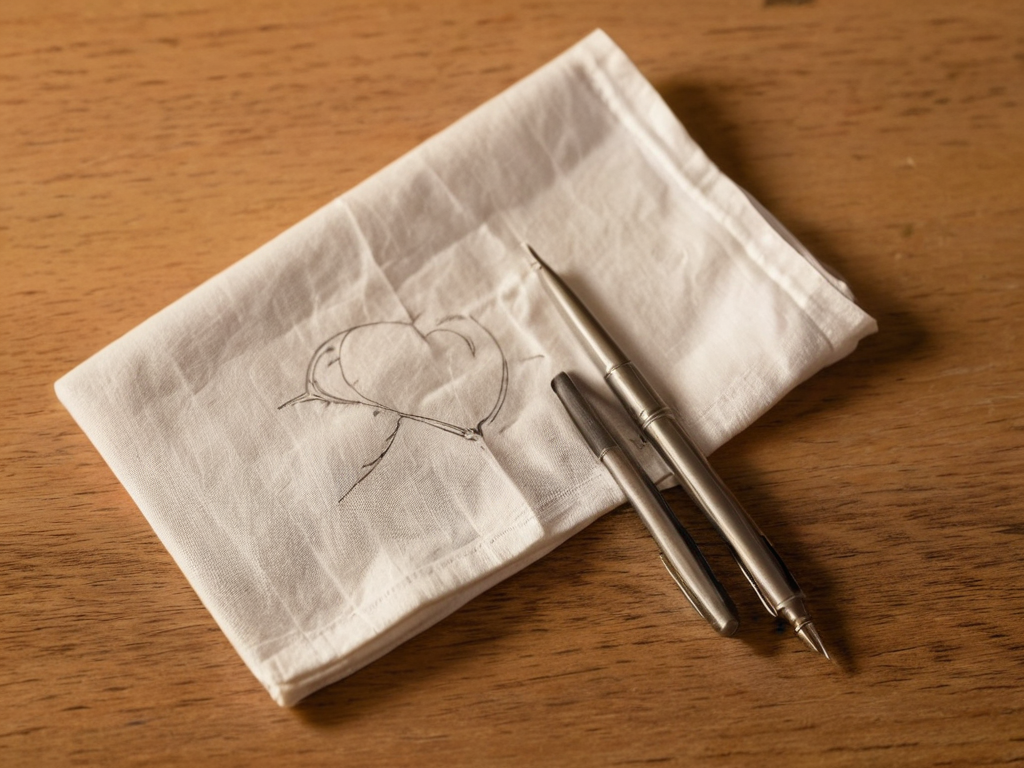
The Round Table. The last chair before the author's own. The wizard does not pull this one back right away — he stands behind it holding a paper napkin, folded once, like a relic.
---
The Seat
Thirty seats are filled, and I have saved the smallest spell for the last master — the one you can carry out of this hall on a napkin. That is not an insult to the man. It is the whole point of him, and if you hold still through this page, you will watch it become the point of the entire table.
Let me tell you how I found him, because the finding is half the lesson. The last leg of my journey ended in the decade just before my own, in rooms that had stopped being markets at all: no ticker, no ribbon of paper, no shouting — only chalkboards, and machines humming through the night, keeping every price ever printed. Understand what that hum meant. For twenty-six centuries a price existed for one moment — called out, acted on, gone. This was the first era that could keep them all, and so the first era that could ask not what is the price? but what does price DO? Show me every quiet Tuesday for thirty years. Show me every storm, laid side by side. I built a scrying pool in my own century and called it magic; these rooms are where that magic was born.
The rooms at the end of that corridor were loud with genius. One held a wall of mathematics behind a locked door. Another held one enormous opinion and a man watching it without blinking. And then, at the very end, a room so small and so quiet that I nearly walked past it — which is the whole story of this seat, told in advance. A plain desk. A screen of green glass with a single curve glowing on it. A chalkboard, mostly bare, with one short line of arithmetic written in the corner, in the hand of a man who saw no reason to make a fuss about it.
When I met him there he was only "a man named Kaufman" at that plain desk, because the visit's records carried no story. The seat deserves the story, so I went and checked the public record, and I hand it to you with that label — checked, not legend.
Perry Kaufman was born in New York in 1943, took a degree in mathematics, and began his working life as what the newspapers of his day happily called a rocket scientist. He worked on navigation for Project Gemini — guidance later carried into the Apollo missions — and on control systems for the orbiting observatory that came before the great space telescope. Hold that image longer than feels polite, because everything else at this seat grows out of it: a young mathematician computing paths for machines that were absolutely not allowed to get lost, in an age when a wrong number did not lose money — it lost the machine. There is no arguing with the sky. A man in that trade does not get to average down, or hold on out of conviction, or explain to the falling debris that his reasoning was sound. He computes, he checks, he files the numbers where the next crew can check them — and he learns to feel about an unverified figure the way this book has been teaching you to feel about an unverified legend. He has said, near enough, that after that work the markets looked quite manageable — the one line of his I will let stand as this seat's joke, because rockets gave him what most traders buy far too expensively: a healthy respect for what happens when you are wrong.
The markets caught him at the start of the 1970s, and mark the season. It was the exact hour the craft's humming cabinets were waking — the era whose whole discovery was that a machine can cast any spell you can write down exactly, and only those. Most who arrived in that season used the new machines to build spells. Kaufman used them the way his first trade had trained him: to run the checks. He became one of the first people alive to make a machine hold a trading rule and test it — to take a promise down off the wall and ask it, alone and under oath, are you real?
In 1978 he set down the encyclopedia of the craft — Trading Systems and Methods, the book working system-builders still keep within arm's reach — and he has revised and re-argued it across five decades and six editions, still writing into his eighties. Sit with how strange that is at this table. His was an era in which lesser men sold secret systems in sealed envelopes, and most masters in this hall guarded an edge the way dragons guard the older kind of hoard. This one spent fifty years publishing the tests, corrections and all, the way a rocket man files his numbers: openly, so the next launch can check them. Every new edition is a man saying, over his own signature, here is where the last one was wrong — and I ask you to notice that this may be the rarest act recorded anywhere in this book.
But he does not take his chair for the encyclopedia. He takes seat thirty-one for one small thing from one book — 1995, Smarter Trading — a single line of arithmetic short enough to fit in the corner of any chalkboard in the last hall. And to tell you why so small a thing closes so large a table, I must confess what I was actually doing all those years on the road.
At every seat of this journey I asked the master to show me his spell, and every master obliged — channels and boxes, springs and wards, twenty-six centuries of treasure pressed into my pack. But underneath the question I asked out loud there was always a second question, the quiet one: which tool, and when? When do I cast your spell, master — and when do I leave it wrapped? The great ones smiled and said the market would teach me. The honest ones admitted they did not know. The rest never noticed the question at all, because each believed his own weather was the only weather there is.
The man at the plain desk is the one master of the whole journey who took that question seriously — and he answered it the way the best teachers always answer, with a question handed back. Not what should I do? His line of chalk asks the question underneath that one, the question you have been asking since the first page without knowing its name: what kind of day is it? Is this market actually going somewhere, or only moving? Ask the day what it is, before you ask any spell to work in it. That is the whole gift. There is no envelope to unseal and no secret to guard — he hands you a question small enough to fold once and carry out of this hall in your pocket, and the folding is literal: the working of it, one finger on a paper napkin, is the spell of this seat, and it waits for you just below.
One thing more, and then I will call him to the chair. When I finally carried his question home to my own tower, I found — and the full confession is entered in this seat's ledger, where confessions belong — that the answer had been sitting on my own desk for years, employed as decoration. The smallest spell of the journey, and I had walked past it in my own workshop exactly as I nearly walked past his room. Remember that when you go shopping for treasure: the smallest rooms are where the endings live.
Sit down, Perry. Lend me your napkin.
The Spell
Every spell at this table so far answers the question what should I do? This one answers the question underneath it, the one you were asking all along: what kind of day is it?
Here is the whole spell. Take any stretch of chart — say, one morning. Measure how far price actually traveled from where it started to where it ended. Call that the journey. Then measure how far it walked to get there — every up-wiggle and every down-wiggle, all counted as distance, none of them canceling. Call that the walking. Now divide:
The journey, divided by the walking.
That is the Efficiency Ratio, and you can do it on this napkin. Suppose price starts the morning at 100 and ends at 110. The journey is 10. Now add up the wiggles it took to get there: up 6, back 2, up 8, back 4, up 10, back 8, up 4 — forty points of walking. Ten divided by forty is one quarter. That morning scores 0.25.
The number can only live between zero and one, and both ends have a face. If price marched ten points and walked ten points, the score is one: a clean wind, a market actually going somewhere. If price walked all morning and ended where it began, the journey is zero, the score is zero: chop, a storm that goes nowhere. Between them lies every trading day of your life, now wearing a number.
Tonight, do this to one day of your own chart with a finger and a napkin. Rough is fine — count the big swings, skip the crumbs. You are not trading it; that is the vow. You are learning to read weather off a napkin, and your eye already half-knows the answer before you divide. This is the lesson this whole table kept refusing me: not one master in thirty could tell me when to use their treasure. This number is the when.
Kaufman's own first use of it was an average with the good sense to look out the window before leaving the house. You know the ordinary kind — a line that follows price at a fixed, stubborn pace, same pace in a gale, same pace in a dead calm. His bends: when the Efficiency Ratio runs high it hurries, hugging the move; when the ratio falls toward zero it digs in and refuses to be dragged around by noise. An average that trusts the market exactly as much as the market is currently earning.
And mark the fine print, because it is the deepest law at this seat: the line bends with efficiency — with whether price is going anywhere — and not with how hard the wind is howling. There are averages that bend to the howling, and my pool has weighed them, and they do worse than never bending at all. Bending toward the wrong thing is worse than standing still. Ask the storm are we going anywhere? — never merely is it loud?
The Honest Ledger
Here this seat parts company with the two before it, and the parting is the finale of the whole table. Seat twenty-nine's record is documented, not audited. Seat thirty's is reported, not audited. Seat thirty-one needs no such label at all, because there is no record to take on faith — there is a number anyone can check. You could check it. I did. These receipts are my own laboratory's, and the laboratory ships with this book so you can pull the same levers.
First receipt: the router itself. I put the question which spell should I cast? to the two great weather-glasses. The storm gauge — which measures only how hard it is blowing — split my thirteen tools thirteen to nothing: every tool agreed, all wanting quiet. Useful, but it can only ever say whether to trade. Kaufman's ratio split the same field nine to four: under it, different spells genuinely want different weather — snap-back spells beg for chop, pursuit spells beg for clean wind. Only a glass that splits the field can choose between tools. That is the difference between a gate and a router, and only one number on this table routes.
Second receipt, the one the whole book stands on: cast always, in all weather, my entire spellbook earns four thousandths of a risked coin per hand — nothing. Routed by this napkin number, snap-back only in chop, pursuit only in wind, the same spells kept about a quarter of a risked coin per hand: +0.234R across five thousand hands the rules had never seen, with odds of roughly one in three hundred that luck did it (p = 0.0033).
Third receipt: his bending average against the rigid kind, five trials, five wins for the one that bends — and the false cousin that bends with the howling instead lost to standing still. Bend with efficiency, not with loudness.
One confession closes the ledger, because this table runs on them. I did not learn this number from his book. I found it already sitting in my own chart tool, where it had lived for years, wired to nothing grander than the coloring of my candles — the most valuable number of my whole journey, employed as decoration. The magic was on my desk the entire time, waiting to be taken seriously. Check your own desk. That is how this book keeps ending, and it is not an accident.
For Your Grimoire
Before choosing any spell, divide the journey by the walking — and whatever bends, let it bend with efficiency, never with the noise.