The Counting
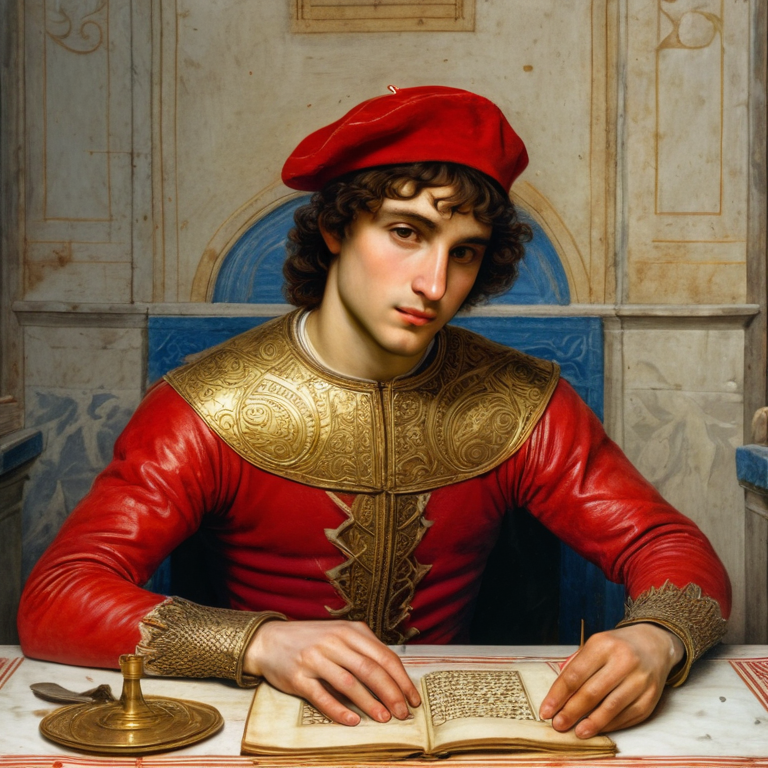
The guest at seat two arrives with ink-stained fingers and an apologetic look, because he knows what you think he brought to the table, and he didn't. You want to talk to him about a spiral. He wants to talk to you about a ledger. One of you is right about which of those is magic, and after eight hundred years it is finally time to settle which — because this seat is the only one at the table where the famous spell and the true spell are different spells entirely.
---
The Seat
Nobody at this table calls him Fibonacci, because nobody in his lifetime did. That name would not exist for six hundred years — a historian coined it long after everyone in this story was dust, from filius Bonacci, son of the Bonacci family. In Pisa, in the year that matters, he is Leonardo, and some in that town call him Bigollo — the traveller. Both names are true, and the travelling is the whole story.
His father, Guglielmo, was a customs official, posted across the water in Bugia on the North African coast to look after the interests of Pisan merchants trading there. And he sent for his boy. Leonardo tells it himself, in the one scrap of autobiography he ever wrote: his father brought him to the customs house as a youth and had him taught calculation — taught, that is, by Arab masters, which meant taught the nine strange figures the Arab world had carried west from India, and the little circle that travels with them. The zero. Then the young man did the thing that made him: he kept going. Egypt, Syria, Greece, Sicily, Provence — port after port, watching how every trading people on that sea kept its accounts, and everywhere finding that the men who reckoned with the nine figures ran rings around the men who reckoned any other way.
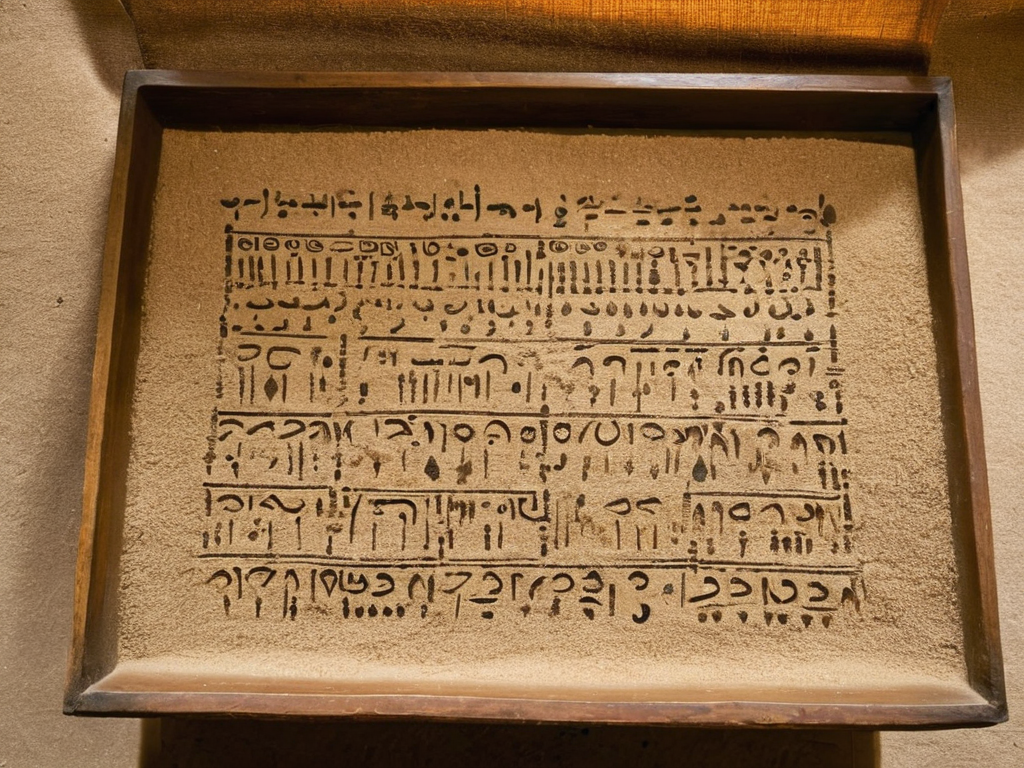
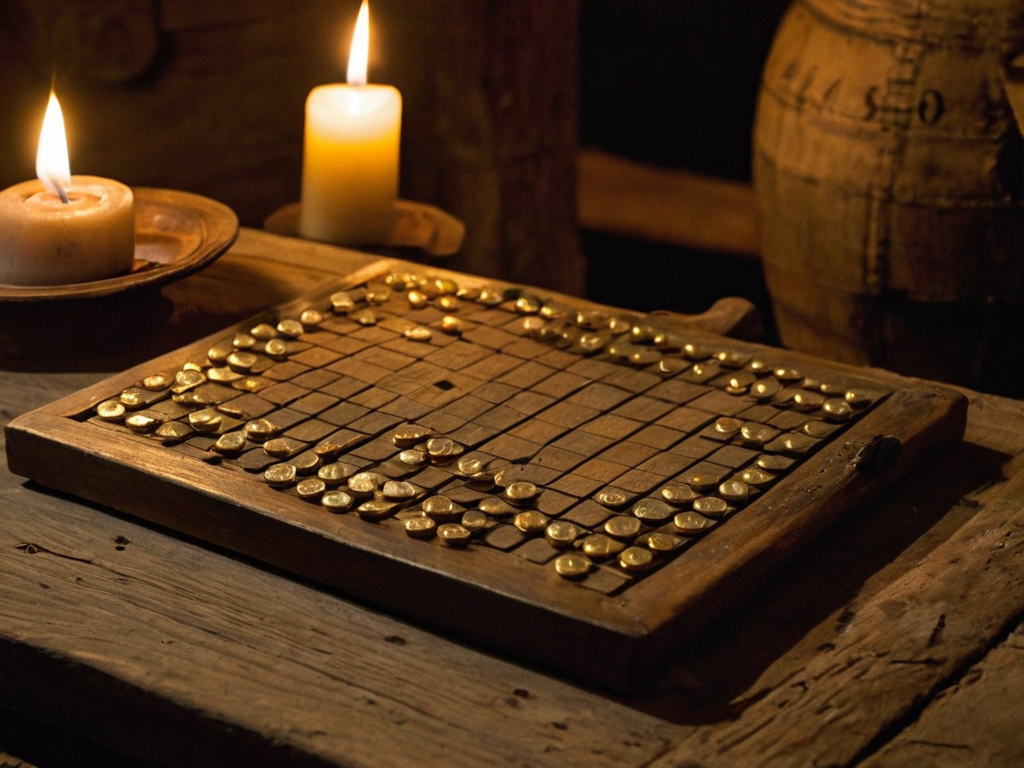
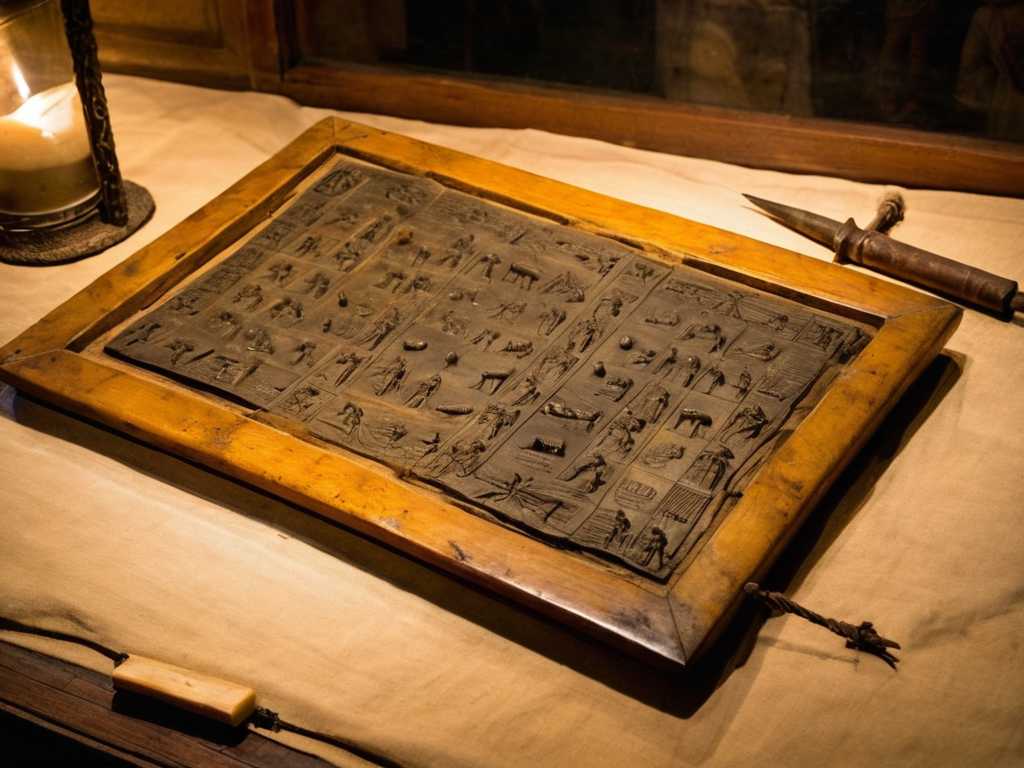
To feel why that mattered, you must feel the world he came home to. Pisa in 1202 was one of the great merchant republics of the Mediterranean, rich the honest, dangerous way — by sailing — her cathedral and her famously tilting bell tower all paid for out of cargo holds. And this whole glittering world of galleys and spice ran on arithmetic that could barely think. Roman numerals were wonderful for carving above doorways and nearly useless for calculating; every real sum lived on a counting board, in the flying fingers of a trained specialist, counters sliding along chalked lines — and the moment the answer came, the board was swept clean. The board forgets. A merchant of that age could feel whether a voyage went well. What he could not easily do was know — cleanly, checkably, in a form he could look at twice. His profit reached him as an announcement from another man's mouth, and he trusted it or he didn't.
You have felt trades go well and been wrong about it. So had every trader on that sea. The cure arrived in 1202, when Leonardo came home and finished the book.
It is called Liber Abaci, and history plays a joke on us by shelving it as mathematics, because it is mostly nothing of the kind. Open it and what do you find, chapter after chapter? The price of goods. Converting one port's coin into another's. Splitting profits among partners of unequal shares. Barter, interest, the mixing of coinage metals. It is a merchant's manual — the most practical book on that entire sea, written by a customs official's son who had seen every market on it and knew exactly which pain he was curing. Near the front he states its whole magic in one sentence, one of the few of his we can still quote: with the nine Indian figures, and the sign 0, any number whatsoever may be written.
Written. Not built out of counters and swept away — written down, where it stays. A page remembers how it reached its answer. A merchant could at last put his finger on the exchange rate and follow his own money, line by line, from Bugia to his purse — could look at his profit instead of being told it. The new figures were not even faster at first; the old board men won sprints for another century, and said so loudly all the way down. The new figures were clearer. An answer that remembers can be checked, and only what can be checked can be honestly trusted. The board forgets; the page remembers. It is the oldest spell in this book.
And Pisa knew what it had, by the end. In 1240 the republic granted the aging Leonardo a yearly salary from the public purse, for his counsel on the city's accounts. Not for the rabbits. For the bookkeeping. His own city, which understood money better than any city of its age, looked at everything he had ever done and paid him for the counting.
Ah yes — the rabbits. One small puzzle about breeding pairs, tucked into a late chapter between problems about coin and cloth, one exercise among hundreds, very likely borrowed from the same Eastern schools that gave him the numerals. He solves it and moves on to the next sums; he has pepper to price. Out of that finger-stretch, centuries later, the world would pull a sequence, and out of the sequence a ratio, and hang both around this man's neck along with a name he never heard. What the world did with them, the ledger below will say. He is innocent of all of it.
The Spell
The spell of seat two is the one his own city paid him for, and it fits in five words: whoever counts more clearly, sees first.
The merchant reading his own profit off Leonardo's page could see what his rivals could only feel — and the gap between seeing and feeling is where every edge that has ever existed lives. It still is. Every candle on your chart is his arithmetic. Every honest record of what a strategy actually did — rather than what it felt like it did — is a page that remembers, sitting in judgment over a board that forgets. Your memory of your own trading is the counting board: quick, confident, and swept clean nightly by hope. The written record is the page. When the two disagree, the page is right, and knowing that in your bones is worth more than any indicator ever drawn.
So the rite of this seat is the plainest in the book, and the most disobeyed. Keep the ledger. Every trade, written: what you risked, what you got, what the weather was. Not in your head — your head is a board. On the page, where it stays, where a colder eye than tonight's can check it. A trader with a true written record owns something almost none of his rivals own, exactly as a Pisan merchant with the nine figures once did.
And the ratio? Here is the honest frame, and it is this seat's second gift: a ratio is a question, not an answer. Numbers put to the market honestly — does this level hold more often than chance? count and see — are Leonardo's inheritance working as he worked it. Numbers worshipped — a level trusted because the number is old, or golden, or found in sunflowers — are the counting board's oldest enemy wearing the page's clothes: an answer taken on faith from another man's mouth. The same nine figures serve both masters. The spell is knowing which one you are serving, and the test is simple: an answer you would not allow to be checked is not counting. It is chanting.

The Honest Ledger
This seat's ledger must carry a verdict, because the most famous thing bearing this man's name stood trial in my lab, and this book does not sell what it has seen die.
Fibonacci retracements. The golden ratio, 0.618, drawn on every chart on the internet, defended in ten thousand videos with spirals and seashells. We put it to the question the way Leonardo would have — by counting — and we did it twice, because the first time was not fair to it. Pooled across 12,420 retracements, and then again properly split apart — by market, by swing size, by conditions — across 95 separate cells, so no honest hiding place remained.
Measured: the 0.618 level does less than the plain 0.700 line sitting next to it. Not less than hoped — less than an arbitrary neighbour with no mysticism attached whatsoever. And 0.500, which is not a Fibonacci ratio at all, merely half, does exactly as much as 0.618 does. Which is to say: nothing in particular. The sacred number, counted fairly, is one rung on an ordinary ladder, and not the best rung.
What the ratio's faithful were feeling is real — the ratio just wasn't it. Pullbacks matter; how deep a retreat runs before the wind resumes is genuine information, and the market's weather is genuine weather. The believers were standing near something true and measuring it with a seashell. The depth is real. The magic number on the depth is decoration.
None of this touches Leonardo. He never drew a retracement, never blessed a ratio, never saw a chart. The sequence was one exercise; the golden lore was hung on him centuries later by people who preferred chanting to counting — the exact people his book was written against. The kindest thing ever done for this man's memory was our trial itself, because the trial is his method: write it down, split it apart, check it. His arithmetic executed his legend, and he would have held the pen.
And the blade cuts the holder. Honest counting will do to your favourite tool what it did to the golden ratio, and you must let it. A ledger kept only to admire is a counting board with delusions. The page remembers your losers too — that is not its cruelty but its entire point, and the seats further along this table will show you what the written record of losses builds when you let it.
Labels, briefly, for the biography: the customs house, the travels, the 1202 book, the one quotable sentence, the 1240 salary — all standard record, anchored by his own autobiographical scrap. The famous painting of the board-man racing the pen-man is an allegory drawn three centuries later; the war it depicts was real and lasted a hundred years. And the man's very name is an honest label in miniature: "Fibonacci" is an 1838 invention. Even what we call him is a retracement drawn by later hands.
For Your Grimoire
- The board forgets; the page remembers. Keep the written ledger — your
- Whoever counts more clearly, sees first. Clear counting is not the
- A ratio is a question, not an answer. Put numbers to the market;
- Counted fairly, 0.618 did less than the plain line beside it, and
- An answer you would not allow to be checked is not counting — it is
- Let the blade cut your own tools. A ledger that only flatters you is
memory of your own trading is the board.
boring part of the magic; it is the magic.
never accept a number on faith because it is old, golden, or grows in sunflowers.
half did just as much. The depth of a pullback is real information; the sacred number on it is decoration.
chanting.
a counting board with delusions.