The Concentration
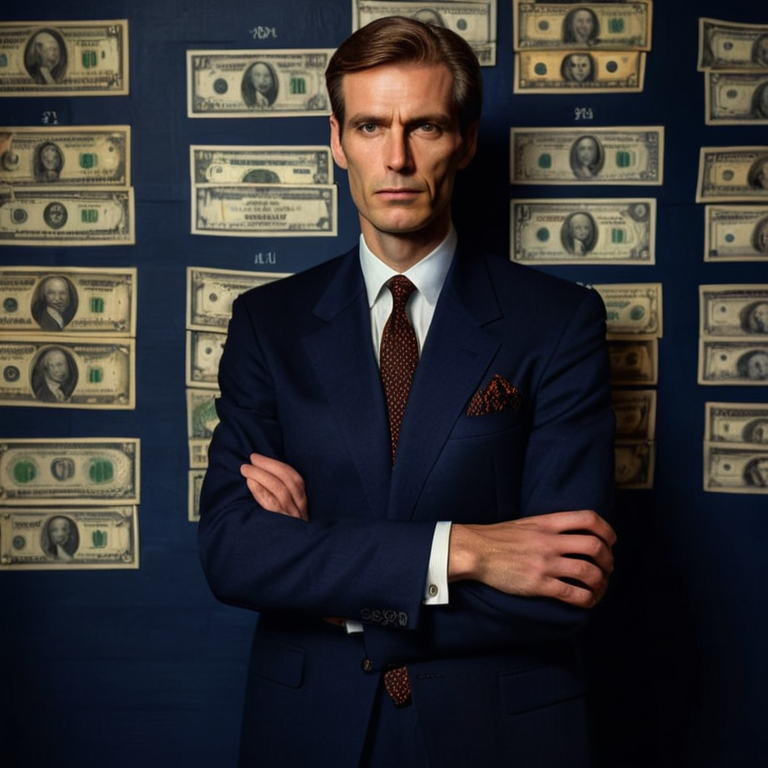
The Round Table again. The wizard pulls back the next chair — plain, sturdy, built for one occupant and one idea at a time — and looks around the table before speaking.
---
The Seat
Look at the seat we just filled, and now look at this one, because they are opposites in every particular, and the table needed both or it needed neither.
Seat twenty-nine holds ten thousand tiny wagers and a locked door. Seat thirty holds one enormous opinion and a man from Pittsburgh — not Wall Street, Pittsburgh — watching it without blinking. And before this page is out you will see why the table could not close without him: he is the master whose greatest gift is a story he tells against himself.
Stanley Druckenmiller dropped out of a doctorate, was running a bank's equity research department at twenty-five, and founded his own fund at twenty-eight with about nine hundred thousand dollars — reported; the records are private, like nearly everything at this seat, and I will keep saying so. Hold on to the Pittsburgh in this story. He did not come up through the temples of the craft; he came up in a Pittsburgh bank, under an old mentor who drilled two commandments into him that became the spine of everything after.
The first: never invest in the present. Do not buy the world you can see — everyone can see it, and everything visible is already in the price. Picture the world eighteen months out and price THAT. Every trader at this table fought for today's price; his teacher taught him that today is the one thing you can never buy cheaply, because it is the one thing already fully sold. Eighteen months is far enough out that the crowd has not priced it, and near enough that a person can still reason about it — the mentor's window, and the spine of everything after.
The second: earnings do not move the great tide of the market; liquidity does. Watch the central banks, the great reservoirs. When they release the water, every boat in the harbor rises — the well-sailed and the badly sailed alike — and when they hold it back, every boat drops. Watch the tide-keepers, not the sailors. Of everything taught at this seat, that commandment is the one a stranger can most nearly carry home.
In 1988 the most famous speculator alive hired him to run his fund, and September 1992 brought the trade every profile leads with. The idea was the younger man's, and he had argued it for months, in the patient way of a man trained to live eighteen months in the future: the British pound was pinned to a rate it could not defend, and the German central bank would not save it. The tide was going out from under a boat that was chained to the dock.
Here is the funny beat of this seat, verified in its teller's own retellings, so enjoy it with that label on: Druckenmiller walked into the owner's office to propose betting big — and got scolded. Not for recklessness. For timidity. Run the owner's logic for yourself, because it is a whole education in one scolding: if the idea was right and the downside was structurally tiny — the pound was pinned; it could barely rise against him — then a merely large bet was a waste of a great idea. Great ideas are rare. Capped downsides are rarer. When the two arrive together, size is not courage; size is arithmetic. "Go for the jugular." The short grew to roughly ten billion dollars, larger than the fund itself, and on the sixteenth of September, 1992, Britain tore out of the currency mechanism and the fund made about a billion dollars in a day. The owner got the nickname. The thesis had been Druckenmiller's all along. Fame, I have noticed, reads the nameplate on the door before it reads the ledger.
And mark what the famous day did not change: the method. The bet was enormous because the downside was small — never because the man was brave. Bravery is what the trade looks like from the outside. From the inside, in his own retellings, it was two commandments and a capped loss, arithmetic wearing a hero's cloak.
If the story ended there, this would be a seat about winning enormously, and this table keeps no chair for that. Winning enormously is a weather event. What earns the chair is what he did with the other story — the one that cost three billion dollars — because he gave it away, and it is worth more than the billion he kept.
January 2000. The mania of that age — internet stocks priced like prophecy — and this man looked at it and called the top. Correctly. He sold everything and told his famous partner the valuations were insane. Do not miss this part, because the whole seat turns on it: the analysis was right. The best risk manager of his generation did the work, got the answer, and acted on it cleanly. And then he sat in cash — correct, and idle — while two young traders he himself had hired kept printing money in the mania's final melt, day after day, and it ate at him. Envy appears in no book of method ever written, and it moves more money than the central banks. He told himself, three separate times in one week, not to do it. Hear that clearly: the discipline was awake, on duty, and saying no — three times. Then he bought six billion dollars of the very stocks he had correctly fled — by his own dramatic compression, "within an hour" of the top, in March 2000 — and lost three billion dollars in six weeks.
Sit with what this seat is actually showing you, because it is the most useful exhibit in the hall. This was not ignorance — he knew. It was not bad analysis — the analysis was right. It was not even weak discipline as the word is usually meant — the discipline argued with him for a week. Knowing did not save him. Knowing is never a defense. The seat beside his keeps its rules in chalk, outside the man, sized so that no fire can ever force a human hand — and that vow held. His rules lived inside the man, where rules stay warm and negotiable, and one bad week found the door. Only structure is a defense — the fence built in the calm, out of reach of the week when your knowing fails. Because it will fail. It failed the best there was.
And face the exit with me, because this book always does. He walked out of that spring, rebuilt, and finished his thirty years with the record whole. Then he did the rarest thing of all: he told the story. He stood in front of a room of strangers and called himself an emotional basketcase — his own words — so that people he would never meet could build the fence he didn't have that week. Most masters leave a method. A few leave a warning. Almost none volunteer to be the warning, warmly, by name, at the height of their reputation. That telling is the true billion-dollar day of this seat — and unlike the first one, every coin of it was given to strangers.
Take your seat, Stan. The table wants your spell — and then it wants that second story again, slowly, in your own words, because it is worth more than the first.

The Spell
The spell of this seat is concentration: when you truly see it, bet big and watch the basket without blinking; when you don't see it, hold your capital and wait, and call the waiting a position too.
Every profile hangs one sentence on him — put all your eggs in one basket, and watch the basket very carefully — and this table's ledger has checked the sentence, because it checks everything. It is older than he is by a century. Andrew Carnegie said it to students in 1885, in Druckenmiller's own hometown of Pittsburgh, of all places on earth; Mark Twain printed the famous version in 1894; Druckenmiller himself credits Twain. What is genuinely his is not the sentence. It is the demonstration, thirty years long — and we will label the demonstration honestly in the ledger below.
Later writers have pressed his talks into what they call his four pillars — their packaging, not a list he ever numbered, so take the frame with that label and the substance at full weight:
Never invest in the present. The world eighteen months from now is the only one you can still buy cheaply. Today's world is already priced.
Liquidity moves markets. Not headlines, not earnings — the tide itself. Watch what the central banks are doing, not what the newspapers are feeling. Of everything at this seat, this clause is the nearest to a rule a machine could hold.
Concentrate when you have conviction. The eggs. The basket. The unblinking watch. Diversifying into a dozen half-ideas, in his telling, is how nearly everybody guarantees themselves mediocrity.
Preserve capital, then hit home runs. He pressed hard only when the downside was structurally capped — the pound could barely rise — and when he was wrong he was OUT, immediately, ego not consulted. The Friday before the great crash of 1987 he flipped from short to heavily long: wrong within the hour, by his own telling. He reversed inside Monday's chaos and finished even that month ahead — his account, given in a famous interview, labeled so.
Now the centerpiece. Because in January 2000 this man looked at the mania of that age — internet stocks priced like prophecy — and called the top. Correctly. He sold everything and told his famous partner the valuations were insane. Do not miss this part: the analysis was right. Then he sat in cash while two young traders he himself had hired kept printing money in the mania's final melt, day after day, and it ate at him. He told himself, three separate times in one week, not to do it. Then he bought six billion dollars of the very stocks he had correctly fled — by his own dramatic compression, "within an hour" of the top, in March 2000 — and lost three billion dollars in six weeks.
Asked years later what he learned, he gave the answer that belongs on every wall in this castle, exactly as the transcript carries it: "I didn't learn anything. I already knew that I wasn't supposed to do that... I was just an emotional basketcase and couldn't help myself."
The best risk manager of his generation. Analysis fully in hand. Top already correctly called. And knowing did not save him — envy of two kids' winnings shouted down thirty years of his own rules in one week. Set this seat beside the last one and the lesson closes like a lock: Simons's vow held because the rules lived outside the man, in chalk, sized so no fire could force his hand. Druckenmiller's rules lived inside the man, and one bad week found the door. Knowing is never a defense. Only structure is.
And face the exit with me, because this book always does. He walked out of that spring, rebuilt, and finished his thirty years with the record whole. And then he did the rarest thing: he told the story. He stood in front of a room and called himself an emotional basketcase so that strangers — so that you — could build the fence he didn't have that week. That is a master's gift as surely as any formula at this table.
The Honest Ledger
The record, with its label riding in front: from 1981 to 2010 his fund is REPORTED to have averaged around 30 percent a year with never a single down year — through 1987, through 2000, through 2008. The fund was private; its accountings went to its investors; no public audit exists, and none is coming. What can be said honestly is this: the claim stood for three decades in front of rivals who would have loved to laugh, and not one of them ever did. Reported, never publicly audited, unusually well-corroborated by thirty years of nobody laughing.
He closed the fund in 2010, saying that defending that record with other people's money had grown too heavy — which is its own kind of honesty, and the table respects it. The method itself cannot follow you home: it is trained judgment, forty years deep, and any "Druckenmiller system" someone sells you is a costume. What follows you home is the structure argument — and the confession that proves you need it.
For Your Grimoire
Bet big only when the downside is capped and you truly see it — and build the fence before the week your knowing fails, because it will.