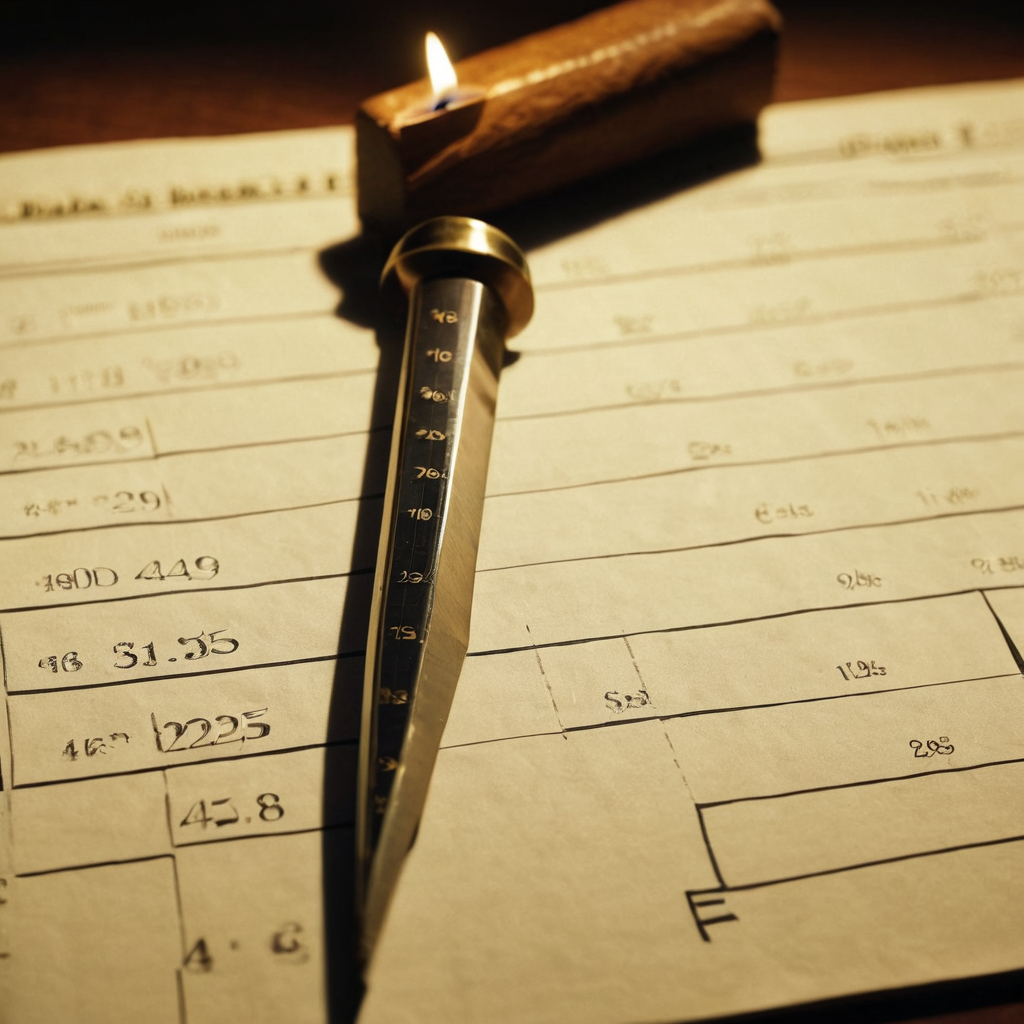
Richard Donchian, 1960 · The Man with the Ruler
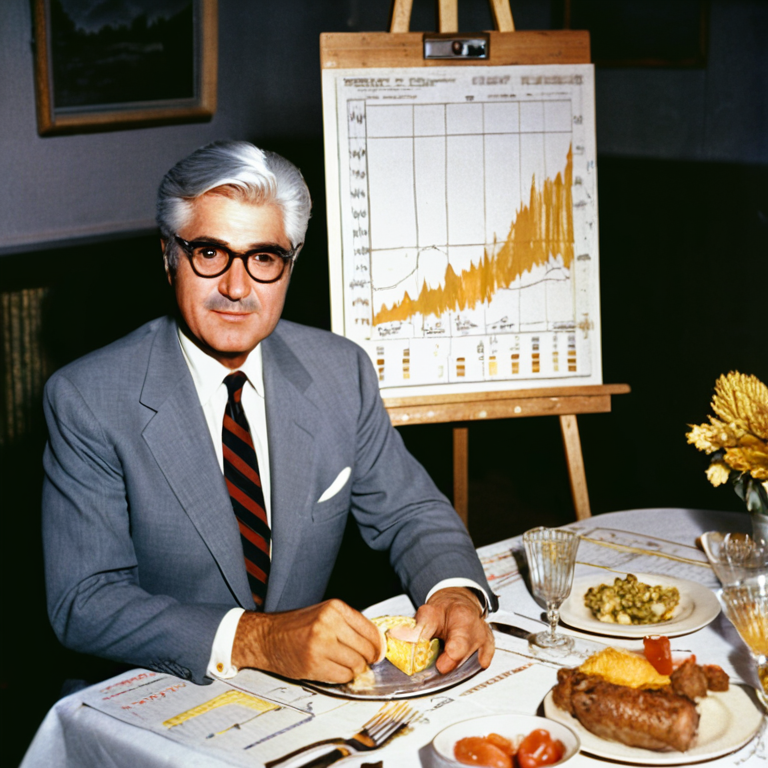
He waited longer for his magic to pay than any master at this table — and when it finally paid, it paid everyone who came after him too.
---
The Seat
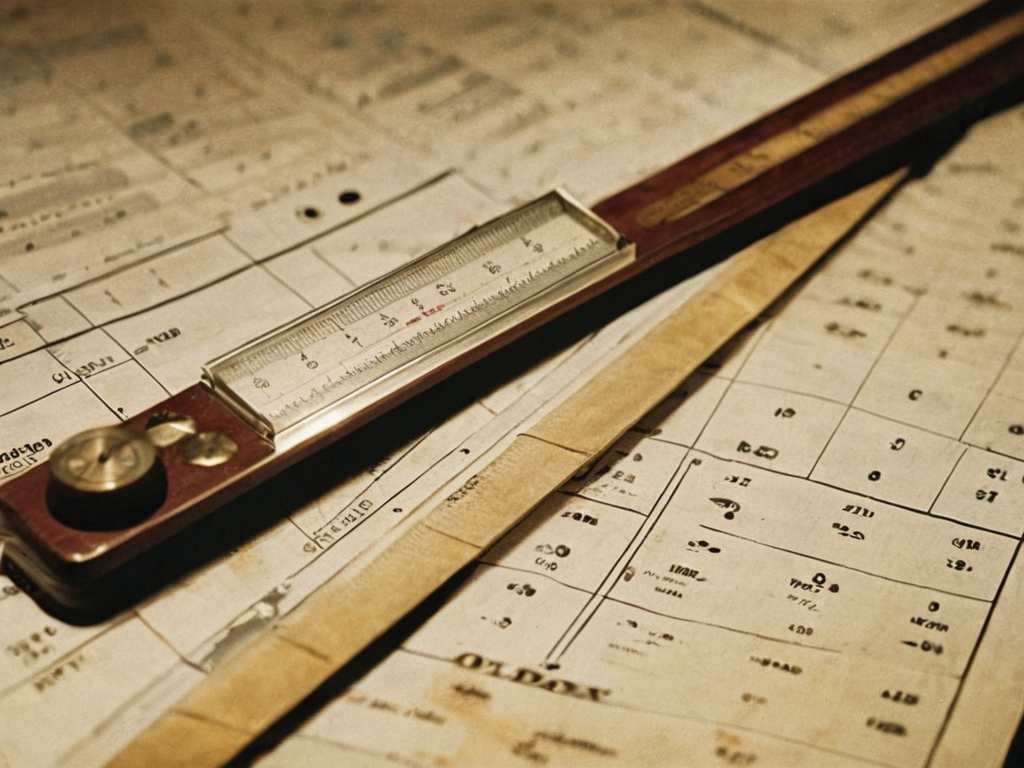
Come and stand by the twenty-second chair. The man in it wears a tie at a round table full of robes, and on the wood in front of him lies the humblest instrument in the whole hall: a straightedge. You met him briefly in the Machine Age, working a ruler along charts of wheat and copper in a quiet office. Now let me introduce him properly, because the quiet office hides the most patient story I collected in thirty-three seats.
Richard Donchian. Born in Hartford, Connecticut, in 1905, to Armenian parents who had crossed an ocean and built an oriental rug business — and the plan, as plans go, was that Richard would sell rugs. He went to Yale instead, took a degree in economics in 1928, and came home to the rug company one year before 1929 taught the whole world its lesson at once. The crash took its tuition from him personally. And in the wreckage he made the decision that seats him here: reading everything written about markets, he concluded that the only people who made sense to him were the ones who studied price itself — the chart readers. Not the tipsters. Not the storytellers. The measurers.
So he measured. Beside the rug business, then beside a brokerage desk, then beside a war — he landed with the invasion of Sicily and finished as a statistics officer in the Pentagon, a man whose wartime job, fittingly, was counting. And in 1949 he did a thing generally credited as a first in all the world: he opened Futures, Inc., a fund where strangers could pool their money to follow written rules on the commodity markets. Not a famous hand's feelings. Rules, on paper, applied the same way every day. The whole modern craft of managed money descends from that one quiet idea.
Now the part of his story I carry closest, and I will hand it to you exactly as the record hands it to me. A great magazine visited him near the end of his career and printed the arc: after forty-two years of pencils and graph paper, he was managing about two hundred thousand dollars. Forty-two years. Then, when he was about sixty-six, the method began to click — and a decade later he was managing many millions, with the craft's young masters lining up to learn from him. That telling is Forbes magazine's, from 1982, and I pass it to you labeled, as this book labels everything: reported, not audited by me.
But sit with the shape of it, because the shape is the gift. Here is a man who was right early — the principles on his graph paper in the 1930s are the same principles the turtles ran in the 1980s and my own silver box weighed in 2026 — and the world took four decades to build the plumbing his rightness needed. He did not spend those decades losing. He spent them writing, teaching, publishing his letters, handing his method to anyone who asked — and when the harvest finally came, he kept working it to the end of his life, which came in 1993, in his eighty-eighth year, with his ruler still in reach. They call him the father of trend following. Every trend spell in this grimoire is one of his grandchildren.
The academy will tell you magic favors the young. The twenty-second seat says otherwise: the craft's most patient master was an overnight success at sixty-six.
The Spell
His spell is so simple that I must warn you in advance: you will think I am leaving something out. I am not. The leaving-out IS the spell.
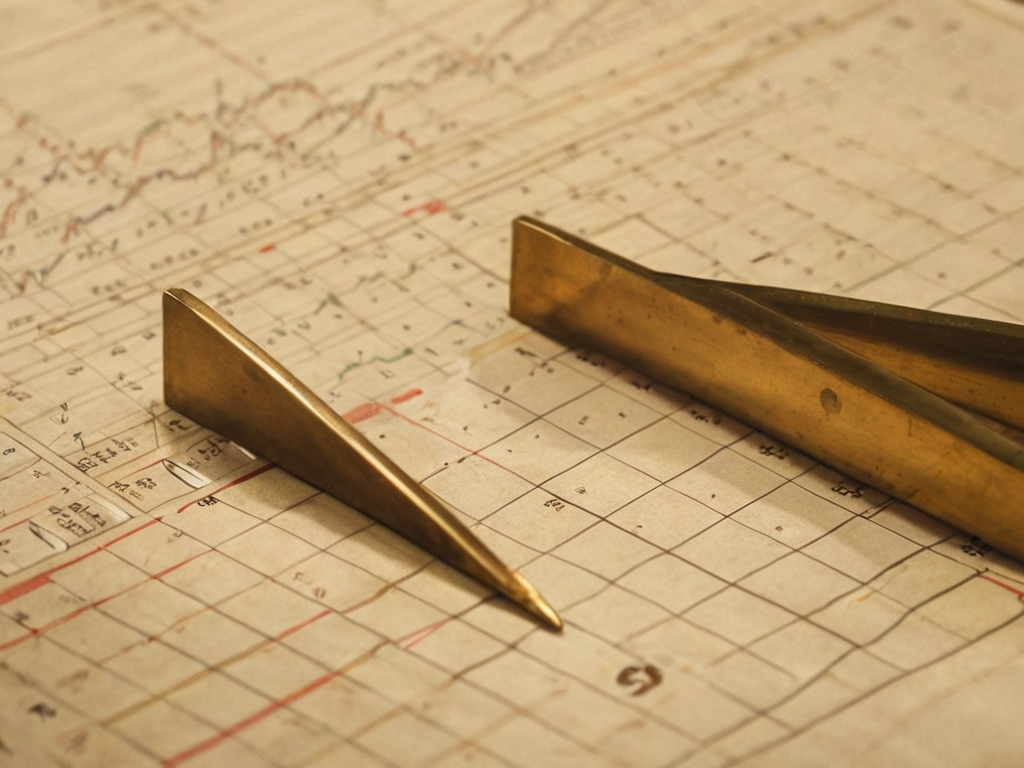
Take any chart. Choose a stretch of recent days to look back across — his famous weekly version looked back four weeks. Now find the highest high anywhere in that stretch, and lay a line there: the ceiling. Find the lowest low, and lay the floor. Price lives between them like a tide between two marks — until the day it does not.
When price climbs above the highest high of the lookback, buy. That is the entry, whole and entire. No dip-buying, no story, no feeling about the company. A market doing the one thing strong markets do — making new ground — is the only invitation this spell accepts.
When price breaks the floor, you are out. The broken floor is the only seller. In Donchian's own hands the four-week version was even stricter: a new four-week low did not merely close the position, it turned him around entirely, because a floor breaking is the same event as a ceiling breaking, seen from below.
That is the channel. Two lines that price draws for itself, and a standing order at the roof. His desk carried a second instrument, and I name it because a young engineer is going to feed it to a machine one seat from now: two moving averages, one tracing the last five days, one the last twenty — when the quick line crosses above the slow, the wind is up. Same school, softer bell.
Notice what is missing from every rule I just gave you: him. No judgment, no eye, no thirty years of feel. The whole method can be spoken in two sentences to a clerk — and anything a clerk can follow without asking questions, we learned in the Machine Age, a machine can follow too. That is not a weakness of the spell. It is the discovery of his lifetime: a rule written so exactly that it works with nobody inside it is the only kind of rule that can ever be honestly tested. Mumble and you can always forgive yourself. Speak exactly, and the record speaks back.
You have traced this channel before — in the Machine Age I set your finger on the highest high of twenty candles. Keep that rite. The vow stands: trace it, watch it, trade nothing yet.
The Honest Ledger
Every seat gets its ledger opened, and his opens cleanly.
First, the man. His late fortune is reported — the Forbes telling, plus the figures that circulate among his admirers — and no audit of it sits in my pack. I hand you the arc labeled, and the arc survives its label: nobody disputes that the method was written, published, taught for free in his letters, and mechanical enough to hand to a fund in 1949.
Second, the spell — because unlike most legends at this table, his rule walked into my scrying pool and was weighed. The channel's direct descendant — the turtles' system, which is Donchian's channel with sizing attached — ran through years of replayed weather in my own lab, every cast paying its honest toll. Here is what the pool showed, and it is the cleanest lesson in the entire grimoire.
In clean, trending wind, the rule won 40.1 of every hundred casts — and a trend-follower's wins run long, which is where its whole living comes from. In chop, the same rule — same words, same ceiling, same floor — won 15.0 of a hundred.
Same spell. One weather blesses it, the other eats it. The rule was never the problem, and the rule was never the whole answer: the weather decides, and choosing the weather is the one spell Donchian never wrote. He gave the craft its first honest trend spell; the router that decides when to cast it waited another generation. That is not a mark against him. A man who hands you a true instrument and forty years of patience has done his seat's work.
For Your Grimoire
Buy the break of the highest high of your lookback; let the broken floor do all your selling — and read the weather before you cast the spell.