The Market's Bones
The Round Table · Seat 8 · The Dōjima Broker, 1697
This chair holds no famous name at all — and the whole modern world sits in it anyway. Meet the man who carried nothing heavier than paper, and mind the buckets. This market has to be put out by hand, like a fire, every single day.
---
The Seat
Come round the table with me to seat eight, and notice something odd before the guest says a word: no biography hangs on this chair. No fortune, no legend, no name in gold.
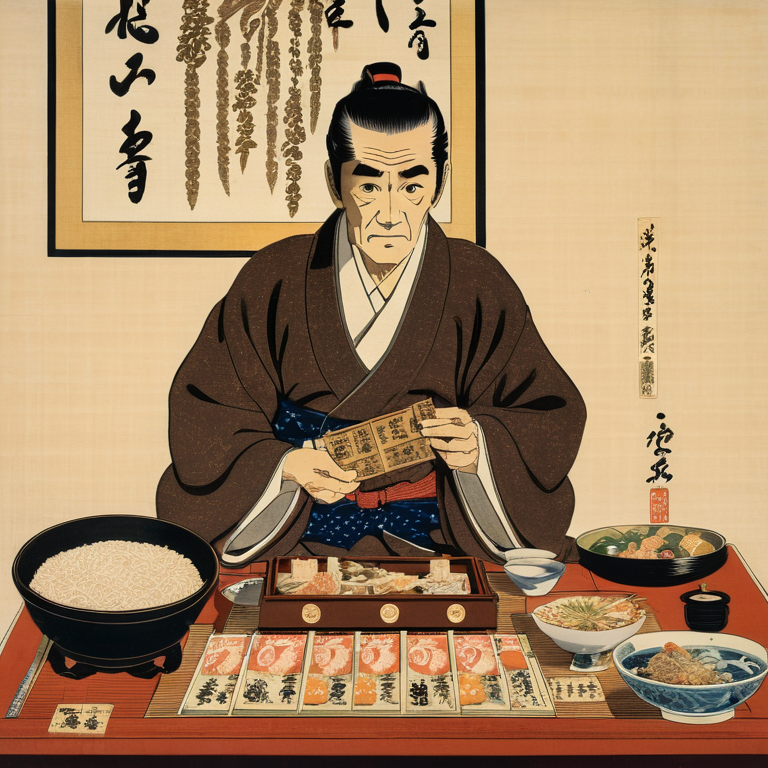
That is on purpose. Like the beginner's chair far around the circle, this seat belongs to an archetype: the broker on the bridge at Dōjima — sharp-eyed, quick-sleeved, standing in the dawn crowd above the brown river in Osaka, and carrying nothing heavier than paper. You stood on that bridge with me. You remember the detail, because I told you it was the whole chapter.
His country runs on rice the way yours runs on money — taxes in rice, salaries in rice, a paycheck you can eat. Every autumn the harvest of a hundred provinces floods into the white warehouses along his river, and the warehouses hand out paper tickets: bring this back whenever you like, collect your bales. And then — quietly, the way water finds a crack — the tickets became the market. By his day the busiest trade on the riverbank is in what the traders call, with perfect honesty, book rice: rice that lives only as writing in ledgers. Every deal the same size — one lot is enough rice to feed a hundred people for a year, and not a grain of it will ever be seen. Counting houses stand in the middle of every bargain so that no man need trust a stranger. The season's promises cancel against each other on paper, and whoever's promise lost pays the difference in silver.
The shogun's government looked at all this and said what your eyebrows are saying — isn't that gambling? — and banned it for years. Then the price of rice collapsed, the samurai found their rice-salaries buying half a living, and in 1730 the shogun blessed the very thing he had been forbidding, hoping eager buyers of paper rice would lift the price of the real thing. The gamblers were legalized to rescue the soldiers. Markets have been getting rulings like that ever since.
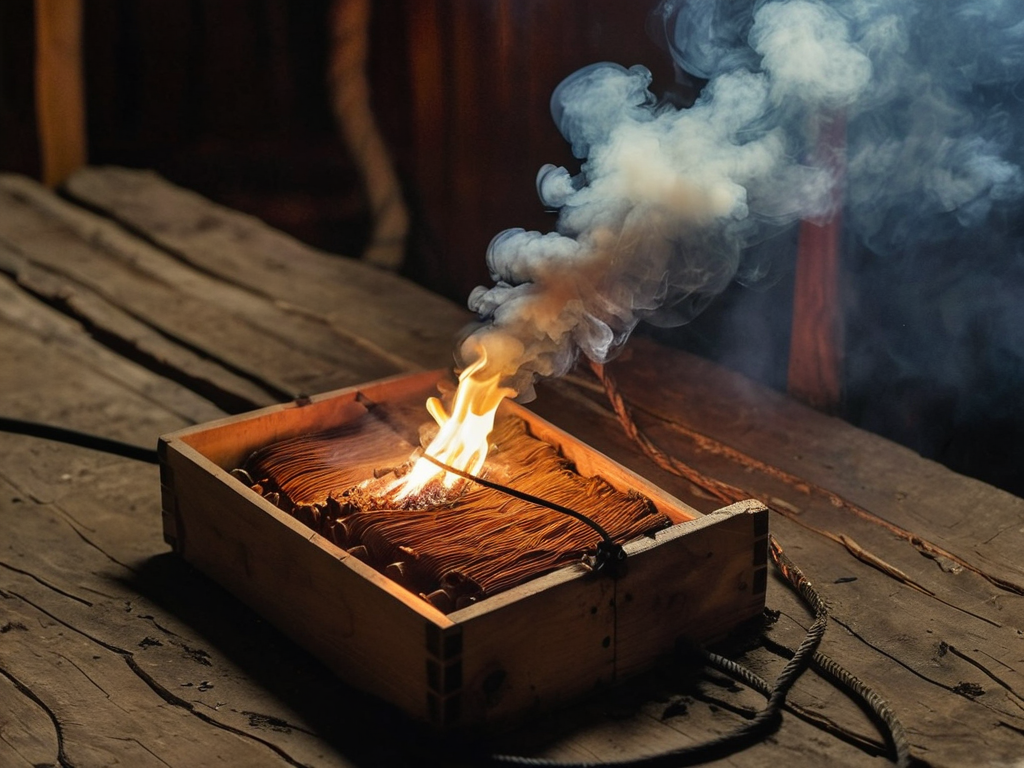
And the daily theater — verified, and my favorite ritual in six centuries of visits. The trading day is a slow fuse burning in a wooden box at the ridgepole. When the fuse dies, trading must stop. It never does — somewhere in that crowd are men who are losing, and the day cannot end badly if the day refuses to end. So the exchange keeps a crew of watermen, grim as firemen, and they end the session by throwing buckets of water over the crowd until the shouting drowns. The fuse's price opens tomorrow; the bucket's price settles today. The records even complain of ruined mornings when men charged the close on horseback to stall the reckoning. You have felt that exact wish at 3:59 in the afternoon. Now you know how old it is.
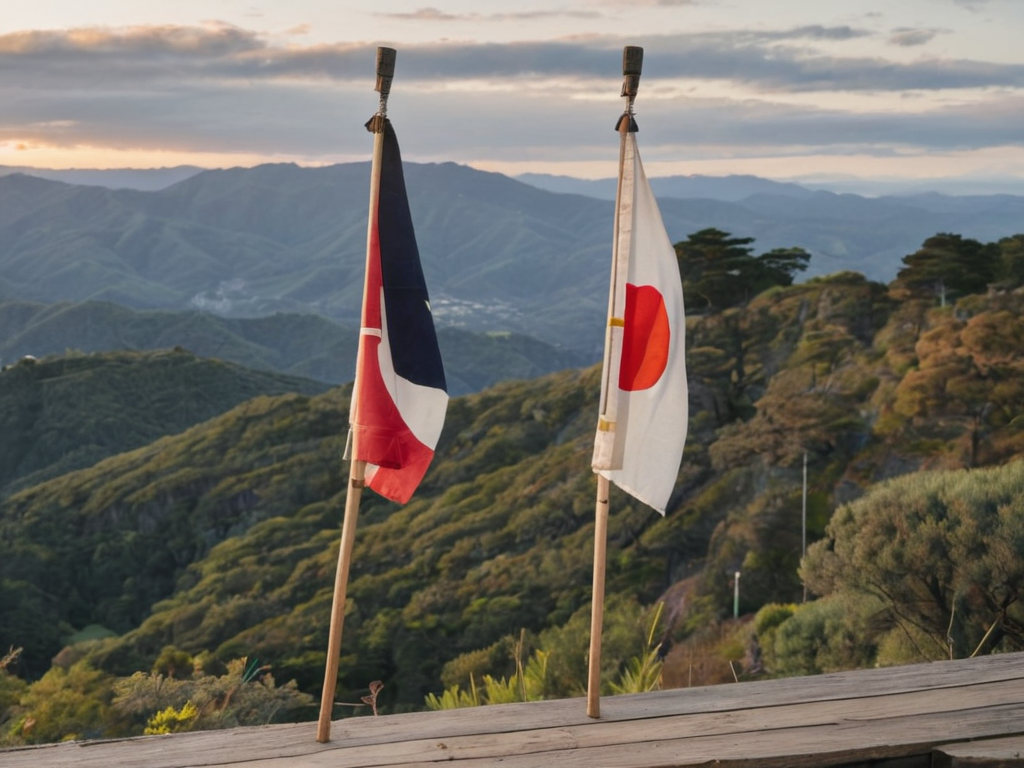
One more wonder: the moment the bucket falls, the price leaves the city — waved from hilltop to hilltop by men with flags half the size of doors, read by telescope, relayed on. Modern re-enactors have run the old routes with flags and clocks: the closing price reaches Kyoto in about four minutes. The authorities banned the flag-men over and over. The flag-men kept waving. Fast information has never once in history stayed illegal.
The Spell
So what does the man with the paper sleeves hand me? Not an entry. Not an exit. Every other master at this table teaches a way to win; the broker teaches the thing underneath all of them.
He hands me the board the game is played on. The market's bones.
Look at what his riverbank invented, piece by piece, because every piece is on your screen right now wearing modern clothes.
Standard promises. At Dōjima every contract is the same size, so any promise cancels any other. That is why a trade can be exited at all — you do not hunt down the man you bought from; you sell an identical promise to anyone, and the paper cancels. Your screen calls this a contract. The bones are unchanged.
A house in the middle. The counting houses stand between every buyer and seller, so nobody needs to trust a stranger — you trust the structure instead. Your screen calls this clearing. It is why you can trade at noon against someone you will never meet and sleep that night.
Settling in money. Nobody delivers the rice; losers pay the difference in silver. Your screen calls this cash settlement. It is why a promise about rice — or about an index, which is even less edible — can be a market at all.
An official close. The bucket falls, and one price is written into the books, and everyone's ledger squares against it. There is a settlement price on your screen tonight with river water still dripping off it.
Now the teaching, taught like a first spell: the bones are not a way to win — and knowing them is still the first honest edge you will ever hold. Because the board is not free. The house in the middle is paid on every promise; the gap between asking and getting is paid on every cast. The bones define the toll, and the toll is the quietest force in this whole book — my pool found it eating small, quick magic alive while leaving slow magic barely scratched. The broker on the bridge would only nod: the counting houses were paid first at Dōjima too. Whoever wins the day, the middle of the market eats every day. You are not playing against the board. But you are always, always paying it.
So here is tonight's rite, and it is the cheapest one in the book. Look up the skeleton of the thing you actually trade — the contract page every exchange publishes and almost no trader has ever read. Find four bones: how big one contract is; how small the smallest price step is; what that smallest step is worth in real money; and what one round trip costs you in fees. Read them out loud, once. Then do the one sum that turns anatomy into wisdom: how many of those smallest steps must the market move in your favor just to pay the toll? That number is the floor every spell you ever cast must clear before it earns a single coin. Most traders have never met the bones of the animal they ride. After tonight you are not most traders.
The Honest Ledger
Labels on, and this seat's first label is the biggest.
This is a lore seat. Testable: no — and saying so plainly is the point. There is no entry rule here, nothing to send to the gauntlet. The broker's gift is a structure, and you cannot backtest a skeleton. Like the banking houses at seat three, this chair teaches the same hard kindness: if you are not the infrastructure, you are its customer. The bones cannot be owned from where you sit. They can only be known — and almost nobody bothers, which is why knowing them is worth a seat.
Verified: the rice-ticket market on the Dōjima riverbank from 1697; book rice and its standardized lots; the counting houses and cash-settled differences; the ban, and the 1730 blessing that legalized the paper trade to prop the soldiers' salaries; the fuse cord and the watermen's buckets; the two prices — fuse for tomorrow's open, bucket for today's settlement; the horseback charges at the close; the flag telegraph and its repeated, useless bannings.
Labeled as measured re-enactment: the four minutes to Kyoto — modern researchers with flags and clocks on the old routes, not an Edo stopwatch.
Scenery: the crowd sizes, the smells, the broker himself — he is a composite of a documented profession, an invented man among invented men, with no invented facts in his hands.
Measured, in this lab: nothing bears this seat's name — and everything pays its toll. Every trial the scrying pool has ever run charges each cast the honest cost the bones demand, because a verdict that skips the toll is a lie with good posture. The lab's costs column is this broker's signature, written four thousand trials deep.

For Your Grimoire
The bones are not a way to win; they are the board the game is played on — and the board is never free. Learn your market's skeleton, count the steps it takes just to pay the toll, and remember: whoever wins the day, the middle of the market eats every day.