The Poet of the Goblin Treasure
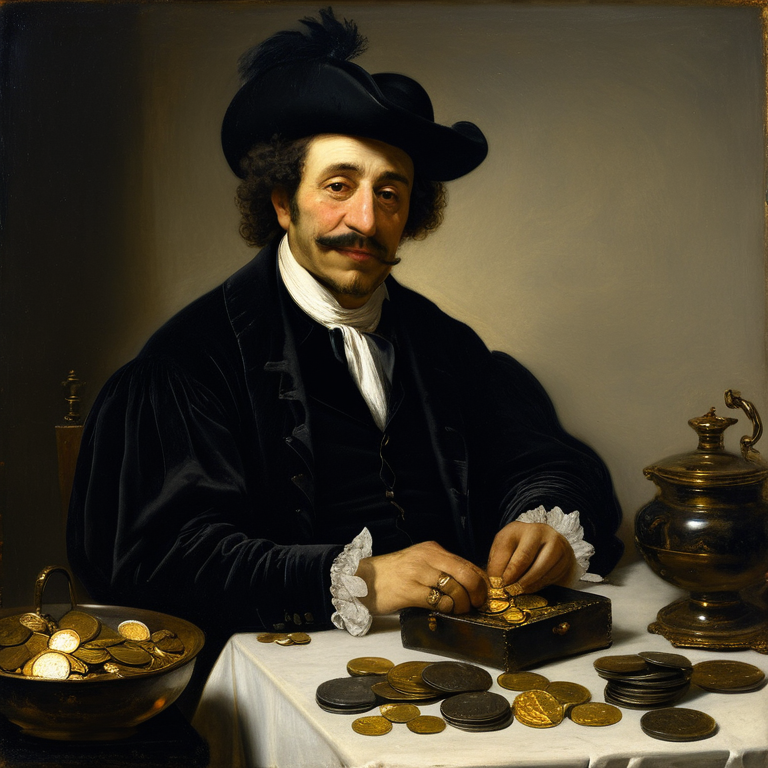
The Round Table · Seat 7 · Joseph de la Vega, 1688
The only guest at this table who came to the market as a poet — and the first human being ever to write a book about a stock exchange. He named it honestly: Confusion of Confusions. Mind your pockets and your certainties.
---
The Seat
Come round the table with me, past the tulip traders — they are still arguing about a flower, and they will be arguing when the candles burn down — to seat seven, where a man sits writing while everyone else is shouting.
Joseph Penso de la Vega. You stood beside him once, in a stone courtyard in Amsterdam with a canal running underneath the trading floor, so you know the outline: a Sephardi Jew whose family fled Spain and the Inquisition for the one improbably tolerant city in Europe; a merchant, a philosopher, and — this is the part that earns the chair — a poet, with a poet's eye for the distance between what people do and what they say they do.
In 1688 he finished the book that seats him here: Confusion de Confusiones, written in Spanish as a conversation — a philosopher, a merchant, and a shareholder arguing about what the exchange is. It is the first book ever written about a stock market, and I want you to savor its title, because it is the most honest title in the history of finance. The first person to look at a stock exchange long enough to write it down looked, and looked, and titled his findings Confusion of Confusions. The market's first book review, and the reviewer gave it: bewildering, would watch again.
The legend says he made and lost his fortune on those stones several times over — and that is a legend, labeled, because the ledgers, as usual, are quieter than the stories. What is certain is that he watched the crowd from inside it, and wrote a portrait no one has improved on: the greed, the dread, the rumor that moves a price a year before any ship's letter can arrive to confirm it.
And then history played the joke this whole table exists to warn you about. De la Vega died in 1692, four years after his book — and the book was forgotten. Not banned. Not burned. Just unread, for two hundred years, while manias in shares and canals and railways rolled through generation after generation with the warning already written, sitting in the dark of a library shelf, until a German scholar dusted it off in 1892.
Nobody hands you the lantern. It sits on the table for two centuries. Somebody has to be the one who picks it up. Tonight, that is you — this chair's whole job is to hand you what the eighteenth and nineteenth centuries never came to collect.
The Spell
First, the metaphor this book runs on, earned fresh for anyone landing on this page: a spell is exact language — spoken precisely it changes the world, mumbled it does nothing, which is also the truest thing anyone will ever tell you about a trading rule. De la Vega left four rules exact enough to carry. I give them in my words, since he is owed his own.
First: never tell anyone to buy or to sell. Guessing right, he says, is closer to sorcery than to skill. Keep your counsel — and be properly suspicious of anyone who does not keep theirs.
Second: take every profit without regret. Good fortune does not hold still while you renegotiate with it.
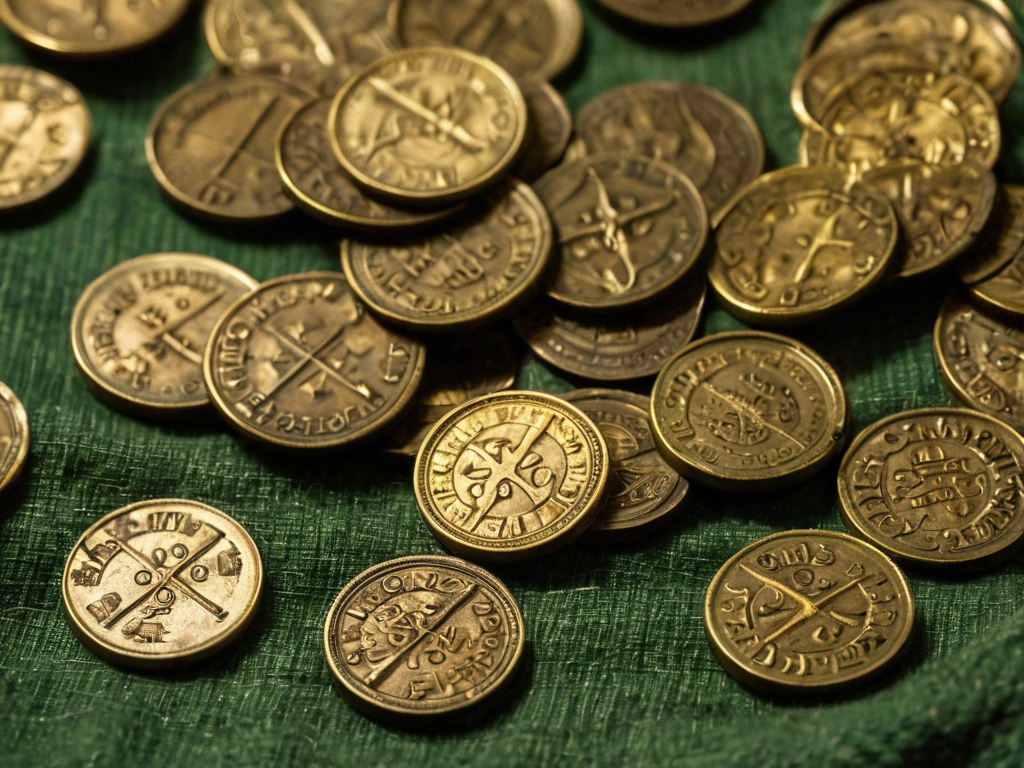
Third — the seat's great spell — profits in this market are goblin treasure. In the old stories, treasure taken from goblins never stays what it was: diamonds at midnight, coal by morning; sometimes dew, and sometimes only tears. Now feel where the enchantment actually sits, because this is the whole lesson. It is not on the money. It is on you, the holder — who cannot tell yet whether you are rich.
Say it in money, because that is where you live. The green number glowing on your open trade tonight — the profit you are letting ride because it might grow — is not money. It is a bet that the crowd's weather holds, renewed silently every hour you hold it. The weaver of Haarlem was wealthy for one whole winter, every promise in his coat marked up week after week — and he never banked a guilder, and in February it turned to coal in his pocket while nothing about the paper changed. Only the crowd changed. And my scrying pool has since watched thousands of market storms end, and learned that the calm after one is not rest — far more often than chance allows, it is the next weather, already loading. Water never rests. The crowd owes your open profit nothing.
Banked money is the only kind the goblins can't touch.
Fourth: whoever would get rich at this game needs both money and patience. Either alone is a slow way to lose.
Now cast the third rule yourself, tonight, as a first spell. Open your platform and find any position showing a profit — or if you have none, remember the last one you had. Say out loud, where the cat can hear you: this is not money yet. Then write down the exact price at which you will make it money. Not a feeling — a number, on paper, before the crowd votes again. You are not required to sell tonight; you are required to know, in writing, where the treasure stops being enchanted. That single written number is the difference between holding a plan and holding a hope.
The Honest Ledger
Labels on, as always at this table.
Verified: the flight from Spain; the book, its year, its dialogue of three arguers; first book ever written about a stock exchange; the four counsels, faithfully paraphrased — no quotation marks, because translations vary and this table does not put words in a poet's mouth; his death in 1692; the two-hundred-year sleep on the shelf and the 1892 rediscovery.
Legend: the fortune made and lost several times over. Even the encyclopedias say supposedly. Too fitting to omit; too unledgered to lean on.
Measured, in this lab — honestly: not yet. His bank-it-fast doctrine is one half of a genuine quarrel that runs the length of this table — at seat twelve sits Ricardo, whose commandment is the opposite: let profits run. Two masters, two centuries, two rules that cannot both be right on the same trade. So the lab has written the duel down as exact rules — take profits early, or at double, or at quadruple the risk — with the verdict rules signed before the trial, and the trial waits its turn on the scrying pool. This seat will not whisper a verdict it does not have; when the pool speaks, the number will live in the lab where numbers live. What the pool has already measured is the weather his rule rides on: the storm that re-ignites, the calm that is only the next storm loading. The goblins, in other words, are real. Whether to pay them early or late is the open case.
What transfers to you tonight, regardless of the verdict: the writing. De la Vega's deepest act was not a trade — it was putting the lantern in ink so it could outlive him, the crowd, and two hundred years of neglect. Your grimoire is the same act at your own scale. An unwritten rule dies with its keeper; a written one waits on the shelf for whoever combs the wreckage. Be your own German scholar. Don't wait two centuries.

For Your Grimoire
An untaken profit is goblin treasure — diamonds at the close, coal by morning, and the enchantment is on the holder, not the coins. Write down the price at which it becomes money. Banked money is the only kind the crowd cannot vote on.