The Lone Wolf
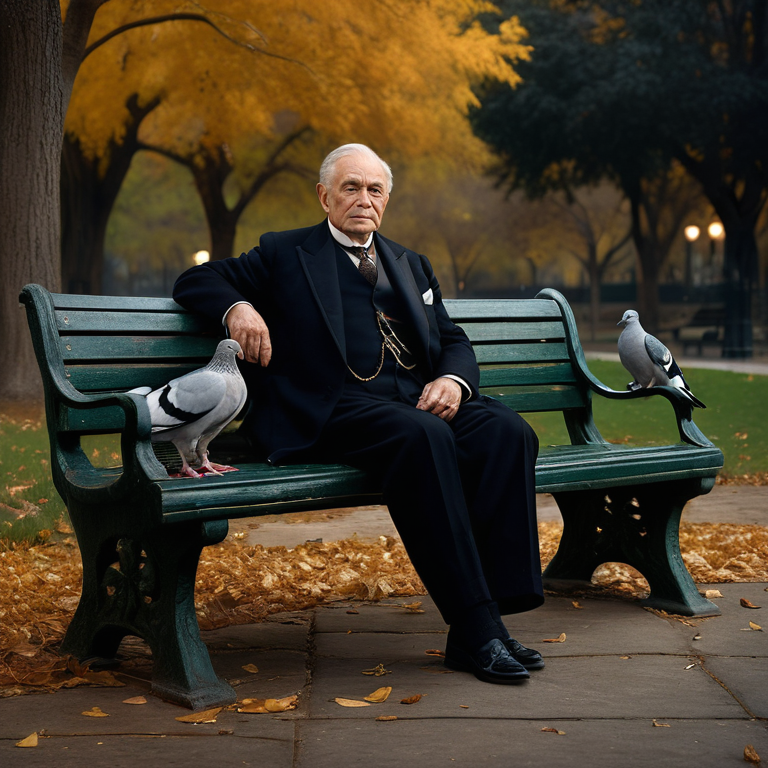
The guest at seat eighteen would rather be on a park bench, and he has told me so twice, charmingly. He is the best-dressed man at the table and the most mis-remembered man in this book: everyone knows one story about him, and the one story everyone knows has been opened, audited, and found false. Sit down anyway. The truth underneath is better — and the way we know it is false is the deepest thing this seat has to teach.
---
The Seat
Bernard Mannes Baruch. Born 1870 in Camden, South Carolina, son of a surgeon; brought to New York at eleven; into Wall Street as an office boy at a brokerage house. From that bottom rung, one of the most storied climbs American finance has produced.
The first coup was homework, not luck. In 1897 he loaded into a sugar company on a single readable fact: the company's fortunes hung on a tariff, Congress was debating the tariff, and Baruch judged Congress would not kill it. Congress didn't — possibly the only moment in this book when a plan resting on Congress ran to schedule — and the trade bought him a seat on the New York Stock Exchange and a wedding. The ledger keeps the shadow too: earlier, he had been nearly wiped out betting against that very same stock. The street's schoolhouse is like that. Same building, twice.
In 1901 came the trade that made him: a short sale — selling borrowed shares first, to buy them back cheaper if the price falls — against a copper giant he judged badly overpriced. His memoir keeps the grace note, and only his memoir, so label it self-told: in the thick of the campaign his mother telephoned to remind him that the next market day was Yom Kippur, and he observed the holiday instead of trading it. He held for months as the stock sank, and by his own account he had, at thirty-two, a hundred thousand dollars for every year of his life. In 1903 he opened his own firm and refused every invitation to join a house, and the street named him for it: the Lone Wolf.
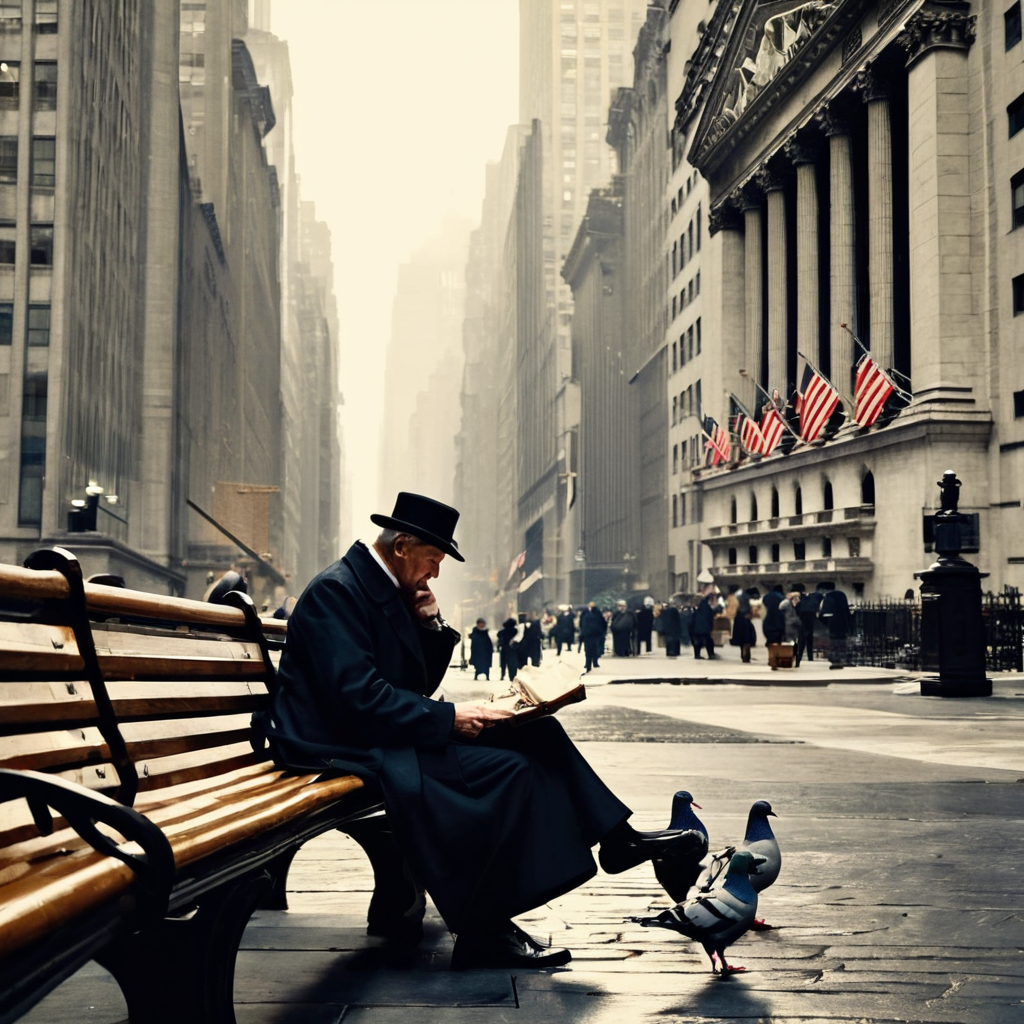
Then Washington: chairman of the War Industries Board in the Great War, adviser to presidents from Wilson onward — and too restless for waiting rooms, so he waited on a bench in Lafayette Park across from the White House, and the newspapers fell in love. The Park Bench Statesman. It is reported — charming, unverifiable, so labeled — that a letter addressed simply Bernard Baruch, Lafayette Park, Washington found its way to him; the park service dedicated a bench there on his ninetieth birthday. Understand what the bench is: not method. Theater. Good theater — but the method underneath was always facts gathered before the crowd had them, which is harder to photograph than a bench. He died in 1965, at ninety-four, still being asked for advice.
Now the legend, and the audit, because this seat exists for it.
The legend: The Man Who Sold Out Before the Crash. It is repeated to this day, in encyclopedias and on quote sites, as settled fact. And his legend was audited — the rarest fate a legend can suffer. In 1983 a biographer went into the actual records, trade by trade, the nearest thing to a true audit any master at this table has received, and the legend came apart in his hands. Baruch did not sell out at the top. He was bullish into October 1929. What saved him was not prophecy. It was skill in the wreckage: he traded the collapse well, salvaged most of his fortune on the way down, and came out the far side rich.
And here is the truer compliment, which I would rather engrave on this seat than the legend: surviving 1929 wealthy while wrong about it is the more impressive feat. Prophets are lucky once. Survivors are skilled every day of the storm. The legend flatters him with a coin flip he never called; the ledger credits him with a discipline he actually had. He comes out of his own audit better, and that almost never happens — it happened here because the thing underneath was real.
While the audit is open, two smaller items. The famous shoeshine-boy story — the great man sells everything the day the boy shining his shoes offers stock tips — is folklore, triple-layered: no trace of it exists from 1929 itself; it is mostly told about a different famous man entirely, first reaching print thirty years after the crash; and what Baruch verifiably supplied is a sentence in his own memoirs observing that shoeshine boys had summarized the financial news. An observation, not a decision — and the audit says he did not act on his own omen anyway. And his most famous quotation — that he made his money by selling too soon — is pinned to him everywhere and sourced nowhere. Folk wisdom attaches itself to whichever famous name is standing nearest. He was usually standing nearest.

The Spell
His method fits in two sentences, and he said so himself: get the facts before you act — and understand that getting facts is a job that never ends. Everything else he wrote is commentary on those two. Take losses quickly and cleanly; do not expect to be right all the time; when you have made a mistake, cut it as fast as you can. Keep a good part of your capital in cash, always. Hold few enough things that you can truly watch them. Beware of anyone — barber, waiter, well-dressed stranger — bearing tips; and do not try to buy the exact bottom or sell the exact top, because nobody does that honestly. His engine was judgment, fed on facts gathered before the crowd had them; prices, he taught, are moved less by events than by human feelings about events, and the speculator's constant work is separating the cold facts from the warm feelings of the people holding them.
But the master-spell of this seat — the one that earns him the chair — is the confession. In 1905 he bet heavily, on borrowed money, that coffee would rise. Sound reasoning; the next year's crop came in enormous, and coffee fell. And instead of cutting the loser, he began selling his profitable position, a fine railroad holding, piece by piece, to feed the sinking one — butchering the healthy horse to feed the failing one — and came to his senses only when the winner was entirely gone. The cost, in his own handwriting: about $800,000, in 1905 dollars.
Then he did the thing that makes him a master of the first rank: he wrote it down. Against himself, in his own book, for strangers. Every rule he later published, he said plainly, was scar tissue from trades like that one. And there is the spell, castable tonight by anyone with a pencil: a loss written down exactly is a loss that only has to be paid for once. Unwritten, it is paid for annually, forever, by everyone who repeats it — and the market collects that particular toll with perfect patience.
The Honest Ledger
Now the labels, and this seat's are unusual.
Testable: no — and honestly no. His rules contain no numbers. "Quickly" is not a number. "A few" is not a number. "A good part in reserve" is not a fraction. He was skeptical anyone would follow his rules and said so in the act of writing them, which may be the most honest sentence ever printed in an investment book. His course could never be bound in tan morocco and leased, like his neighbor's at seat sixteen, because the course was him — judgment, fed on facts, running since boyhood. The pool cannot weigh a man. Nothing from this seat is pre-registered for the festival; the festival's two registered spells belong to seats fourteen and sixteen, whose owners left shapes a stranger could cast.
One honest fragment survives translation: take losses quickly is the oldest pedigree in this book for the escape order — and when the lab studies stops, it may fairly cite him as ancestry. But any number chosen would be ours, not his, so such a study is called a stop-loss study in Baruch's honor — never a Baruch backtest. The difference between those two phrases is this entire table's discipline in miniature.
And the ledger prints his 1929 line the way it will print yours, if you keep one: audited — the legend is false; the truth underneath is better. Remember the shape of that verdict. It is the only verdict worth wanting.
For Your Grimoire
A loss written down exactly is a loss that only has to be paid for once — unwritten, it is paid for annually, forever.