He did not sell out at the top — bullish into October. The truth underneath is better: he traded the wreckage well and survived rich.
☶
Magic in the Markets
Adventure · Visit X · Wall Street, 1900–1935
The Tape
The ledger outranks the legend — even when the legend is about the legend-keepers themselves.
♪ Lamplit Casebook · the music of Wall Street, 1900s · MoneyWizard
Three masters on one street, and the street will not hold still under the door. A boy who learned to read footprints in a ribbon of paper. A lone wolf who wrote his worst trade down so that strangers could pay for it only once. A man who kept a fire escape bolted to every position he ever owned. And the strangest treasure of the whole visit: two legends about the same crash — one opened and found false, one never opened at all — and the lesson hiding in the difference.
The step through
Every visit before this one, the door opened on a year and held it. Not this time. This stop is not a year. It is the lifetime of a street.
I step through into a sound I have never heard in any century: a fast, dry, ceaseless chatter, like rain on a tin roof that never lets up. Machines under glass domes, one in every office window, printing onto ribbons of paper that coil into baskets on the floor. And before I can take a second breath, a boy comes around the corner at a dead sprint with a fistful of paper and very nearly puts me in the gutter.
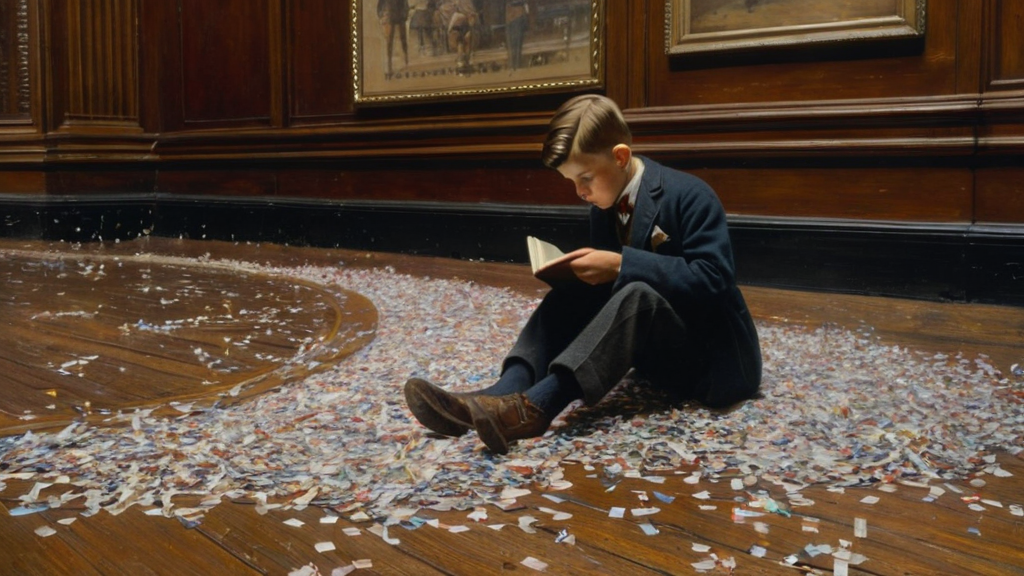
It is 1888, a dozen years shy of where the door was aimed, and the door has not missed — it is showing me where this era's first master begins. The boy is fourteen going on fifteen, a runner for a brokerage house, carrying quotations between offices in the age when a fast pair of legs is market infrastructure. Hold on to his face. The street is going to teach him everything it knows, and then he is going to turn around and teach the street.
The door shivers behind me. It will do this all visit — flickering me up and down four decades of the same few blocks, because this era's lesson does not live in one man. It takes three, and they do not agree.
The market of that age
Understand first what the chattering machine is, because it is the whole era in a box.
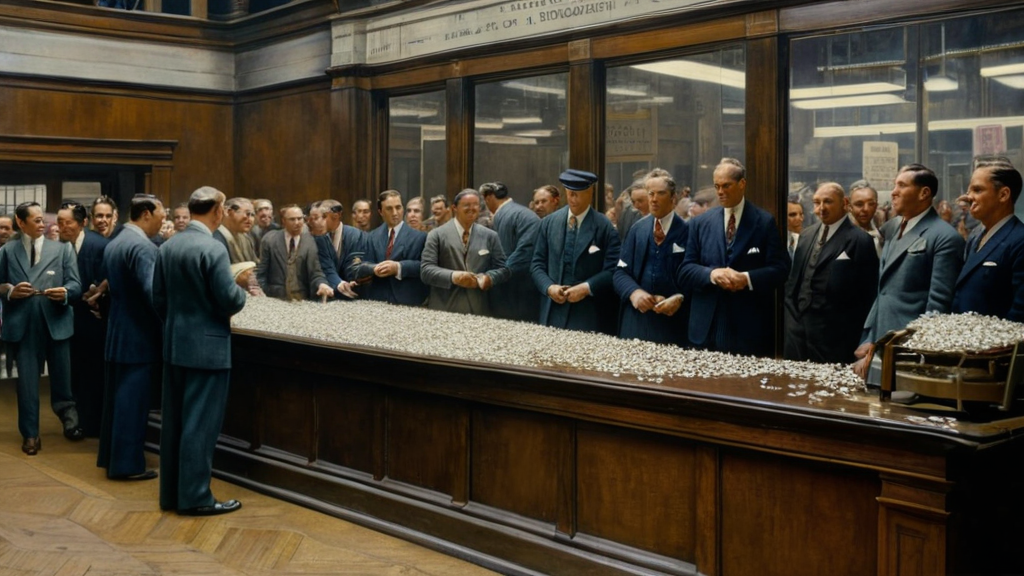
Every trade on the great exchange — every price, every size, one after another, in the order they happen — is squeezed down a telegraph wire and printed onto a moving ribbon of paper. They call the ribbon the tape. For the first time in the history of markets, the entire day's battle fits between a reader's finger and thumb. In Amsterdam you had to stand in the crowd to know the price. Here the crowd comes to you, single file, on paper.
And around the honest ribbon, a carnival. Tips. Whisper-men. And a low industry of shops that let the public bet on the tape's prints without ever owning a share — rooms built so the customer's money arrived faster than his understanding. Remember them; one of our masters is going to go back into those rooms carrying a lantern.
The tape is a new instrument, and like every new instrument, almost everyone plays it badly. The question of the age is simple: the ribbon shows every footstep the market takes — is there anyone who can read the footprints?
The reader of footprints
The runner boy grows. His name is Richard Demille Wyckoff, and across forty years — he kept the dates himself, 1888 to 1928 — he climbs every rung the street has: runner, broker, owner of his own firm, operator, publisher. In 1907 he founds a magazine, The Ticker, later renamed The Magazine of Wall Street, and it becomes one of the most influential financial publications in America. He is the man who helps make Jesse Livermore a household name. And all the while he is doing the thing nobody else on the street thinks to do systematically: he interviews and watches the great operators of his era at close range — Livermore across a table, the legendary market generals of the age studied the way a naturalist studies wolves.
In 1910 he sets down what he has learned in a book about reading the tape — published, with magnificent gravity, under the pen name Rollo Tape. The most serious student of the ribbon in America signs his masterwork like a vaudeville act. The era's humor is like that: bone dry and hiding in the bylines.
Here is what Rollo Tape learned, taught as the first spell of the visit.
Pretend the whole market is one man. One immensely wealthy operator, sitting behind the scenes, running campaigns. He is not real — Wyckoff knew that; this is a lens, not a conspiracy. (The era kept plenty of real conspiracies; inventing another would have been wasteful.) But look through it and the chaos organizes itself. The one great operator accumulates quietly while the public despairs. He marks the price up. He distributes his holdings into the public's cheering. He marks it down. Your job is not to fight him and not to worship him. Your job is to read his footprints on the ribbon and walk where he walks — instead of into his traps.
And the footprint Wyckoff prized above all the others is the false breakdown. Watch how it works, because it is beautiful.
A stock spends weeks trading on a shelf — a floor it refuses to fall through, a ceiling it keeps failing to break. Then one day price is pushed below the floor. Every alarm on the street rings at once. The protective orders resting under that floor are triggered; the breakdown traders pile on; the public sees the shelf collapsing. Now the test: if real selling floods out, the shelf was rotten, and the great operator walks away — and so should you. But if almost nothing comes out — if the dip is shallow and quiet, and price climbs calmly back onto the shelf — then the market has just rung every alarm it owns and found nobody left who wants to sell. The supply is exhausted. The one great operator has bought all there is to buy, and the markup is about to begin. That failed breakdown is the shelf's final exam — and, Wyckoff taught, the lowest-risk entry in the whole structure.
His arithmetic for it was spare, and it is the one number he hands us. Never take the position without an escape order, placed just below the low point of the false breakdown — the market has already shown you its extreme; stand your exit behind it. And never take the trade at all unless it promises at least three dollars of gain for every dollar risked. Three to one, or no trade. That is the whole ledger row.
The famous one-syllable name traders use for this pattern today — the spring — was not Wyckoff's word. His own terms were "terminal shakeout," and the market being "on the springboard." The snappy name was added to his course after his death by his successor-teacher, Robert G. Evans.
The tidy numbered diagrams everyone posts today were not drawn by his hand either; he taught from real charts and real tape, and his students drew the maps afterward. None of this diminishes the man — the concept is his, entirely. But mark the lesson, because it is the visit's watermark: the ledger outranks the legend, even when the legend is about the legend-keepers themselves.
Wyckoff grew wealthy, and then he turned evangelist. From 1922 he published exposés of the bucket shops — those rooms where the public's money went to be educated — because he had concluded that ordinary people were being systematically fleeced and could be taught to see. The runner boy went back down the street with a lantern. You and I know that walk.
The end of his story is quieter. In 1928, in a dispute inside his own house, he lost control of the magazine he had built. Health failing, he made his last act a school: in 1931 he founded a firm to teach his course in stock market science — two volumes bound in tan morocco, and, in a flourish I confess I admire, leased to students, never sold. He died in March 1934. The course outlived him: taught by successor after successor, a descendant of it is still sold today — a spell in continuous casting for some ninety-five years.
Into my pack goes the terminal shakeout, and I tie a plain tag to it, because my pack is honest or it is nothing: untested. The scrying pool at home has not yet weighed this one. It reads beautifully; so did others that the pool later weighed and found wanting. The tag stays on until the water says otherwise.
The lone wolf's confession
The door flickers, and the street is richer and louder. I am looking for the second master, and I find him twice — which is fitting, because the world remembers two of him, and only one survives an audit.
Bernard Mannes Baruch. Born 1870 in Camden, South Carolina, son of a surgeon; brought to New York at eleven; into Wall Street as an office boy at a brokerage house. From that bottom rung, one of the most storied climbs American finance has produced.
The first coup was not luck and not the tape — it was homework. In 1897 he loaded into a sugar company on a single readable fact: the company's fortunes hung on a tariff, Congress was debating the tariff, and Baruch judged Congress would not kill it. Congress didn't. It may be the only moment in this book when a plan resting on Congress ran to schedule. The trade bought him a seat on the New York Stock Exchange and a wedding. (The ledger keeps the shadow too: earlier he had been nearly wiped out betting against the very same stock. The street tuition is like that — the same schoolhouse, twice.)
In 1901 came the trade that made him: a short sale — the trick of selling borrowed shares first and buying them back cheaper, so that a falling price pays you — against a copper giant he judged badly overpriced. His memoir keeps the grace note, and only his memoir, so label it self-told: in the thick of the campaign his mother telephoned to remind him that the next market day was Yom Kippur, and he observed the holiday instead of trading it. He held for months as the stock sank, and by his own account he had, at thirty-two, a hundred thousand dollars for every year of his life. In 1903 he opened his own firm and refused every invitation to join a house, and the street named him for it: the Lone Wolf.
So far, a legend polishing itself. Now the reason he is in this book.
In 1905 he bet heavily, on borrowed money, that coffee would rise — sound reasoning, from restricted planting in Brazil. The next year's crop came in enormous. Coffee fell. And here is where a master shows you something no winner ever can: instead of cutting the loser, he began selling his profitable position — a fine railroad holding — piece by piece, to feed the sinking one. Feeding the failing horse by butchering the healthy one. He came to his senses only when the winner was entirely gone.
$800,000
the coffee confession · 1905 dollars · his own memoir, written against himself
And then he did the thing that makes him a master of the first rank: he wrote it down. Against himself, in his own book, for strangers. Every rule he later published, he said plainly, was scar tissue from trades like this one. Learn the spell hiding here, because it is castable tonight by anyone with a pencil: a loss written down exactly is a loss that only has to be paid for once. Unwritten, it is paid for annually, forever, by everyone who repeats it. His ten rules — he was skeptical anyone would follow them, and said so — boil down to two: get the facts before you act, and understand that getting facts is a job that never ends. Take losses quickly and cleanly. Keep cash in reserve. Beware of anyone bearing tips.
And note, honestly, what the rules do not contain: numbers. "Quickly" is not a number. "A few" is not a number. "A good part in reserve" is not a fraction. His engine was judgment, fed on facts gathered before the crowd had them — which is why his course could never be leased in tan morocco. The course was him.
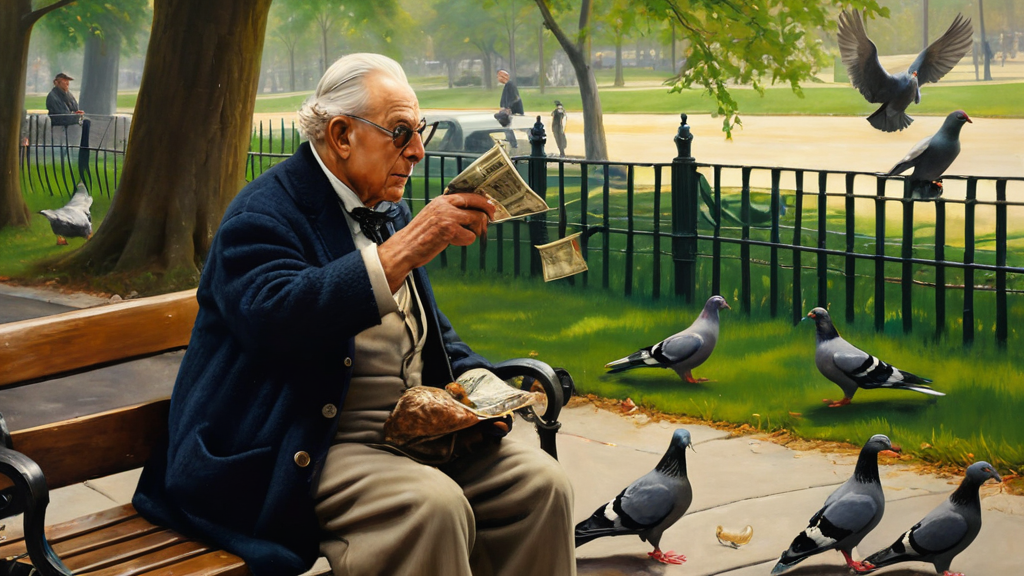
The second time I find him, decades later, he is not on Wall Street at all. He is on a park bench in Washington, across from the White House — chairman of the War Industries Board in the Great War, adviser to presidents from Wilson onward, and too restless for waiting rooms, so he waits on the bench instead, and the newspapers fall in love. The Park Bench Statesman. It is reported — charming, unverifiable, so labeled — that a letter addressed simply Bernard Baruch, Lafayette Park, Washington found its way to him; the park service dedicated a bench there on his ninetieth birthday. Understand what the bench is: not method. Theater. Good theater — but the method underneath was always facts before the crowd, which is harder to photograph than a bench.
He died in 1965, at ninety-four, still being asked for advice. Hold your questions about 1929. That story gets its own section, because it deserves — it demands — an audit.
The battle for survival
The door flickers once more, and now the street is nervous. It is the late twenties, and I am following a Californian: Gerald Martin Loeb, born 1899 in San Francisco, into the business in 1921 in a bond department, and by 1924 at the great brokerage house of E. F. Hutton in New York, where he would one day rise to vice-chairman.
(One smile before the storm, because this era buries its jokes in the records: half the books call Loeb a founding partner of that firm — which was founded in 1904, when Loeb was five years old. The phrase survives everywhere and cannot be literally true. Even the small legends need auditing. Especially the small ones; nobody checks them.)
Then 1929 — the year the tape's carnival ends. The accounts say Loeb saw the break coming and stepped aside: sold down his holdings and his clients', and came through the collapse and the long grind after it largely unhurt. Mark the label on that sentence and keep your thumb on it — the label IS this chapter, and we will come back for it.
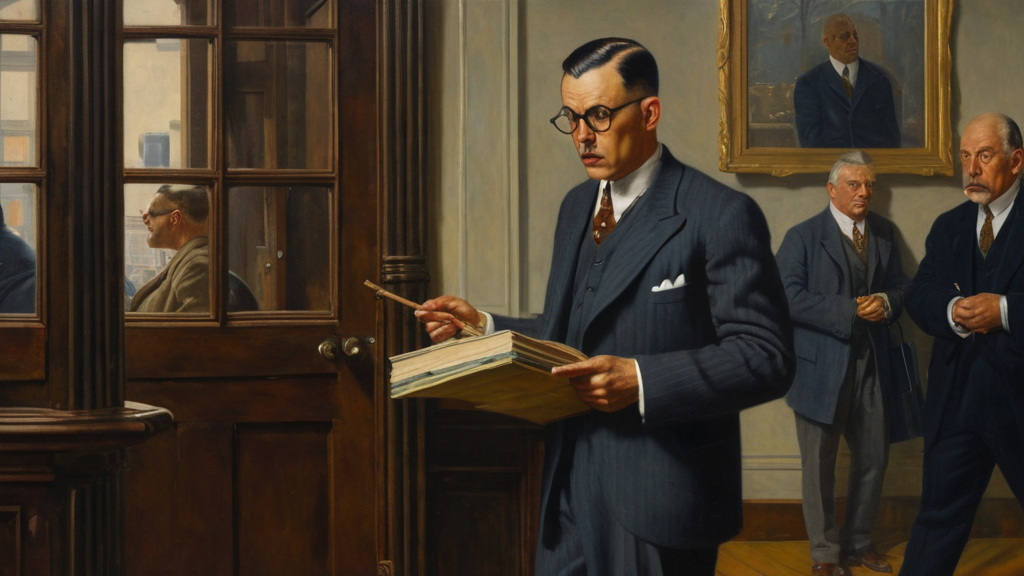
What is beyond dispute is the doctrine the crash burned into him. He spent the next years writing it in columns, and in 1935 he bound it into a book with the most honest title in the financial canon: The Battle for Investment Survival. Published into the very trough of the Depression — a book about not losing money, offered to a public that had just lost nearly all of it — and it reportedly sold in stacks anyway. Perfectly timed. Fitting, from a timing man.
His creed, taught as spells:
Holding forever is itself a risk. No analysis is safe from war, weather, fashion, invention, and the moods of crowds. The other great book of his decade — published within a year of his — taught the opposite: find the dollar selling for fifty cents, buy it, and wait for the price to obey the value. Loeb answered that there is no final answer to values — value is mostly hopes and fears — and that waiting is not a shield, it is exposure. That argument has never ended. It is running right now, in your century and mine, and both armies descend from these two books. Neither side has ever accepted the other's surrender, mostly because neither has ever offered one.
Concentrate, and watch. Wide scattering of money across many names, he taught, is poor protection against not knowing what you are doing. His ladder: beginners spread out to learn; the more skill, the fewer positions; the expert puts his eggs in one basket and watches the basket. And for the learner, the most concrete rule in his book: own one stock at a time, never more than a hundred shares, so that every new idea forces a decision — you must close the old before you may open the new.
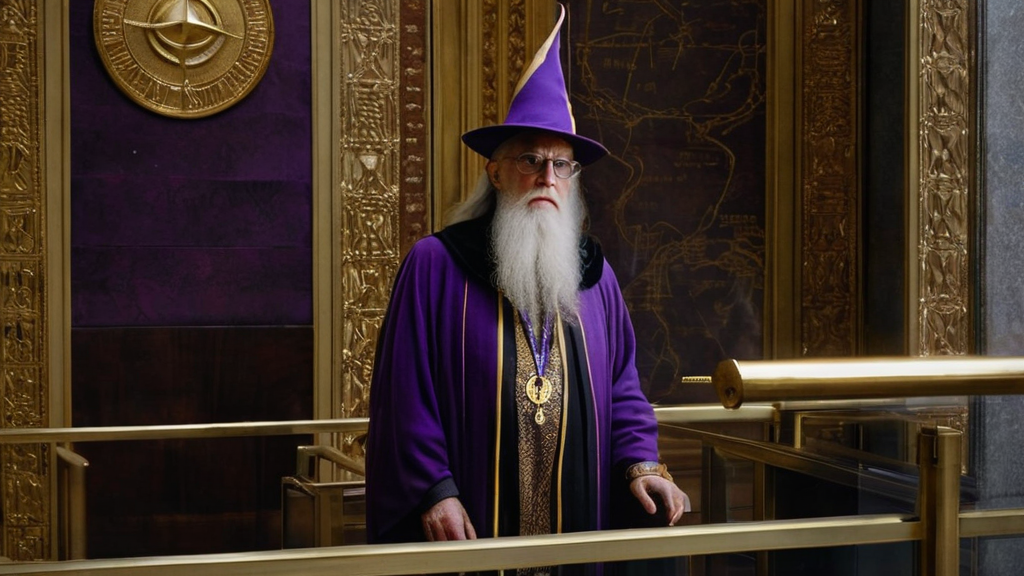
Cash is a position. Better idle money than buying merely to be busy. Bargains appear only when fear is general; when everything is popular, the successful investor sits out and endures looking foolish. (On enduring looking foolish I claim professional standing: I wear a tall purple hat.) He ruled out being always-invested flatly.
Buy strength, and write it down first. He bought what the majority still called speculative and sold when the majority promoted it to respectable — the profit lives in that migration of opinion. And before buying, he demanded his readers write down why, the gain expected, the time allowed, and the risk accepted. Sit with that a moment: he required the vow in writing, in 1935. My laboratory, a century on, calls this pre-registration and considers it modern. The wizard's hat comes off.
And the loss rule — exact, and doubled. The rule he is famous for: never let a loss grow past ten percent of what you paid — and get out sooner if the signs are bad. Deeper in the book sits its twin: consider selling anything that falls ten to fifteen percent from its top price while you hold it — profit or loss, no difference. The first is a floor under your entry; the second is a floor that climbs with the peak, and takes profits as well as losses. He banned averaging down. He named the prompt acceptance of losses the single most important device for safety of capital — the first key to success, and the act investors know least and practice least. In a reported exchange years later, a young disciple asked whether he truly sold every stock that fell ten percent below cost. Loeb answered that he preferred to be out well before that. The ten percent was never his exit plan. It was his fire escape — and the whole doctrine is in that distinction: you do not plan to use the fire escape. You do not own a building without one.
The rest of the life is books, columns — one magazine called him the most quoted man on Wall Street — and, in 1957, an award for financial journalism that still carries his name: a speculator memorialized for accuracy in print rather than size of fortune. He died in April 1974. No scandal, no blowup, no attorney general. By this ledger's standards, a suspiciously clean exit.
The two legends
Now put your thumb back on that label, because here is the treasure I carried home from this visit above all the spells.
Two masters. One crash. Two legends.
Baruch's legend: The Man Who Sold Out Before the Crash. It is repeated to this day, in encyclopedias and on quote sites, as settled fact. And his legend was audited. In 1983 a biographer went into the actual records, trade by trade — the nearest thing to a true audit any master in this book has received — and the legend came apart in his hands. Baruch did not sell out at the top. He was bullish into October 1929. What saved him was not prophecy. It was skill in the wreckage: he traded the collapse well, salvaged most of his fortune on the way down, and came out the far side rich. The legend says prophet. The ledger says survivor. And I will tell you a secret the legend misses: surviving 1929 wealthy while wrong about it is the more impressive feat. Prophets are lucky once. Survivors are skilled every day of the storm.
(The famous shoeshine-boy story — the great man sells everything the day the boy who shines his shoes offers him stock tips — is folklore, and triple-layered folklore at that. No trace of it exists from 1929 itself; it is mostly told about a different famous man entirely, and that version first reached print thirty years after the crash. What Baruch verifiably gave the story is a sentence of his own memoirs, written in old age, observing that taxi drivers had recommended stocks and shoeshine boys had summarized the financial news. An observation — not a decision. And the audit says he did not act on his own omen anyway. Even his most famous quotation — that he made his money by selling too soon — is pinned to him everywhere and sourced nowhere. The honest label is: folk wisdom that attaches itself to whichever famous name is standing nearest.)
Loeb's legend: The Man Who Stepped Aside. And here is the mirror, polished and perfect: his legend has never been audited at all. No biographer has gone through those brokerage records. The vivid sold-everything version traces back through his own columns — the survivor telling his own story. The cautious sources say only that he largely avoided personal losses. It is plausible. His whole later doctrine is exactly what a man who sold early would preach. And it is self-reported, and unexamined — and unexamined is a different word from false, and a different word from verified, and the deepest spell this street ever taught me is the ability to feel the difference between those three words in the dark.
So the honest book prints both labels, side by side, and changes neither:
Baruch · 1929Audited · 1983 · legend false
Loeb · 1929Never audited
Self-reported through his own columns; no biographer has opened the records. The legend stands — wearing its label.
Almost every book you will ever read strips those labels off, because labels slow the story down. This one leaves them on, because the labels are the story. A trader who accepts legends unweighed will accept his own legends unweighed — the moved stop unlogged, the bad month unwritten, the memory quietly improved. The audit you practice on the famous dead is rehearsal for the audit you must run, nightly, on yourself.
The lesson taken
Now the ledger, and this era hands me three treasures that argue with each other all the way home.
Wyckoff says: the footprints of the big money are readable on the ribbon — stand where it stands, behind the failed breakdown, escape order below the extreme, three promised for one risked, or no trade.
Baruch says: the facts, gathered before the crowd has them, are the only ground — and when you are wrong, confess it in writing, quickly and cleanly, so the tuition is paid only once.
Loeb says: there is no ground. War, weather, fashion, and crowds dissolve every certainty, so survive by mobility — concentrate, watch, keep cash, and never argue with a loss past ten percent.
They contradict each other beautifully. Patience on the shelf against mobility above all; the one great operator's campaign against the crowd's dissolving moods; read the tape against get the facts the tape cannot print. I will not referee them — the scrying pool at home exists precisely because arguments like this one cannot be settled by eloquence, and the pool has not yet weighed these relics.
But look at where three men who agreed on almost nothing agree exactly. Wyckoff: never take the position without the escape order, placed behind the known extreme. Baruch: take the loss quickly and cleanly — he paid $800,000 once so that sentence could be short. Loeb: ten percent, without argument, and sooner if the signs are bad. Three masters, three temperaments, one street, one law: the loss is accepted at a line drawn before the trade, and it is never, ever negotiated with afterward. When every path up a mountain passes the same shrine, a traveler may reasonably suspect the shrine is load-bearing.
And under everything, the visit's watermark, stamped now on my whole pack: the labels stay on. Even the master tape-reader's most famous word was coined by his student after his death. Even the diagrams were drawn by other hands. Even the crash-prophets come in two kinds — audited-and-false and never-audited — and the difference between them is worth more than either legend. The ledger outranks the legend. All the way down.
The step back
The door is humming behind me, and for the first time it hums with electricity.
I stand a last moment on the street. Somewhere above me a ribbon is still printing — the whole market, single file, on paper, read by eyes and carried by boys. Every footprint Wyckoff taught me to read is printed at the speed a machine can hammer and a runner can run.
But the door knows where it is taking me next, and I can already hear it in the wire's hum: a decade is coming when the ribbon will pour into machines instead of baskets — when the tape will stop being paper and become a signal, and the boys will stop running, and someone will teach the reading of footprints to something that never sleeps and never tires and never once feels the crowd's fever in its own chest.
The tape is about to learn to read itself.
Step through with me. It is the machine age, and the door opens on the 1960s.