Calm in the Panic
The last stop. A week in which the fate of Europe rides on one battle, a market goes mad on rumor, and the calmest man on the floor is calm for a reason nobody would guess — and the legend told about him afterward gets everything backwards.
The step through
I arrive in fog, which in this city is not weather but furniture.
London, the third week of June, 1815. The fog comes up off the Thames and mixes with the smoke of a hundred thousand coal fires until noon looks like dusk, and through it the newest marvel of the age glows in a few proud streets: lamps burning coal-gas, hissing at midday because the day cannot manage on its own. Horses, mud, church bells, the river at low tide — and under all of it a hum you can feel in your teeth, because this city is the paymaster of a world war, and this week nobody in it knows whether the war is won.
Napoleon is back. He escaped his island in the spring, gathered France to him in a hundred days, and is marching north toward the British and Prussian armies in Belgium. Everyone knows the collision is coming. Nobody knows the day, and nobody — hold on to this — will know the result until days after it happens.
I have come to watch a market wait for news that travels at the speed of a horse — and to meet the one man on its floor who does not need it to hurry.
The market of that age
Forget shares. Forget flowers, forget rice. The great market of this age — the ocean every other market is a pond beside — is debt. Britain has borrowed for a century to pay for its wars, and that borrowing has been minted into a thing the whole nation trades: the funds. A slip of the national debt pays a small fixed rent forever, and its price rises and falls every hour on one question — how goes the war? Victory, and the government's promises are good as gold. Disaster, and they are paper. The funds are the war, written as a price.
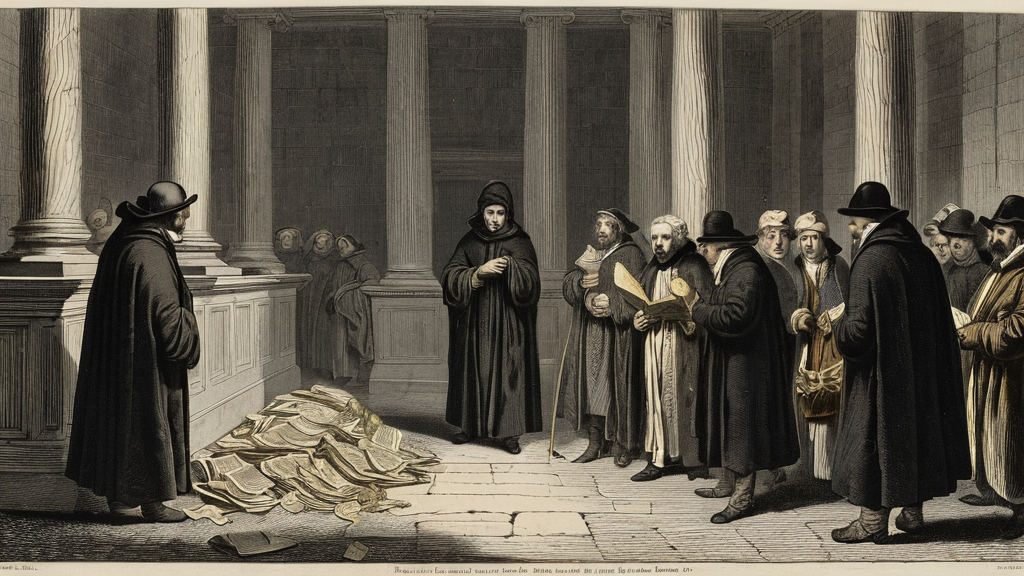
They trade in a building I go to find in Capel Court, a narrow passage in the shadow of the Bank of England. The Stock Exchange: barely a dozen years in its new hall, members only, and inside it a roar I know by now from three continents and two thousand years — men packed shoulder to shoulder, prices flying, chalk and paper and shouting. The smell is wet wool, tallow, ink, and anxiety.
And here is what makes this floor different from every floor I have visited: it is the first market I have seen that is truly wired to the news. The Admiralty has built a chain of signal towers — great shutters on rooftops, blinking word from the coast to London in minutes when the air is clear. Fast packet boats run the Channel. Couriers kill horses on the Dover road. The legend of this age will even add carrier pigeons, though the ledgers, as usual, are more modest than the legend. Every one of these channels feeds this room — which means every one can poison it. Only last year, men in invented uniforms rode through the towns spreading false word that Napoleon was dead, and the funds leapt on the lie and crashed on the truth, and the plotters were tried for it. This floor has already learned, the expensive way, that news is not light. News is weather.
Notice one more thing, because it matters in three days: the signal towers go blind in fog and dark. The fastest wire in the world stops working exactly when the world holds its breath. Whatever arrives this week arrives the old way — a tired man on a horse.
The master
They point him out without my asking, the way a room points out its best.
David Ricardo is forty-three, slight, precise, courteous, and by common consent the ablest man on this floor. He was born to it — a stockbroker's son, at his father's side from boyhood — and then, at twenty-one, he lost it all in an afternoon, and not to a bad trade. He fell in love with a Quaker girl, and he a Jew; they married; and both families closed like doors. His father cut him off. His mother, the story says, never spoke to him again. He started over with almost nothing — a borrowed few hundred pounds and a reputation for being worth backing — which means the man in front of me built one of the great fortunes of the age from roughly the same starting line as you.
Watch him work, because I did, and it is nothing like what the room around him is doing. Men who knew him wrote down how he traded: an uncanny quickness for spotting when two prices that ought to move together had drifted slightly apart — step in, take a small, almost unremarkable percentage on a large, careful sum, step out. Again. And again. No heroics. No all-or-nothing afternoon. Turn after turn, each one modest, none of them fatal, for twenty years.
And these last years he has taken the biggest seat the floor offers: contractor for the government's war loans — one of the men who promises to raise millions for the Treasury, taking in exchange a bundle of the new debt the market calls Omnium, which he sells on at whatever premium fortune allows. He has been a partner in loan after loan for years running. It is the most dangerous seat in British finance: you buy a nation's promises in bulk, in wartime, before you know how the war turns out.
Which brings us to this week. The newest loan — the largest yet — closed on the fourteenth of June. The battle that decides whether Britain's promises are good was fought on the eighteenth. Ricardo and his partners signed first and found out after. So did everyone. There was no other way to do it.
The week the world held its breath
The nineteenth, the twentieth, the twenty-first. Three days in Capel Court, watching a market try to see through fog in both senses.
The rumors come in waves. Not one thunderclap — waves. A whisper off a fishing boat at Dover becomes a shout by Cheapside: a great battle, the Prussians broken. The funds sag. The wave crests, settles, and the floor breathes. Hours later another swell: Brussels was safe on Monday. Prices lift. Another: Napoleon victorious — down. No — a rout, his army destroyed — up, but nobody dares believe it. Each wave builds, breaks, and settles at an uneasy new level, and the next one builds on that. I stood on the beach of it thinking of something my scrying pool would show me at home, years from now: news moving through a market has never once looked like the lightning bolt of legend. It looks like this. It builds like a tide and settles like one, and the men who drown are the ones who treat every swell as the sea's final answer.
The floor is not calm. Men who signed for pieces of the loan are white. Some are selling their share at any price that lets them sleep; some are buying any rumor with a happy ending. Fortunes change hands on stories that will be false by supper.
And Ricardo, at his place, is doing what he does every week of every year: his sums, his small turns, his notes in that precise hand. He has — the ledgers will show it two centuries from now — already sold part of his own Omnium at a modest premium, a small certain gain taken quietly while the outcome is anybody's guess. Hold that fact. It is about to destroy a legend.
Even his friends cannot match his stillness. His dearest sparring partner — a country parson named Malthus, who argues economics with him by post the way other men play chess — took a small share of the loan through him, and the worry kept the good reverend from sleeping; the correspondence says he asked Ricardo to sell him out before the battle for whatever small profit was there. Ricardo did as his friend asked. His own share, he kept working his own way. Same loan, same week, same facts: one man's nerves, another man's arithmetic.
Then, late on the night of the twenty-first, it comes. Not through the blind signal towers — through a spent officer in a chaise, carrying Wellington's own dispatch and two captured French eagles, hunting the Prince Regent through the West End to tell him the war is over. Waterloo. Victory — total. By morning the news is in the Gazette and Capel Court is a carnival. The funds surge. The loan that terrified its owners for a week is suddenly a blessing on everyone who held it.
Now — the legend, and the ledgers, because this book tells you every time.
The legend says: Ricardo knew early. Secret courier, some say pigeons — the same tale they tell of his rival Rothschild — a million pounds swept off the table in an afternoon, the fortune of the richest economist in history explained by one perfect stroke of inside knowledge. Great economists repeated that story for two centuries.
The ledgers say: a patient scholar went through the archives and the price records, line by line, and published the arithmetic in our own time. Ricardo had no early word — and the proof is beautiful: he sold part of his Omnium at a whisker of profit before the true news arrived. No man with tomorrow's newspaper in his pocket sells today. He simply did in the panic exactly what he did in the calm: took modest, certain gains on a large, frightening position, kept the rest, and let the event fall as it would. The loan paid him handsomely when victory came — and it was not a million, and he was not even the biggest contractor at the table, and the fortune it joined had been built the way stone stairs are built: one small, cut, deliberate step at a time, thousands of them, over twenty years.
The legend is a lightning bolt. The truth is a staircase. And the truth is the better story, because you cannot copy a lightning bolt.
I claim my one question. In the emptying room I ask him the thing the whole floor wants to know and is too proud to ask: how were you calm, when the fate of everything you hold was on a battlefield you could not see?
He is not a man for speeches. But he had already answered, four years before, in a letter to his friend Mill — his own hand, and a man repeats the sentences he has found true:
*"I play for small stakes, and therefore if I'm a loser I have little to
regret."*
That is the whole secret. Feel how strange it is. The richest economist who ever lived is telling you his edge was that no single trade mattered. He could be calm in the panic because he had arranged his affairs so that being wrong was survivable — always, automatically, by construction. The men sweating around him had bet their sleep. He had only ever bet his stakes. Calm was not his temperament. Calm was his size.
The lesson taken
Ricardo never wrote a trading book. What survives instead — secondhand, set down by a journalist a generation later and endorsed as tradition by his great biographer, so take it as remembered truth rather than gospel — is that he pressed on his friends three golden rules. I carried them home like relics. Listen:
Never refuse an option when you can get it. The right to act without the duty to — the exact treasure Thales showed me in an olive grove twenty-three centuries before this fog. First stop, last stop, same lesson.
Cut short your losses. The moment a position turns against you, be gone. I have stood in front of the marching wave with you; I have measured what it costs to argue with one. He knew without measuring.
Let your profits run on. And here my lantern swung, because in Amsterdam a poet told me the opposite — take every profit without regret, for profits are goblin treasure. Two masters, two fortunes, two contradictory rules. Which is right? Both. Neither. It depends on the weather the rule is cast in — and no man at the long table, not even this one, had an instrument for the weather. That reconciliation is the work waiting at home.
But the deepest thing in my pack is not the rules. It is the small stakes — because it answers the question you actually carry. You have been told your problem is that you are small; that the real players are big, and until you are big you are prey. Now look at what I saw in the fog: a whole floor panicking, and the one man at peace is the one who chose smallness — small stakes, small certain gains, small regret — and simply never stopped. He started at your starting line, disowned, on borrowed money. He retired in his forties to green hills in Gloucestershire, wrote the books that made the economists claim him forever, and died worth some £675,000 — one of the great fortunes of his age, assembled with no lightning whatsoever, out of profits so individually modest that history mistook the staircase for a bolt from the sky and had to invent the pigeons.
Smallness is not your weakness. Sized right, smallness is why you get to be calm — and calm is why you are still there, still playing, still learning, on the morning the tide finally turns your way.
The step back
I leave Capel Court the morning after, the bells of the City going mad above the fog, and I do not open a door to another era.
There are no more stops. Seven times I have stepped through: an olive grove, a gambler's table, a tulip tavern and a poet's courtyard, a rice bridge at dawn, a street in Paris drowning in paper money, a counting-house of ghosts, and this fogbound floor. Seven lessons in my pack — and every master at the long table gave me a tool, and not one of them could tell me which tool, and when. Ricardo and the poet looked me in the eye and gave me opposite commandments, and both were right.
One more door, then — and it is the strangest one yet, because it opens forward. Past the telegraph, past the ticker, into the age of aeroplanes — where I am told a professional dancer beat the whole of Wall Street from hotel lobbies on the far side of the planet, reading week-old newspapers, precisely because he was too far away to hear the noise. After centuries of masters who lived inside their markets, history saved one lesson for a man who could barely reach his.
I step through.